How to Improve Golf Skills: Coach Insights from White Pines Golf Course
Golf is a sport that demands precision, patience, and continuous refinement. Whether you’re a beginner picking up your first club or an intermediate player looking to lower your handicap, understanding the fundamentals of skill development is essential. At White Pines Golf Course, our experienced coaches have helped hundreds of golfers transform their game through proven techniques and personalized instruction. This comprehensive guide shares insider knowledge on how to improve your golf skills, backed by coaching expertise and practical strategies you can implement immediately.
Improving at golf isn’t just about hitting balls at the range—it’s about developing a systematic approach to practice, understanding your swing mechanics, and building mental resilience on the course. The difference between golfers who plateau and those who continue progressing often comes down to how they structure their improvement efforts. Our coaches emphasize that consistent, purposeful practice combined with proper instruction yields the fastest results.

Master Your Grip and Stance Fundamentals
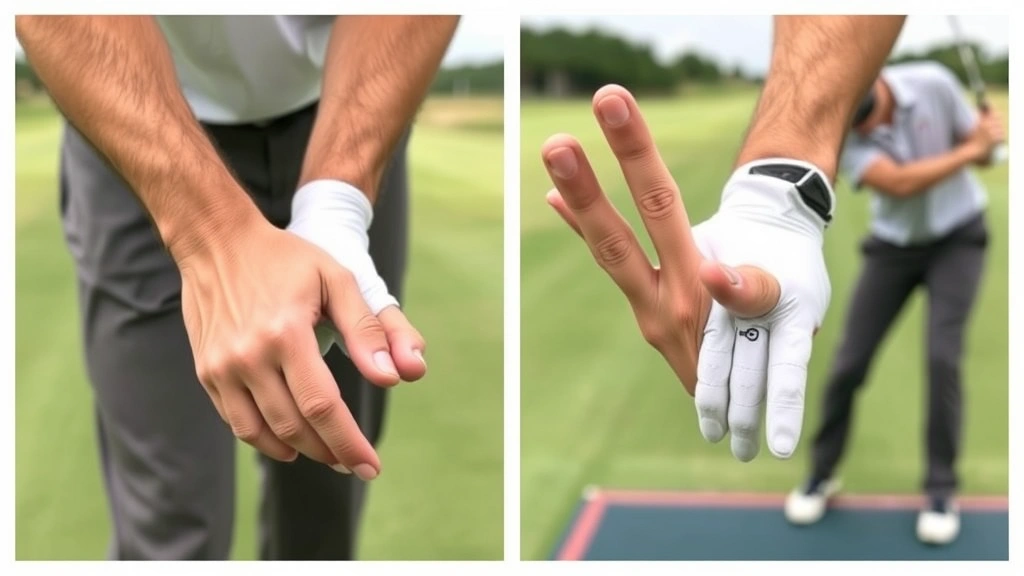
The foundation of any solid golf swing begins with your grip and stance. These fundamentals are non-negotiable, and our coaches at White Pines Golf Course insist that every player—regardless of skill level—regularly reviews these basics. A poor grip can cause inconsistent ball striking, hooks, slices, and loss of distance, making it impossible to build reliable skills on top of a weak foundation.
The Proper Grip involves positioning your hands on the club in a way that promotes a square clubface at impact. For most golfers, the overlap or interlock grip works best. Your leading hand (left for right-handed golfers) should be positioned so that you can see two knuckles when looking down. The trailing hand should complement this position, creating a unified grip pressure of about 4 out of 10 on a tension scale. Many golfers grip too tightly, which restricts wrist movement and reduces clubhead speed.
Your stance and posture significantly impact your ability to generate power and consistency. Stand with your feet shoulder-width apart, with your weight balanced between your heels and the balls of your feet. Your knees should have a slight flex, and your back should maintain its natural curvature—avoid hunching or standing too upright. The ball position varies by club: for drivers and woods, position the ball toward your front heel; for mid-irons, center it; for short irons and wedges, move it slightly back. These positioning details directly influence your swing plane and impact location.
When you visit golf courses hiring near me, ask if they offer grip and stance assessments. Many facilities provide these evaluations as part of their coaching programs. Spending time on these fundamentals prevents bad habits from becoming ingrained, which takes significantly longer to correct than learning correctly from the start.

Develop a Consistent Pre-Shot Routine
Professional golfers understand that consistency comes from repetition and ritual. A pre-shot routine is a sequence of actions you perform before every shot to ensure mental and physical preparation. This routine becomes your anchor in high-pressure situations and dramatically improves your focus and execution.
An effective pre-shot routine typically includes: standing behind the ball to visualize your target line, approaching the ball with purposeful steps, positioning your feet and body, taking one or two practice swings to feel the desired motion, establishing your grip, and executing the shot. This entire sequence should take approximately 20-30 seconds for full shots and slightly less for short game shots. The consistency of this routine trains your mind and body to perform automatically, reducing swing thoughts and anxiety during play.
The psychological benefit of a pre-shot routine cannot be overstated. Research in sports psychology demonstrates that ritualistic preparation reduces performance anxiety and increases confidence. When you follow the same sequence every time, your brain enters a familiar state, making execution more reliable. This is particularly important when you’re playing challenging courses or competing against other golfers.
At White Pines Golf Course, our coaches emphasize that your routine should be personal and natural to you, but it must be repeatable. Some golfers prefer longer routines with multiple practice swings, while others favor quicker, more streamlined approaches. The key is consistency—performing the same sequence every single shot, whether on the practice range or in tournament play.
Practice with Purpose and Structure
Mindless range sessions where you simply hit balls without direction waste valuable practice time and can actually reinforce poor habits. Purposeful practice involves setting specific goals, tracking progress, and focusing intensely on improvement areas.
Structure your practice sessions into three components: technical work, skill development, and simulation. Technical work focuses on swing mechanics—using video analysis or working with a coach to refine your swing fundamentals. Skill development targets specific shots: hitting different distances with each club, working on trajectory control, or improving accuracy. Simulation involves practicing under conditions that mimic course play, such as playing different distances in sequence or adding pressure situations.
The 80/20 principle applies to golf practice: spend approximately 80% of your time on your weaknesses and 20% reinforcing strengths. If your short game is weak, dedicate more practice time to chipping, pitching, and putting. If you struggle with specific clubs, practice those more frequently. This targeted approach accelerates improvement significantly compared to general practice.
Consider tracking your practice with a simple spreadsheet or app. Record what you worked on, how long you practiced, and specific improvements or challenges. This data helps you identify patterns and make informed decisions about where to invest your practice time. Many best online learning websites now offer golf training modules that provide structured practice plans and progress tracking.
If you’re looking for quality practice facilities, par three golf courses near me offer excellent opportunities for skill development in a lower-pressure environment.
Improve Your Short Game Skills
The short game—chipping, pitching, and putting—accounts for approximately 60% of your total strokes in a round. This disproportionate impact means that improving your short game delivers the fastest improvement in your overall score. Yet many golfers spend excessive time on the driving range hitting full shots while neglecting their short game practice.
Putting is where shots are actually made. A consistent putting stroke requires a stable setup, proper alignment, and a smooth pendulum motion. Your eyes should be directly over the ball, your shoulders should be square to the target line, and your stroke should originate from your shoulders and arms rather than your wrists. Practice lag putting (long-distance putting to get close) and short putts (3-6 feet) separately, as they require different techniques. Spend at least 30% of your practice time on putting—this investment directly reduces your score.
Chipping and pitching develop your touch and distance control around the green. The difference between a chip and pitch is distance and trajectory: chips are shorter shots with lower trajectories, while pitches are longer with higher arcs. Practice chipping with various clubs (7-iron through wedge) to develop versatility. For pitching, focus on consistent distance gaps—knowing exactly how far you hit each wedge at full swing, three-quarter swing, and half swing. This distance knowledge is crucial for course management.
The short game responds quickly to focused practice. Many golfers see measurable improvement in putting and chipping within two weeks of dedicated work. This rapid feedback is motivating and reinforces the importance of prioritizing these skills.
Mental Game and Course Management
Golf is a mental game played on a physical course. Your mental approach directly impacts your performance, and developing mental resilience separates good golfers from great ones. Course management involves strategic decision-making that minimizes risk and maximizes scoring opportunities.
Understanding your capabilities is fundamental to smart course management. Know your average driving distance, your accuracy patterns with each club, and your strengths and weaknesses. Play to your strengths and away from your weaknesses. If you struggle with long irons, lay up with a fairway wood instead. If you’re inconsistent with driver, use a 3-wood off the tee. These decisions reduce costly mistakes and improve your score.
Mental resilience involves managing frustration, maintaining focus, and bouncing back from poor shots. Golf inevitably includes bad shots and bad breaks—how you respond determines your score. Develop a pre-shot routine that includes a reset mechanism: when something goes wrong, perform your routine, take a deep breath, and commit to the next shot. Dwelling on past mistakes only affects future performance.
Visualization techniques strengthen your mental game significantly. Before each shot, visualize the ball’s trajectory, landing spot, and final resting position. See the successful shot in your mind before executing it. This mental rehearsal primes your nervous system for proper execution and builds confidence.
Many golfers benefit from working with sports psychologists who specialize in golf performance. Resources like the American Psychological Association’s sports psychology resources provide evidence-based strategies for mental performance enhancement.
Utilize Technology and Video Analysis
Modern technology provides invaluable tools for improvement. Video analysis allows you to see your swing objectively and identify mechanical issues that feel different than they look. Recording your swing from down-the-line and face-on perspectives reveals alignment problems, sequencing issues, and other faults invisible to feel alone.
Launch monitors and swing analysis tools provide quantifiable data about your swing: clubhead speed, ball speed, launch angle, spin rate, and carry distance. This data helps you understand how your technique translates to actual ball flight. For example, you might discover that your perceived problem (slicing) is actually caused by a high launch angle combined with excessive spin, not simply an out-to-in swing path. This precise diagnosis enables targeted corrections.
Putting analysis tools measure stroke consistency, face angle at impact, and putting path. These metrics reveal whether your putting struggles stem from mechanics or decision-making (like misreading greens). Many course den facilities now incorporate these technologies into their coaching programs.
The PGA of America provides technology certifications for coaches, ensuring that instructors properly interpret and apply this data. When selecting coaching, verify that your instructor uses technology appropriately to support improvement rather than relying solely on feel and observation.
Finding the Right Instruction
Quality instruction accelerates improvement dramatically. A good coach identifies your specific issues, provides clear corrections, and tracks progress over time. When selecting a coach, look for credentials like PGA certification, proven student success, and a teaching philosophy that matches your learning style.
Consider working with a coach who specializes in your specific challenge area. If your short game needs work, find a coach known for short game instruction. If you’re struggling with consistency, find someone who emphasizes fundamentals and swing plane. Specialized expertise delivers faster, more focused improvement than generalist coaching.
The relationship between coach and student matters significantly. You need someone who communicates clearly, provides constructive feedback, and motivates you toward improvement. A great coach adapts their teaching to your learning style and maintains realistic expectations about the improvement timeline.
White Pines Golf Course and facilities like those listed in Florida state parks golf courses often employ certified instructors. Many courses offer lesson packages that provide continuity and relationship development with your instructor.
Don’t overlook peer learning and practice partners. Playing with golfers better than you raises your level through exposure to better techniques and course management. Discussing golf with practice partners, sharing observations about your swings, and competing in friendly matches all contribute to improvement.
As you develop your improvement plan, remember that blog resources and golf publications regularly feature coaching tips and improvement strategies from professional instructors.
FAQ
How long does it take to see improvement in golf?
Most golfers notice measurable improvement within 2-4 weeks of focused, purposeful practice. However, significant skill development typically requires 3-6 months of consistent effort. Improvement follows a non-linear path—you’ll experience plateaus where progress seems stalled, followed by breakthroughs where multiple skills suddenly click. The key is maintaining consistent practice through these plateaus.
What’s the best practice-to-play ratio?
Ideally, spend 70% of your golf time practicing and 30% playing. This ratio ensures adequate skill development while maintaining the motivation that comes from course play. As you improve, this ratio can shift more toward playing, but returning to more practice during performance plateaus accelerates breakthrough progress.
Should I take lessons if I’m a beginner?
Absolutely. Beginners benefit tremendously from professional instruction because it prevents ingrained bad habits. Learning correct fundamentals from the start requires far less correction later than learning incorrectly and requiring major changes. Even 3-5 lessons covering grip, stance, swing plane, and basic mechanics provide enormous value for beginners.
How important is equipment in improving golf?
Equipment matters, but technique matters far more. A beginner with excellent fundamentals will outplay an intermediate golfer with poor fundamentals using premium equipment. That said, once your fundamentals are solid, properly fitted equipment optimized for your swing characteristics can improve performance. Invest in fundamentals first, then equipment upgrades.
Can I improve my golf game without playing courses?
Yes, though course play accelerates certain skills. Range practice and short game practice deliver significant improvement without course play. However, course management, pressure situations, and reading different green conditions require actual course experience. Ideally, combine both approaches: practice to develop skills, play to apply them in realistic conditions.
What’s the most important skill in golf?
Short game consistency—particularly putting—has the greatest impact on scoring. However, if forced to choose one fundamental, grip and stance consistency is most important because everything else builds on these foundations. A golfer with perfect fundamentals but inconsistent short game will score better than a golfer with excellent short game but poor swing fundamentals.


