
Improve Your Swing? Pro Golfer Insights for Better Performance
Whether you’re a weekend golfer looking to break 90 or a serious enthusiast aiming for single-digit handicaps, improving your golf swing is one of the most rewarding pursuits in the sport. The golf swing is a complex biomechanical movement that requires coordination, timing, and consistent practice. At premier facilities like Bartley Cavanaugh Golf Course, golfers of all skill levels have access to world-class instruction and practice environments designed to accelerate improvement.
Learning to golf effectively shares surprising similarities with other skill-based disciplines. Just as online learning platforms emphasize structured progression and deliberate practice, golf instruction has evolved significantly over the past decade. Modern coaching combines video analysis, biomechanical assessment, and personalized feedback to help golfers identify and correct flaws in their technique. Professional instructors at championship courses understand that every golfer has unique physical characteristics, swing tendencies, and learning preferences.
This comprehensive guide explores evidence-based strategies for improving your golf swing, drawing on insights from PGA professionals, sports psychologists, and biomechanics researchers. Whether you’re seeking to refine your fundamentals or overcome a specific swing issue, these principles will help you develop a more consistent, powerful, and reliable golf game.
Understanding Golf Swing Fundamentals
The foundation of any good golf swing rests on five core fundamentals: grip, stance, posture, alignment, and ball position. These elements are non-negotiable because they directly influence every subsequent movement in your swing. Many golfers spend years struggling with inconsistency, only to discover that one or more of these fundamentals was faulty from the beginning.
Grip is the only connection between your body and the club, making it critically important. The grip should be firm but not tense, with your hands working as a unified unit. Most amateur golfers grip the club too tightly, which restricts the natural wrist action necessary for power generation. Professional instructors at Bartley Cavanaugh emphasize finding the balance between control and freedom.
Stance and posture establish your foundation for the entire swing. Your feet should be shoulder-width apart for most full swings, with your weight balanced between your heels and the balls of your feet. Posture involves bending at the hips while maintaining a straight spine, creating the athletic position necessary for proper rotation. Many golfers suffer from poor posture, which leads to compensatory movements and inconsistency.
Alignment means positioning your feet, hips, and shoulders parallel to your target line. Surprisingly, many golfers have no idea whether they’re actually aligned correctly. This is where understanding how to assess and verify your learning becomes relevant—you need feedback mechanisms to confirm your alignment is accurate.
Ball position varies depending on the club you’re using. For driver, the ball should be positioned opposite your left heel (for right-handed golfers). For irons, it moves progressively back toward the center of your stance. This seemingly minor detail has enormous implications for strike quality and shot direction.

The Role of Professional Instruction
While self-teaching through YouTube videos and golf magazines can provide some value, nothing replaces working with a qualified PGA professional. Research from the Professional Golfers’ Association of America demonstrates that golfers who receive structured instruction improve significantly faster than those attempting to self-correct.
A good instructor serves multiple critical functions. First, they identify flaws you cannot see yourself. The human brain has difficulty perceiving its own movement patterns, especially in complex motor skills. Video analysis and mirror work help, but a trained eye catches subtle issues that self-diagnosis misses. Second, they provide corrective strategies tailored to your specific situation. Not every golfer responds to the same coaching cue or practice drill.
Third, professional instructors prevent you from developing compensatory patterns. When you try to fix one problem yourself, you often create new problems elsewhere in your swing. This cascading effect can set back your progress significantly. Fourth, they keep you motivated and accountable, much like how golf course employment opportunities often require ongoing skill development and mentorship.
Premium golf facilities like Bartley Cavanaugh offer instruction programs ranging from single lessons to comprehensive coaching packages. Many facilities provide video analysis, launch monitor data, and structured progressions that track your improvement over time. This systematic approach mirrors best practices in other skill-based learning domains.
Biomechanics and Swing Mechanics
Modern golf instruction has been revolutionized by biomechanics research. Scientists studying elite golfers have identified specific movement patterns that correlate with consistency, distance, and accuracy. Understanding these patterns helps you make informed decisions about your swing development.
The kinetic chain is fundamental to modern swing theory. Rather than thinking of the golf swing as an upper-body movement, biomechanists recognize it as a coordinated sequence of rotations beginning in the lower body. Power generation flows from the ground up: legs, hips, torso, shoulders, arms, and finally the club. Many amateur golfers reverse this sequence, starting with their hands and arms, which results in loss of power and consistency.
Research from the Journal of Sports Sciences shows that proper sequencing in the downswing is one of the strongest predictors of clubhead speed and accuracy. Elite golfers demonstrate a significant lag in the downswing, where their hips and torso are rotating toward the target while their arms and club remain behind. This lag stores elastic energy that releases into the ball.
Rotation and mobility are essential for executing the proper kinetic chain. Your thoracic spine (mid-back) needs sufficient rotation to coil during the backswing and uncoil during the downswing. Your hips need mobility to rotate freely without compensatory movement from your lower back. Many golfers lack the mobility for proper technique, which is why flexibility and strength training should complement your swing practice.
Weight transfer is another critical biomechanical element. During the backswing, your weight should shift toward your right foot (for right-handed golfers). During the downswing, this movement reverses, with your weight moving toward your left foot. This weight transfer generates power and helps you strike the ball more solidly.
Practice Strategies That Work
Not all practice is created equal. Research on effective learning consistently shows that deliberate, focused practice produces superior results compared to mindless repetition. Applied to golf, this means your practice sessions should have clear objectives and feedback mechanisms.
Deliberate practice involves focusing on specific elements of your swing that need improvement. Rather than hitting 100 range balls with various clubs, you might spend 30 minutes working exclusively on your transition from backswing to downswing, using video feedback to verify your progress. This targeted approach accelerates improvement dramatically.
Range practice structure should follow a progression: warm-up, technical focus, shot variety, and pressure situations. Begin with fundamental drills that reinforce proper mechanics. Then practice hitting different clubs and shot shapes. Finally, simulate pressure by playing imaginary holes or competing against yourself with scoring systems.
Short game emphasis cannot be overstated. Statistics consistently show that 60 percent of strokes in golf occur within 100 yards of the green. Yet most amateur golfers spend 80 percent of their practice time on full swings. Reversing this ratio would dramatically improve scores. Chipping, pitching, and putting practice should comprise the majority of your preparation time.
Practice tracking helps you understand what’s working and what isn’t. Keep detailed notes about your practice sessions, including what you worked on, what drills you used, and what results you achieved. This data becomes invaluable when discussing your progress with an instructor or analyzing your improvement trajectory.
On-course practice is fundamentally different from range practice. The range allows you to focus purely on mechanics without pressure. On the course, you face course management decisions, variable lies, and emotional pressure. Both forms of practice are necessary, but they serve different purposes in your development.
Mental Game and Course Management
Golf is often described as 90 percent mental, and while that’s an oversimplification, the psychological aspects of golf are absolutely crucial to performance. Two golfers with identical swing mechanics can produce vastly different results based on their mental approach and decision-making.
Course management involves making smart decisions about club selection, shot selection, and risk-reward calculations. Many amateur golfers attempt shots that even professionals would consider low-percentage plays. A professional golfer at Bartley Cavanaugh might lay up short of water with a 7-iron, while an amateur tries to clear it with a 5-wood. Over 18 holes, smart course management can save multiple strokes.
Emotional regulation affects swing quality significantly. When you’re angry or frustrated, your muscles tense, your breathing becomes shallow, and your decision-making deteriorates. Developing pre-shot routines, breathing techniques, and positive self-talk helps maintain emotional equilibrium throughout your round.
Confidence in your swing allows you to commit fully to your shot. Hesitation and doubt introduce subtle compensations that reduce consistency. Building confidence requires successful repetition, both on the range and on the course. This is why practice success is so important—it creates the neural pathways and emotional associations necessary for confident execution under pressure.
Resilience and recovery are critical skills in golf. Even professionals hit bad shots. What separates good golfers from great golfers is their ability to recover quickly from mistakes without allowing one bad shot to cascade into a bad hole or bad round. Mental skills training, similar to structured skill development programs, can significantly improve your resilience and performance recovery.
Technology and Swing Analysis
Launch monitors, high-speed cameras, and swing analysis software have transformed golf instruction. These technologies provide objective data about your swing and ball flight, eliminating guesswork from the improvement process.
Launch monitor technology measures critical parameters: clubhead speed, ball speed, launch angle, spin rate, and carry distance. This data reveals whether you’re hitting the club face center, how efficiently you’re transferring energy to the ball, and whether your launch conditions match your swing characteristics. Many premium facilities like Bartley Cavanaugh have invested in this technology.
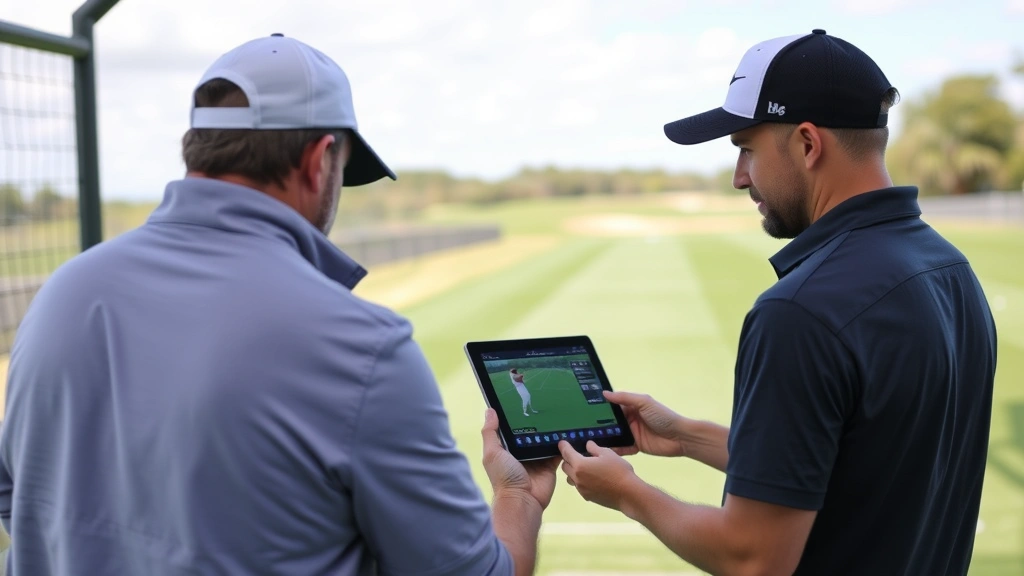
High-speed video analysis captures your swing at 240 frames per second or faster, allowing frame-by-frame examination of your mechanics. Comparing your swing to professional reference footage highlights specific differences that correlate with your performance issues. Video feedback is particularly effective because seeing is believing—it’s harder to deny a mechanical flaw when you can watch it in slow motion.
Swing analysis software uses artificial intelligence to track joint positions, angles, and sequences throughout your swing. Some systems provide real-time feedback, allowing you to feel the correction immediately. This immediate feedback accelerates the learning process considerably.
However, technology should complement rather than replace professional instruction. Data without interpretation is merely numbers. A skilled instructor helps you understand what the data means and how to address identified issues. The combination of technology and expert coaching produces optimal results.
FAQ
How often should I take golf lessons to improve my swing?
Most golfers benefit from monthly lessons combined with structured practice between sessions. Beginners might benefit from more frequent lessons—biweekly or weekly—to establish proper fundamentals. The key is consistency and focused practice between lessons. Many golfers make the mistake of taking occasional lessons without committed practice, which limits improvement significantly.
How long does it take to develop a consistent golf swing?
Developing a fundamentally sound swing typically requires 3-6 months of consistent practice and instruction. However, continued refinement and improvement continue indefinitely. Golf is a skill that rewards lifelong learning and practice. Even professional golfers continue working with coaches to maintain and improve their techniques.
What’s the most common swing flaw among amateur golfers?
The most prevalent issue is improper sequencing in the downswing, where golfers initiate the downswing with their hands and arms rather than their lower body. This reverses the proper kinetic chain and results in loss of power and consistency. The second most common flaw is poor posture, which cascades into numerous compensatory movements throughout the swing.
Should I focus on swing mechanics or course management first?
If you’re a beginner, focus on fundamentals and mechanics first. You need a foundation of solid technique before course management becomes relevant. Once you have a reasonably consistent swing, emphasizing course management and the mental game often produces faster score improvement than continued mechanical refinement.
How can I practice effectively without access to a golf course?
Range practice is valuable, but you can supplement it with short-game practice in your yard or at a local par three golf course near me. Chipping and putting practice don’t require a full course. Additionally, indoor simulators and swing trainers allow practice during bad weather. Mental rehearsal—visualizing successful shots—is also valuable practice that requires no equipment.
What role does fitness play in improving my golf swing?
Fitness significantly impacts golf performance. Flexibility, core strength, and lower body power directly influence swing mechanics and distance. Many swing issues stem from mobility or strength deficiencies rather than technical flaws. A comprehensive improvement program should include fitness training tailored to golf-specific demands, particularly focusing on hip mobility, thoracic spine rotation, and core stability.


