
Golf Strategies: Improve Your Game at Green Knoll
Green Knoll Golf Course stands as one of New Jersey’s most challenging and rewarding golfing destinations, attracting players of all skill levels seeking to refine their techniques and elevate their performance. Whether you’re a seasoned golfer or someone looking to develop fundamental skills, understanding strategic approaches specific to Green Knoll’s layout and conditions can dramatically improve your scorecard results. This comprehensive guide explores proven methodologies, course management techniques, and mental strategies that will help you master this demanding course.
The journey to becoming a proficient golfer extends beyond simply hitting balls at a driving range. It requires understanding course architecture, weather patterns, and the psychological aspects of the game. Green Knoll presents unique challenges with its elevation changes, water hazards, and strategically placed bunkers that demand both technical skill and intelligent course management. By implementing the strategies outlined in this guide, you’ll develop a more complete understanding of how to approach each hole with confidence and precision.

Understanding Green Knoll’s Course Layout
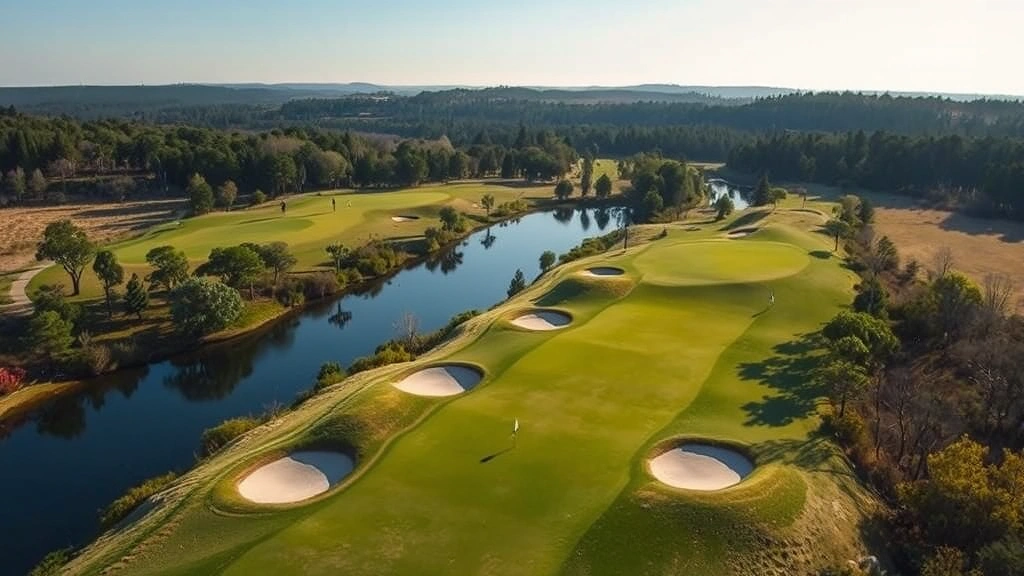
Green Knoll Golf Course features a distinctive layout that separates skilled players from casual golfers. The course’s design incorporates multiple elevation changes that significantly impact ball flight and distance calculations. Understanding the topography of each hole is fundamental to developing an effective strategy. The front nine presents relatively more forgiving conditions with wider fairways, while the back nine introduces tighter layouts and more aggressive hazard placement.
The par-72 course stretches across challenging terrain with several signature holes that test different aspects of your game. Holes 7 through 12 are particularly demanding, featuring water hazards that come into play on five consecutive holes. These demanding stretches require players to understand risk-reward scenarios and make intelligent decisions about club selection and shot placement. Studying detailed course critiques can provide valuable insights into how other experienced golfers approach these sections.
The greens at Green Knoll are notably undulating with slopes that dramatically affect putting lines and speed. Many greens feature false fronts and elevated back sections that reward accurate approach shots. Understanding how to read these subtle breaks and adjust your approach shot targets accordingly will immediately improve your scoring potential. The rough surrounding the greens is particularly punitive, making accurate iron play essential for success.
Fundamental Swing Techniques for Success
Developing a consistent, repeatable golf swing forms the foundation for all improvement at Green Knoll. The fundamentals of grip, stance, and posture cannot be overlooked, as these elements directly influence shot accuracy and distance control. A proper grip pressure—firm yet relaxed—allows for maximum club head speed while maintaining control throughout the swing motion. Your hands should position naturally on the club with the grip running diagonally across your palm, not your fingers.
Your stance width should match your shoulder width for full swings, with feet positioned slightly wider for longer clubs and narrower for wedges. Weight distribution during the setup should be neutral, with approximately 50% of your weight on each foot. This balanced position allows for proper weight transfer during the swing, which is essential for generating power and maintaining consistency. Many golfers at Green Knoll struggle because they fail to master these foundational elements before attempting advanced techniques.
The backswing should proceed with a smooth, one-piece takeaway where your shoulders and hips rotate together initially. This coordinated motion stores energy that releases through impact, generating both distance and accuracy. Avoid the common mistake of allowing your hands to move independently from your body rotation. Your club should reach parallel to the ground at the top of the backswing, with your lead arm relatively straight but not locked. This position allows for a powerful downswing transition while maintaining control.
The downswing initiates with a subtle lower body shift, transitioning weight toward your front foot while your upper body remains coiled. This sequence—lower body leading upper body—creates the lag position where the club head trails your hands at impact. This lag is critical for generating club head speed and compressing the ball properly. Impact should occur with your hands ahead of the ball, your body rotated toward the target, and your weight predominantly on your front foot.
Course Management and Strategic Shot Selection
Intelligent course management separates scratch golfers from mid-handicap players. Rather than always attempting the most aggressive shot, successful players at Green Knoll evaluate risk-reward scenarios for each shot. This strategic approach involves understanding your distances, identifying landing zones that provide optimal positions for approach shots, and acknowledging your personal skill limitations.
The layup strategy becomes crucial on several holes at Green Knoll. Rather than attempting to clear water hazards with marginal distance, laying up to a comfortable distance where you can execute your next shot with confidence often produces better results. This conservative approach prevents double-bogeys and keeps your scorecard clean. Many amateur golfers lose strokes through aggressive decisions that don’t align with their actual capabilities.
Target identification is another critical component of effective course management. Instead of simply aiming at the center of the fairway, identify specific landing zones that set up your approach shot optimally. For example, a hole with a right-to-left sloping fairway might be better approached from the right side, even if that seems counterintuitive. This positioning provides better angles to the pin and reduces the impact of your shot dispersion. Visit the LearnWise Blog for additional insights on strategic golf approaches.
Bailout areas are equally important to understand. Every hole has safe zones where you can recover from a poor shot. Identifying these areas before you swing allows you to play more confidently. At Green Knoll, understanding which side of the fairway offers better recovery opportunities can mean the difference between a bogey and a double-bogey. This advance planning reduces anxiety and leads to better decision-making under pressure.
Reading wind direction and speed requires practice and attention. Wind can add or subtract 10-15 yards from your normal distances and significantly affect ball flight direction. Learning to assess wind speed by observing tree movement and grass behavior improves your club selection accuracy. Headwinds typically require one additional club, while tailwinds suggest playing one club shorter than normal distance.

Mental Game and Confidence Building
Golf is fundamentally a mental game where confidence, focus, and emotional regulation directly impact performance. Research from the American Psychological Association demonstrates that mental skills training significantly improves athletic performance. Developing pre-shot routines creates consistency and reduces anxiety before each stroke. Your routine should include target identification, club selection, stance setup, and a final alignment check, performed in the identical sequence for every shot.
Visualization techniques enhance performance by allowing your brain to rehearse successful shots before execution. Before addressing the ball, spend 5-10 seconds visualizing the perfect shot—seeing the ball flight, landing spot, and final resting position. This mental rehearsal activates the same neural pathways as physical practice, priming your body for optimal execution. Many elite golfers attribute their consistency to this visualization practice.
Managing emotions during rounds is critical for maintaining steady scores. When you hit poor shots—and you will—accepting the result without frustration allows you to refocus on the next shot. Dwelling on mistakes leads to additional poor shots and spiraling scores. Developing resilience through positive self-talk and maintaining focus on controllable factors improves your ability to recover from setbacks. At Green Knoll, where several holes can produce frustrating results, this mental resilience becomes essential.
Confidence building occurs through deliberate practice and tracking progress. Maintaining detailed records of your performance at Green Knoll—scoring by hole, fairway accuracy percentages, and greens in regulation statistics—provides concrete evidence of improvement. This data-driven approach to self-assessment builds confidence based on actual progress rather than subjective feelings. Consider exploring golf course resources that provide detailed performance tracking tools.
Practice Routines That Deliver Results
Effective practice differs fundamentally from casual range time. Purposeful practice involves setting specific targets, tracking results, and progressively increasing difficulty. Rather than mindlessly hitting 50 balls at the range, structured practice sessions focus on particular shot types or distance ranges. For example, dedicating 20 minutes to 120-yard approach shots with various clubs develops consistency in this critical scoring zone.
Skill progression should follow a logical sequence: begin with short game fundamentals including chipping, pitching, and bunker play. These shots account for approximately 60% of strokes in a typical round, yet many golfers neglect this area. Developing touch and consistency within 100 yards of the green dramatically improves scoring potential. Green Knoll’s challenging approach shots and elevated greens make short game proficiency essential.
Distance control practice specifically benefits your performance at Green Knoll. Rather than simply hitting balls to maximum distance, practice hitting half-shots, three-quarter shots, and various distances with each club. This versatility allows you to adjust for wind conditions and course layout variations. Using alignment sticks and distance markers helps you develop accurate yardage awareness, which is crucial for club selection decisions.
Competitive practice simulates tournament conditions better than casual range sessions. Playing practice rounds where you keep score, follow course rules, and manage emotions develops skills that transfer to actual competitions. Additionally, practicing specific scenarios—like hitting approach shots to elevated greens or playing recovery shots from rough—prepares you for Green Knoll’s particular challenges.
Club Selection and Equipment Optimization
Selecting appropriate equipment for Green Knoll’s conditions significantly impacts your performance. Modern golf clubs offer various options designed for different swing speeds, skill levels, and course conditions. Understanding your personal distances with each club—not manufacturer specifications—is essential for accurate club selection. Many golfers overestimate their distances, leading to club selection errors that result in poor shot outcomes.
The driver selection becomes particularly important at Green Knoll, where several holes reward accuracy over maximum distance. A driver with higher launch angles and increased forgiveness often produces better results than a driver optimized for tour-level ball strikers. Similarly, selecting irons with appropriate shaft flexibility and club head design for your swing speed ensures consistent performance and distance predictability.
Putter selection impacts your scoring significantly, as putting accounts for approximately 40% of strokes in a typical round. At Green Knoll, where the greens feature significant undulation and break, selecting a putter that feels comfortable and inspires confidence becomes crucial. Many golfers benefit from trying various putter styles—blade, mallet, or high-MOI designs—to determine which suits their stroke mechanics and preferences best.
Golf ball selection also influences performance, particularly at a course like Green Knoll with demanding conditions. Premium golf balls designed for better players typically offer improved spin control and feel compared to distance-oriented balls. For most amateur golfers, selecting a consistent ball model and sticking with it allows for more accurate distance and performance predictions.
Weather Adaptation and Environmental Factors
Green Knoll experiences significant seasonal variations that affect playing conditions and strategy. Spring conditions often feature softer greens and fairways, allowing for more aggressive approaches. Summer heat firms up the course, requiring different shot selections and potentially adding 5-10 yards to your distances. Fall typically provides ideal playing conditions with moderate temperatures and consistent turf conditions. Winter play becomes challenging due to frozen conditions and reduced ball flight distances.
Temperature affects ball flight characteristics substantially. Colder air is denser, reducing carry distance by 2-4 yards per 10-degree temperature decrease. Conversely, warmer temperatures increase distance. Understanding these seasonal variations and adjusting club selection accordingly prevents distance miscalculations. Research from the United States Golf Association provides detailed information on equipment standards and performance factors.
Moisture levels impact ball flight and green speeds. Wet conditions produce softer landings and increased friction, reducing ball roll distance. Conversely, dry conditions allow the ball to roll further after landing, particularly on fairways and greens. Understanding these moisture effects helps you predict ball behavior and adjust your strategy accordingly. At Green Knoll, where water hazards feature prominently, understanding how moisture affects ball behavior becomes particularly important.
Elevation changes at Green Knoll interact with weather conditions to create unique playing situations. Higher elevation holes experience different air density effects, while exposed holes are more susceptible to wind effects. Learning how these environmental factors combine with course design allows you to make more informed strategic decisions. Consulting resources like the Professional Golfers’ Association provides additional guidance on environmental factors affecting play.

FAQ
What is the best time of year to play Green Knoll Golf Course?
Spring and fall provide ideal playing conditions at Green Knoll, with moderate temperatures and well-maintained course conditions. Summer offers longer daylight hours but firmer playing conditions, while winter play is challenging due to frozen turf and reduced ball flight distances. Check with the course for seasonal maintenance schedules that might affect specific holes.
How should I adjust my strategy for Green Knoll’s water hazards?
Water hazards at Green Knoll should be respected but not feared. Calculate your actual carrying distance honestly and consider layup strategies that position you for confident approach shots. Risk-reward analysis becomes critical—understand when aggressive attempts are justified based on your skill level and the potential consequences of failure.
What handicap level is Green Knoll appropriate for?
Green Knoll accommodates golfers of all skill levels. The course offers multiple tee options allowing adjustment of difficulty. Higher-handicap players should use appropriate tees and focus on course management strategies rather than attempting to match distance benchmarks of skilled players. The course design allows for competitive play across various skill levels.
How can I improve my scoring at Green Knoll’s signature holes?
Study detailed course critiques that break down each hole’s challenges and recommended strategies. Practice the specific shot types that these holes demand—elevated approach shots, water carries, or precision iron play. Play multiple rounds to develop familiarity with how your shots behave on these particular holes.
What practice should I prioritize before playing Green Knoll?
Focus on short game development, distance control with mid-irons, and mental resilience practice. Green Knoll punishes poor approach shots and missed putts significantly. Dedicate practice time to the specific challenges you’ll encounter—elevated greens, undulating putting surfaces, and recovery shots from rough. Your practice routine should specifically address these course-specific demands.
How do I manage course conditions on extremely windy days at Green Knoll?
On windy days, adjust your club selection upward for headwinds and downward for tailwinds. Focus on shot trajectory control rather than maximum distance. Crosswinds require intentional aim adjustments—aim into the wind and allow it to push your ball toward the target. Conservative strategy becomes even more important during windy conditions, as control becomes more challenging.


