
Improve Your Golf Swing: Coach Tips at Boise Ranch
Boise Ranch Golf Course stands as one of Idaho’s premier destinations for golfers seeking professional instruction and skill development. Whether you’re a beginner establishing fundamental techniques or an experienced player refining your swing mechanics, the coaching staff at Boise Ranch provides evidence-based instruction grounded in modern golf biomechanics and learning science principles. This comprehensive guide explores how to maximize your learning experience at this exceptional facility and implement proven strategies for rapid swing improvement.
The journey to a better golf swing requires understanding not just the mechanics of the swing itself, but also how your brain learns motor skills, processes feedback, and builds lasting muscle memory. At Boise Ranch, certified instructors combine video analysis technology, personalized coaching methodologies, and structured practice protocols to accelerate your development as a golfer. By leveraging both on-course experience and dedicated instruction, you’ll discover why this facility has become a trusted resource for golfers across Idaho and the surrounding region.

Understanding Swing Mechanics Fundamentals
A proper golf swing emerges from coordinated movement patterns involving your entire body, not just your arms and hands. Research in sports biomechanics demonstrates that the most efficient swings generate power through sequential activation of larger muscle groups—starting with your legs and core, progressing through your trunk, and finally expressing that energy through your arms and club. At Boise Ranch, coaches assess each student’s current swing mechanics using high-speed video analysis to identify inefficiencies and asymmetries that limit distance, accuracy, or consistency.
The grip represents your only connection to the club, making it foundational to swing development. Coaches at Boise Ranch evaluate grip pressure, hand positioning, and alignment relative to your body’s centerline. A neutral grip allows for proper wrist hinge during the backswing and controlled release through impact. Many golfers unconsciously develop compensatory grips that create inconsistency; professional instruction helps identify and correct these patterns before they become ingrained habits.
Your stance and posture establish the foundation for all subsequent swing movements. Proper posture involves maintaining neutral spine alignment, flexing your knees appropriately, and positioning your weight distribution to support efficient weight transfer. The golf course map at Boise Ranch shows how different holes present varying challenges that require swing adjustments; understanding fundamental mechanics ensures you can execute these adjustments consistently.
The takeaway phase initiates the backswing and sets the pattern for the entire swing sequence. During this critical phase, your club should move on plane—a three-dimensional path that promotes consistent strike patterns and shot direction. Coaches identify takeaway faults such as excessive inside movement or early wrist hinge that compromise subsequent swing positions and create compensatory movements through the rest of the swing.
Boise Ranch Coaching Philosophy and Methods
The coaching team at Boise Ranch employs a student-centered approach grounded in principles of motor learning and skill acquisition. Rather than imposing a single “correct” swing model, coaches recognize that individual differences in flexibility, strength, body dimensions, and athletic background necessitate personalized instruction. This approach aligns with research published in the Journal of Sports Sciences demonstrating that contextual interference and variable practice conditions enhance motor learning and transfer to competitive performance.
Boise Ranch coaches begin each coaching relationship with a comprehensive assessment addressing your current skill level, specific goals, existing swing patterns, and learning preferences. This diagnostic phase typically involves video analysis of your current swing, physical assessment of mobility and stability, and detailed discussion of your golf history and aspirations. By establishing this baseline understanding, coaches design individualized development plans that target your highest-leverage improvement areas.
The coaching philosophy emphasizes deliberate practice principles—focused, goal-directed training with immediate feedback designed to push you slightly beyond your current capability. Rather than simply hitting balls on the range, deliberate practice involves specific targets, varied conditions, and continuous adjustment based on results and coaching feedback. Research in expertise development, documented in American Psychologist, consistently shows that deliberate practice distinguishes elite performers from recreational participants across all domains, including golf.
Boise Ranch instructors also recognize the importance of immediate, accurate feedback for motor learning. When you execute a swing, your proprioceptive system provides intrinsic feedback about movement patterns, but this feedback often proves insufficient for identifying technical faults. External feedback from coaches—particularly when combined with video evidence—creates the cognitive dissonance necessary to modify ingrained movement patterns. This feedback should be specific, actionable, and limited in scope to avoid overwhelming your working memory capacity.
Video Analysis Technology and Feedback
Modern swing analysis technology has revolutionized golf instruction by providing objective, slow-motion visual evidence of movement patterns that occur too quickly for the human eye to perceive. Boise Ranch utilizes high-speed video capture systems that record your swing at 240 frames per second, enabling frame-by-frame analysis of critical positions and movement sequences. This technology transforms abstract coaching cues into concrete visual references that accelerate understanding and facilitate lasting behavioral change.
Video analysis reveals specific technical faults with precision that verbal description alone cannot achieve. For example, a coach might notice that your club shaft moves excessively inside the target line during your takeaway—a fault that, if left uncorrected, would create compensatory movements throughout the rest of your swing. By showing you slow-motion video evidence of this pattern compared to an optimal reference model, coaches help you develop a clear mental image of the desired movement pattern. This visual reference becomes the blueprint your nervous system uses to program corrected motor sequences.
The most effective video feedback includes multiple perspectives—down-the-line views that reveal club path and face angle relative to swing plane, front-view angles that show lateral movement and weight transfer, and overhead views that clarify rotational patterns and alignment. Boise Ranch coaches understand that three-dimensional movement requires multi-angle analysis to capture the complete picture. By reviewing your swing from these varied perspectives, you develop comprehensive understanding of your movement patterns and the specific adjustments needed.
Comparing your swing video to reference models of optimal technique provides powerful learning opportunities. When you see your takeaway positioned beside a professional golfer’s takeaway, the specific differences become apparent. This comparison activates your visual learning system and creates mental representations that guide future swing attempts. Research on observational learning demonstrates that watching skilled performers execute desired movements primes your motor system to replicate those patterns, particularly when combined with direct physical practice and coaching feedback.
Structured Practice Protocols for Rapid Improvement
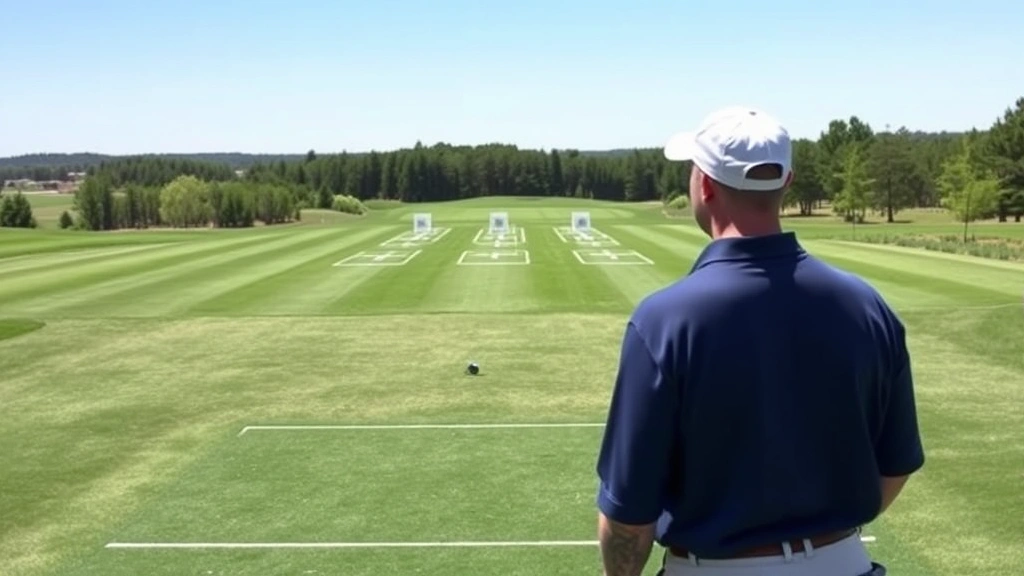
The range at Boise Ranch provides an ideal environment for implementing structured practice protocols designed to maximize learning efficiency. Rather than casual ball-striking, effective practice involves specific practice structures that challenge your motor system and force adaptation. One evidence-based approach involves variable practice—systematically varying practice conditions to enhance motor learning and transfer to novel situations.
Blocked practice, where you repeat the same shot repeatedly with minimal variation, feels productive but actually undermines long-term learning. Research in motor learning psychology shows that variable practice—alternating between different shot types, targets, and swing focuses—creates stronger, more transferable learning. At Boise Ranch, coaches might structure a practice session where you alternate between hitting drives with different targets, then transition to approach shots from varying distances and lies, then work on short-game shots around the practice green. This variation forces your motor system to continuously adapt, strengthening your ability to execute shots in unpredictable on-course conditions.
Another critical practice principle involves appropriate challenge levels—what learning scientists call the “zone of proximal development.” Practice that feels too easy fails to drive adaptation; practice that exceeds your current capability frustrates without producing learning. Effective coaches at Boise Ranch calibrate practice difficulty to keep you in this optimal learning zone, gradually increasing challenge as your capabilities expand. For example, if you’re working on your iron swing, a coach might begin with stationary balls on flat ground, progress to slightly uneven lies, then advance to balls positioned above or below your feet—each increment challenging your adaptive capacity without overwhelming it.
Coaches emphasize target-focused practice where each shot serves a specific purpose rather than simply accumulating repetitions. Instead of mindlessly hitting fifty balls, you might hit five shots to a 150-yard target, five shots to a 160-yard target, five shots to a 140-yard target, and so forth. This approach develops distance control and shot discrimination while maintaining engagement and motivation. The Hansen Dam Golf Course near Boise provides additional practice opportunities for applying skills developed at Boise Ranch in varied course conditions.
Rest and recovery between practice sessions proves equally important as practice itself. Research in neuroscience demonstrates that motor learning consolidation occurs partially during sleep, as your brain processes and stabilizes new movement patterns. Coaches recommend spacing practice sessions across multiple days rather than concentrating all practice into single intensive sessions. This distributed practice schedule aligns with decades of research showing superior long-term retention and transfer compared to massed practice approaches.
Mental Game Development and Course Management
Technical proficiency represents only one component of golf excellence; the mental game and strategic course management prove equally important. Boise Ranch coaches integrate psychological skill development into instruction, recognizing that golf’s unique demands—extended duration, self-paced execution, abundant opportunity for self-doubt—require specific mental training approaches. Research in sport psychology, published in Psychology of Sport and Exercise, demonstrates that mental skills training produces measurable improvements in competitive performance when integrated with technical instruction.
One essential mental skill involves attention management—directing your focus toward productive targets while filtering out distractions and counterproductive thoughts. During your swing, optimal focus narrows to a specific process cue—perhaps the feel of your weight transfer or your target line visualization. Coaches teach techniques for developing this focused attention, including pre-shot routines that anchor your mind to productive targets and shield you from anxiety-inducing thoughts. A consistent pre-shot routine signals your nervous system that it’s time to execute, activating trained movement patterns while minimizing conscious interference.
Another critical mental skill involves emotional regulation—maintaining composure and productive emotional states despite inevitable poor shots and adversity. Golf’s extended duration and low scoring margins mean that emotional reactions to setbacks directly impact subsequent performance. Coaches teach evidence-based emotional regulation strategies including controlled breathing, positive self-talk, and acceptance-based approaches that acknowledge disappointment without permitting it to derail focus and execution.
Course management represents the strategic dimension of golf excellence—making intelligent decisions about shot selection, risk assessment, and target selection based on your capabilities, course conditions, and competitive situation. Rather than always pursuing maximum distance or aggressive targets, superior course management involves matching shot difficulty to your demonstrated capabilities. Coaches help you develop realistic self-assessment skills that enable accurate judgment of your current capabilities under pressure, preventing the overconfidence that leads to unnecessary errors.
Equipment Optimization at Boise Ranch
While swing mechanics and mental skills represent the primary drivers of golf performance, equipment optimization plays a supporting role that shouldn’t be overlooked. Boise Ranch provides access to equipment analysis resources that help you select clubs, shafts, and specifications optimized for your swing characteristics and performance goals. Clubs are not interchangeable; different club designs, shaft flexes, and weight distributions interact with individual swing patterns to produce different launch characteristics, spin rates, and ultimately shot outcomes.
Proper club fitting involves measuring your swing speed, launch angle, spin rate, and shot dispersion patterns to identify equipment specifications that optimize performance. Modern launch monitors provide objective data about how your swing characteristics interact with specific club designs. A coach might determine that you produce excessive spin with your current driver, causing shots to balloon upward and lose distance. By testing alternative driver designs with lower spin profiles, you might discover equipment that better matches your swing, producing longer, more efficient ball flight.
The golf courses in San Diego area represent varied terrain and conditions; similarly, Boise Ranch courses present diverse challenges requiring potentially different equipment strategies. Understanding your equipment’s capabilities and limitations enables you to make strategic decisions about club selection and shot execution. Coaches help you develop this equipment literacy, ensuring you maximize the performance potential of your current equipment while identifying opportunities for strategic upgrades.
Comparing Instruction Options
When considering golf instruction, you’ll encounter various options ranging from public courses with staff instructors to private academies to online coaching platforms. The best online learning websites increasingly include golf instruction content, though nothing fully replaces in-person coaching with video analysis technology. Boise Ranch offers distinct advantages through its combination of on-site coaching expertise, video analysis technology, course access, and practice facilities—creating an integrated learning environment that accelerates skill development.
Compare instruction options by evaluating coach credentials and experience, available technology resources, practice facility quality, and instructional philosophy. The most effective coaches combine deep technical knowledge with understanding of motor learning principles and strong communication skills. Look for coaches who employ video analysis, provide specific actionable feedback, and customize instruction to your individual characteristics rather than imposing a universal swing model.
The Duke University Golf Course represents another quality facility offering instruction, yet Boise Ranch’s specialized focus on coaching and skill development provides advantages for students prioritizing swing improvement. Consider your geographic location, specific improvement goals, and learning preferences when selecting instruction providers. If you’re located in the Boise area, Boise Ranch’s integrated facilities and proven coaching methods make it an excellent choice for serious skill development.
Research from Journal of Sports Sciences confirms that deliberate practice with qualified coaching produces superior long-term development compared to self-directed practice. Investing in quality instruction accelerates your learning trajectory dramatically, potentially saving you years of inefficient practice and frustration. The coaches at Boise Ranch have invested in their own professional development and continue studying emerging research in motor learning, sports psychology, and biomechanics—ensuring their instruction reflects current scientific understanding rather than outdated approaches.
FAQ
How frequently should I take lessons at Boise Ranch?
Most students benefit from weekly lessons during intensive improvement phases, then transition to bi-weekly or monthly maintenance sessions once they’ve achieved their primary goals. Your coach can recommend optimal lesson frequency based on your goals, available practice time, and learning pace. Consistency matters more than frequency—regular weekly lessons typically outperform sporadic intensive sessions.
What should I expect during my first lesson?
Your first lesson will typically involve a comprehensive assessment including video analysis of your current swing, discussion of your goals and golf history, and evaluation of your mobility and stability. Your coach will explain findings and develop an initial improvement plan. Bring comfortable clothing, your own clubs if you prefer, and realistic expectations about the learning timeline.
How long does swing improvement typically require?
Meaningful improvement typically emerges within 4-6 weeks of consistent practice and instruction. However, lasting transformation usually requires 3-6 months of dedicated effort. Golf skill development follows predictable learning curves where initial improvements come relatively quickly, then plateau as you work on more subtle refinements. Your coach will help you maintain motivation through these plateaus by identifying new improvement targets.
Can Boise Ranch instruction help my short game and putting?
Absolutely. While full swing instruction receives significant attention, Boise Ranch coaches also specialize in short-game development including chipping, pitching, bunker play, and putting. Many golfers neglect short-game practice despite its disproportionate impact on scoring. The practice facilities at Boise Ranch support comprehensive game development addressing all aspects of golf performance.
What if I’m a complete beginner with no golf experience?
Boise Ranch welcomes beginners and has coaches specifically trained in foundational skill development. Beginning with proper fundamentals actually accelerates long-term learning compared to self-taught approaches that often develop compensatory patterns. Coaches will establish realistic timelines and help you build confidence while developing sound technical foundations.
How does Boise Ranch instruction differ from other local options?
Boise Ranch distinguishes itself through integrated facilities combining coaching expertise, video analysis technology, quality practice ranges, and course access. The coaching staff emphasizes individualized instruction grounded in motor learning research rather than one-size-fits-all methods. Their focus on deliberate practice protocols and structured skill development produces measurable improvement faster than recreational instruction approaches.


