
Improve Your Golf Skills? Pro Instructor Advice for Every Golfer
Whether you’re a beginner picking up your first club or an experienced golfer looking to refine your game, improving your golf skills requires a combination of proper technique, consistent practice, and expert guidance. The journey to becoming a better golfer isn’t just about hitting harder or swinging faster—it’s about understanding the fundamentals, developing muscle memory, and learning from those who have mastered the sport. This comprehensive guide draws on professional instructor advice to help you elevate your game and see measurable improvements on the course.
Many golfers underestimate the power of structured learning and deliberate practice. Just like pursuing educational courses that build professional skills, golf improvement requires commitment to a learning framework. When you understand the science behind each movement and the reasoning behind each technique, you’ll develop a deeper appreciation for the game and accelerate your progress significantly.

Master the Fundamentals of Your Golf Grip
The grip is the only connection between you and the club, making it absolutely essential to get this right. Professional instructors consistently emphasize that a proper grip is the foundation upon which all other golf skills are built. Without a solid grip, even the most technically perfect swing will produce inconsistent results.
There are three primary grip types: the overlapping grip (Vardon grip), the interlocking grip, and the ten-finger grip. The overlapping grip is most popular among professional golfers and intermediate players. In this grip, your right pinky finger overlaps the space between your left index and middle fingers. This creates a unified connection between both hands while maintaining individual control.
The interlocking grip, where your right pinky interlocks with your left index finger, works exceptionally well for golfers with smaller hands or those seeking maximum hand unity. The ten-finger grip, sometimes called the baseball grip, provides the most natural feel but can sometimes lead to less consistent hand action during the swing. Your choice depends on hand size, comfort level, and personal preference.
Grip pressure is equally important as grip type. Many struggling golfers maintain excessive grip pressure, which restricts the natural motion of the wrists and forearms during the swing. Professional instructors recommend maintaining a grip pressure of about 4-5 out of 10, where your hands remain relaxed yet secure. This allows for proper wrist hinge and smooth acceleration through the ball.
The grip also determines the clubface angle at address. A neutral grip—where the V formed by your thumb and index finger points toward your right shoulder—promotes a square clubface at impact. Understanding grip fundamentals prevents the most common swing faults and gives you immediate improvements in consistency and accuracy.
Develop a Consistent Swing Technique
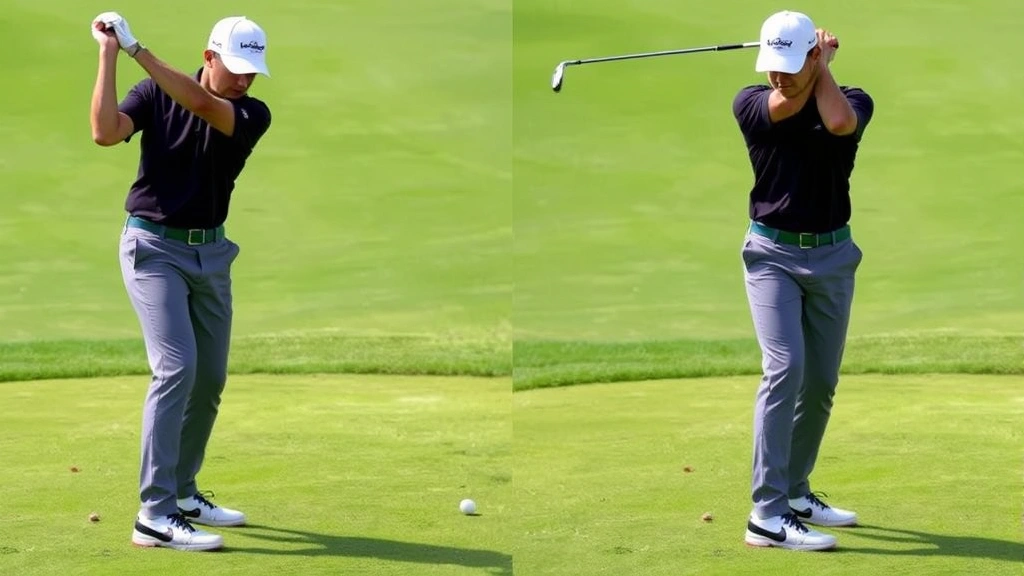
Your golf swing is a complex series of coordinated movements that must happen in precise sequence. Professional instructors break the swing into distinct phases: the setup, the backswing, the transition, the downswing, and the follow-through. Mastering each phase individually before combining them creates the foundation for a repeatable, reliable swing.
The backswing should be controlled and deliberate, not rushed. During this phase, your club moves away from the ball while your body rotates. Your left arm should remain relatively straight (though not rigid), and your wrists should naturally hinge as the club reaches waist height. Many amateur golfers struggle because they try to create power in the backswing, when in reality, the backswing simply loads energy that will be released during the downswing.
The transition is where many golfers lose efficiency. This brief moment between the backswing and downswing determines whether you’ll unleash power effectively or dissipate it. Professional instructors emphasize that the transition should feel smooth and sequential, with your lower body initiating the downswing before your upper body follows. This creates lag—the angle between your arms and the shaft—which is essential for generating clubhead speed and distance.
The downswing is where power is generated. Your hips begin rotating first, followed by your shoulders, arms, and finally your hands and club. This sequential rotation creates a whipping effect that accelerates the clubhead to maximum speed at impact. Many golfers try to hit with their hands and arms, losing the power that comes from proper body rotation.
The follow-through completes the swing and indicates whether you maintained balance and control throughout the motion. A balanced finish position—where you’re standing on your front leg with your back leg extended and your hands high—suggests you executed the swing properly. Professional instructors use the finish position as a diagnostic tool for identifying swing problems.
The Importance of Proper Stance and Posture
Before you even swing, your setup determines much of what happens during the motion. Your stance—the position of your feet, knees, and hips—creates the foundation for everything that follows. For a standard full swing, your feet should be shoulder-width apart, which provides stability without restricting rotation. Your knees should have a slight flex, not locked straight or excessively bent.
Posture at address is critical for both performance and injury prevention. Professional instructors emphasize that your spine should tilt slightly away from the target, with your shoulders positioned above your hips and your hands hanging naturally below your shoulders. Your head should remain still and centered throughout the swing, serving as the pivot point around which your body rotates.
Ball position varies depending on which club you’re using. With longer clubs like drivers, position the ball inside your left heel. With shorter irons, position the ball more toward the center of your stance. This variation allows you to strike the ball at the optimal point in your swing arc for each club type. Understanding how ball position affects your swing plane and angle of attack is fundamental to shot consistency.
Alignment is another critical aspect of setup that many golfers neglect. Your feet, knees, hips, and shoulders should all align parallel to your target line (or slightly closed for certain shots). Misalignment is one of the most common causes of poor shots, yet it’s completely preventable through proper setup routines. Professional instructors recommend using alignment aids during practice to develop consistent pre-shot alignment habits.
Practice Strategies That Actually Work
Practice is essential for improvement, but not all practice is equally effective. Research in sports psychology shows that deliberate practice—focused, goal-oriented practice with immediate feedback—produces far greater improvements than mindless repetition. Professional instructors design practice sessions around specific skill development rather than simply hitting buckets of balls.
Effective practice starts with clear objectives. Instead of practicing “swing mechanics” broadly, focus on specific elements like “maintaining lag through the transition” or “achieving a square clubface at impact.” Use training aids, video analysis, or instructor feedback to monitor your progress toward these specific goals. This targeted approach accelerates learning and prevents the frustration that comes from unfocused practice.
Range practice should simulate course conditions as much as possible. Rather than hitting the same club repeatedly, rotate through different clubs like you would on a course. Practice different shot types: draws, fades, high shots, and low shots. Create targets at various distances and practice hitting specific targets rather than just hitting balls in a general direction. This variation builds adaptability and course-readiness.
Short game practice deserves particular attention because scoring happens within 100 yards of the green. Professional instructors emphasize that improving your chipping, pitching, and putting produces faster score reduction than improving your long game. Dedicate significant practice time to shots from 50-80 yards, various chip shots, and putting from different distances and angles. These skills directly impact your scorecard.
Practice with purpose also includes regular practice rounds where you keep score and play by the rules. Simulating competitive conditions builds mental toughness and reveals which skills need additional work under pressure. Many golfers improve their range game but struggle on the course because they haven’t practiced in competitive conditions.
Mental Game and Course Management
Technical skill alone doesn’t guarantee golf success. The mental aspect of golf is equally important, and professional instructors increasingly focus on psychological training alongside technical instruction. Golf is unique among sports because you have time between shots to think, which can either help or hinder your performance.
Developing a consistent pre-shot routine creates mental stability and reduces anxiety. Your routine should include target selection, alignment, visualization, and one or two practice swings. This sequence should take the same amount of time for every shot, creating a familiar rhythm that calms your mind and prepares your body. Many professional golfers spend 30-45 seconds on their pre-shot routine, using this time to transition from thinking to executing.
Visualization—mentally rehearsing the shot before executing it—activates the same neural pathways as physical practice. Professional instructors recommend visualizing not just the ball flight, but the entire swing, the feel of the club in your hands, and the outcome. This mental rehearsal prepares your nervous system to execute the physical movement more effectively.
Course management involves making strategic decisions that optimize your score. This means understanding your distances, knowing your strengths and weaknesses, and playing to your abilities rather than beyond them. If you’re not consistently reaching a par-5 in three shots, don’t play it like you are. Accept bogey and move forward. Professional golfers score well not just because they hit great shots, but because they minimize big numbers by playing smart golf.
Handling adversity is another critical mental skill. Poor shots, bad breaks, and missed putts happen to every golfer. The difference between golfers who improve and those who don’t is how they respond to these setbacks. Professional instructors teach emotional regulation techniques like breathing exercises, positive self-talk, and refocusing strategies that help you move past mistakes and play the next shot with full commitment.
Choosing the Right Equipment for Your Game
Equipment quality and fit significantly impact your ability to improve. While you don’t need the most expensive clubs, you do need clubs that are properly fitted to your swing characteristics. Club fitting considers factors like swing speed, launch angle, spin rate, and preferred ball flight. Professional club fitters use launch monitors and swing analysis technology to recommend clubs that optimize your performance.
Club specifications matter more than brand name. The shaft flex, club length, lie angle, and loft affect how the club performs in your hands. A shaft that’s too stiff restricts your ability to generate distance; a shaft that’s too flexible produces inconsistent results. Similarly, incorrect lie angles cause shots to curve left or right regardless of your swing quality. Proper fitting addresses these variables.
Golf balls also affect performance. Different balls have different compression rates, cover materials, and dimple patterns that influence distance, spin, and feel. While premium balls cost more, using a quality ball appropriate for your swing speed ensures you get accurate feedback from your shots. Poor quality balls mask swing improvements and make feedback unreliable.
Golf shoes provide stability and traction during the swing, supporting your lower body mechanics. Proper footwear prevents slipping and allows your feet to remain planted during the swing, enabling effective weight transfer. Many golfers overlook this equipment aspect, but quality golf shoes improve stability and consistency.
Like exploring structured educational programs that develop specific competencies, investing in properly fitted equipment removes obstacles to improvement and accelerates your progress.
Finding Quality Instruction and Training Resources
Professional instruction accelerates improvement by providing expert feedback and personalized guidance. A qualified golf instructor identifies your specific swing flaws, explains the underlying biomechanics, and provides exercises to address them. Rather than practicing incorrect movements for months, instruction redirects your efforts toward productive improvement.
Quality instructors use video analysis and launch monitor data to provide objective feedback. Rather than relying on feel or subjective observation, technology reveals exactly what’s happening during your swing. This objective data helps you understand the cause-and-effect relationship between your movements and your shot results. Many golfers are surprised by what the data reveals about their swing.
Group lessons and clinics offer instruction at lower cost than private lessons while still providing professional guidance. These formats work well for learning fundamentals and practicing with peers who share similar goals. Many courses offer beginner clinics, short game workshops, and specialized instruction in specific areas.
Online resources and instructional videos supplement in-person instruction. However, be selective about your sources. Reputable golf instructors with credentials and extensive teaching experience provide reliable information. Following conflicting advice from multiple sources creates confusion and slows improvement. Consider resources from PGA Teaching Professionals, Golf Digest, and other established golf education organizations.
Much like pursuing specialized training programs, golf instruction provides structured pathways to skill development. Combining professional instruction with consistent practice and proper equipment creates the optimal environment for improvement.
If you’re looking to expand your learning beyond golf, consider exploring safety and outdoor education courses or other skill-building programs. Many golfers enjoy multiple outdoor pursuits, and structured education enhances all of them. For those interested in athletic facility management, understanding course design and facility operations provides valuable perspective on how golf courses like Deer Track Golf Course operate and maintain their playing surfaces.
For those interested in entrepreneurship within the golf industry, business education courses teach the fundamentals of starting golf-related ventures, from instruction businesses to course management operations.
FAQ
How long does it take to see improvement in golf?
With consistent, deliberate practice and proper instruction, most golfers see measurable improvement within 2-4 weeks. Significant improvement typically requires 3-6 months of regular practice. The timeline depends on your starting level, practice frequency, and instruction quality. Beginners often improve faster initially, while experienced golfers require more time to ingrain changes.
Should I take lessons as a beginner or practice on my own?
Lessons are highly recommended for beginners. Learning proper fundamentals from the start prevents the development of bad habits that are difficult to correct later. Even a few introductory lessons provide invaluable guidance on grip, stance, and swing basics. Trying to learn golf entirely through videos or trial-and-error often leads to frustration and slower progress.
What’s the most important golf skill to focus on first?
The grip and stance are foundational skills that affect everything else. Master these fundamentals before focusing on swing mechanics. Once your setup is solid, practice short game skills (chipping, pitching, putting) because these directly impact your scores. Many golfers neglect short game practice in favor of long game practice, but short game improvement produces faster score reduction.
How often should I practice to improve?
Consistent practice produces better results than sporadic intensive practice. Three to four practice sessions per week, combined with regular rounds, typically produces steady improvement. Quality matters more than quantity—one hour of focused, deliberate practice beats four hours of mindless ball-hitting. Even 30 minutes of targeted practice with clear objectives produces better results than unfocused practice.
Can I improve my golf game without professional instruction?
Yes, but professional instruction significantly accelerates improvement. Self-taught golfers often develop incorrect habits that limit their potential. An instructor identifies these issues early and redirects your efforts toward productive improvement. Even experienced golfers benefit from occasional instruction to refine technique and address emerging issues.
What role does equipment play in golf improvement?
Properly fitted equipment removes obstacles to improvement and allows your skills to be fully expressed. Poor equipment can mask skill improvements and make feedback unreliable. However, equipment is secondary to technique—excellent technique with average equipment outperforms poor technique with premium equipment. Invest in proper fitting once your fundamentals are solid.
How do I stay motivated during the learning process?
Set specific, measurable goals rather than vague objectives like “get better.” Track metrics like fairways hit, greens in regulation, and putts per round. Celebrate incremental improvements. Practice with others who share your commitment to improvement. Remember that golf is a lifelong learning journey—enjoy the process rather than becoming frustrated by the challenge.


