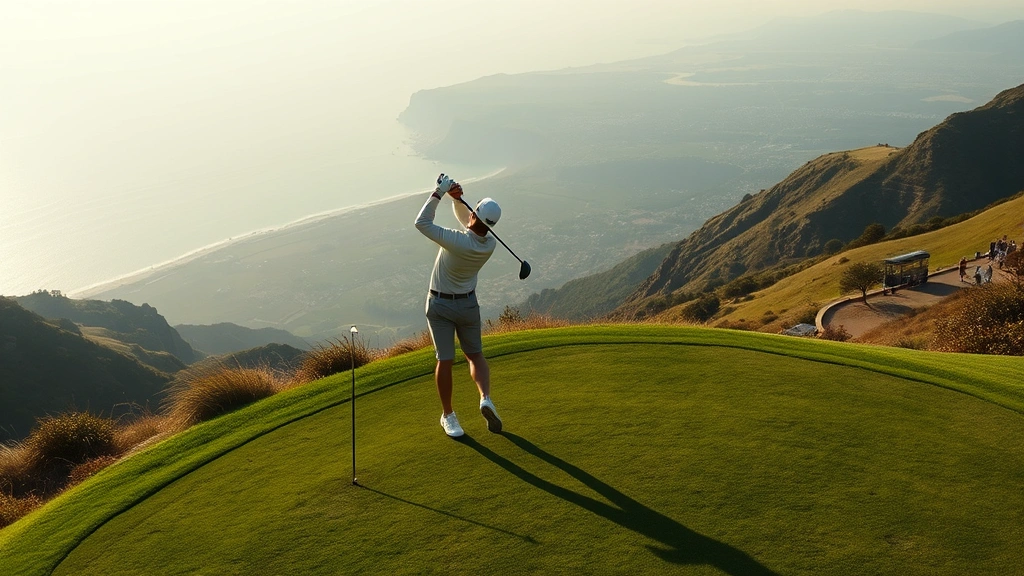
Master Golf at Delaveaga: Pro Insights and Course Strategy Guide
Delaveaga Golf Course in Santa Cruz, California, stands as one of the Pacific Coast’s most challenging and rewarding public golf destinations. Whether you’re a seasoned golfer looking to refine your game or an intermediate player seeking to break through performance plateaus, understanding the nuances of this championship-caliber course can dramatically improve your scores and overall enjoyment.
This comprehensive guide draws from professional coaching principles, course management strategies, and player testimonials to help you navigate Delaveaga’s demanding fairways, strategic water hazards, and undulating greens. We’ll explore specific techniques for different skill levels, analyze hole-by-hole strategies, and provide actionable insights that will transform your approach to this iconic course.
Understanding Delaveaga’s Layout and Design
Delaveaga Golf Course stretches across 6,400+ yards of meticulously maintained fairways, featuring a par-71 layout that demands precision, course management, and strategic thinking. The course design emphasizes risk-reward scenarios at virtually every hole, where aggressive play can yield birdies but also produces double-bogeys if execution falters.
The front nine plays relatively more forgiving, offering scoring opportunities for players who position themselves correctly off the tee. However, the back nine transforms into a formidable challenge with tighter fairways, more pronounced elevation changes, and strategically placed hazards that punish wayward shots. Understanding this structural difference is crucial for developing an effective nine-hole strategy.
The course’s routing takes advantage of natural Santa Cruz topography, incorporating elevation changes that affect ball flight, club selection, and distance calculations. Many players underestimate how elevation changes impact their typical distances—balls travel differently uphill versus downhill, and wind patterns vary significantly across different elevations on the property.
Water hazards define several signature holes, particularly on the back nine where lakes and creeks come into play on seven different holes. These aren’t merely cosmetic features; they’re strategic elements that require careful consideration during your pre-shot routine. Professional golfers consistently note that respecting water hazards through conservative club selection often yields better overall scores than attempting aggressive carries.
Reading Course Conditions and Weather Impact
Course conditions at Delaveaga fluctuate seasonally, with dramatic differences between morning rounds and afternoon play. Morning rounds typically feature firmer greens, faster fairways, and more predictable ball roll, while afternoon conditions—especially during summer months—can produce softer greens that accept aggressive approaches but require different distance calculations.
The Santa Cruz climate creates unique challenges throughout the year. Winter months bring moisture that softens fairways and reduces roll, requiring club selections that account for this added carry distance. Summer months create firm, fast conditions where precision becomes paramount and wind patterns become more pronounced. Spring and fall typically offer ideal playing conditions with moderate firmness and consistent weather patterns.
Fog, common during morning hours near the coast, affects visibility and temperature, which impacts ball flight. Many players report their morning rounds play differently than afternoon rounds on the same day—not just psychologically, but due to measurable differences in atmospheric conditions and course setup. Professional caddies at Delaveaga can provide invaluable insights about daily condition variations.
Wind patterns deserve particular attention. Prevailing ocean breezes create consistent wind corridors, but localized wind patterns near tree lines and elevation changes can create unexpected gusts. Spend time observing flag movement and tree sway before committing to your shot strategy. This observational discipline separates consistent scorers from erratic performers.
Greenkeeping excellence at Delaveaga means the course maintains exceptional conditions, but this also means greens run at tournament speeds. Reading break requires careful attention to subtle grain patterns, and many players benefit from walking the line from multiple angles rather than relying on a single perspective.
Strategic Tee Selection and Handicap Management
Choosing the correct tee box isn’t about ego—it’s about strategic course management. Delaveaga offers multiple tee positions specifically designed to accommodate different skill levels while maintaining the course’s challenge and playability. Professional instructors consistently recommend that players select tees based on recent scoring performance rather than traditional handicap categories.
For golfers scoring in the 90s, the forward tees eliminate unnecessary difficulty while still presenting meaningful challenges. The course design ensures that forward tees don’t feel like a “beginner” experience; they’re simply a different strategic puzzle. Intermediate golfers often find the middle tees most rewarding, as they present the designer’s intended challenge while remaining achievable through solid fundamentals.
Back tees at Delaveaga stretch the course significantly, adding 200+ yards and introducing hazards that don’t factor into play from forward positions. Scratch golfers and single-digit handicappers find appropriate challenge here, though even tour-level players respect this layout. The strategic principle remains constant: select tees where you can execute your game plan rather than where you hope to play someday.
This decision cascades through your entire round. Tee selection determines which fairways are reachable, which hazards become relevant, and which scoring opportunities present themselves. A golfer playing tees too far back will constantly face impossible shots, creating frustration and poor decision-making. Conversely, tees too far forward may eliminate the challenge that makes golf engaging.
Hole-by-Hole Shot Strategy
Delaveaga’s signature holes demand specific strategic approaches refined through thousands of player experiences. The par-4 eighth hole, for instance, plays significantly shorter than its yardage suggests due to elevation, but water guards the left side requiring a right-side bias and longer approach shots. Professional golfers consistently recommend laying up with a fairway wood or long iron rather than attempting driver, accepting a longer approach in exchange for safety.
The back-nine par-5s present classic risk-reward scenarios. While aggressive three-shot strategies are possible, many low-handicap players find that conservative approaches yield better results. Positioning your second shot to leave a full wedge rather than attempting a risky fairway wood that could find water often produces superior scoring outcomes.
Par-3 holes at Delaveaga deserve particular attention. Club selection on these holes determines everything, and overestimating distance is a common mistake. The course’s elevation changes mean that a hole playing 170 yards from the tee might require a 6-iron rather than a 5-iron due to uphill elevation. Spend time on the practice range identifying how your clubs perform at various elevations before attempting these shots during your round.
Approach shot strategy should emphasize accuracy over distance. Delaveaga’s greens feature significant undulation, meaning that approach shots landing in the wrong part of the green can leave 40-50 foot putts. Professional instruction emphasizes targeting specific sections of greens rather than simply attempting to reach the putting surface. This precision approach requires practice but yields dramatic scoring improvements.
When comparing course strategies, you might explore approaches used at Snoqualmie Falls Golf Course, which presents similar elevation challenges, or examine the strategic lessons from Birdwood Golf Course‘s water hazard management. These regional courses offer comparable strategic puzzles that reinforce decision-making principles applicable at Delaveaga.

Mastering the Mental Game
Golf psychology research from the American Psychological Association demonstrates that mental resilience determines performance more significantly than technical skill at competitive levels. Delaveaga’s challenging layout tests mental fortitude constantly, making psychological preparation essential for consistent scoring.
Pre-shot routine development creates a framework for consistent decision-making under pressure. This routine should include: clear target identification, hazard acknowledgment, club selection confirmation, and a specific trigger (perhaps a practice swing or breathing pattern) that initiates the actual shot. Professional golfers spend years refining these routines because consistency in process produces consistency in results.
Managing expectations around course difficulty prevents frustration that undermines performance. Delaveaga is a challenging course—expecting birdies on every hole sets up psychological disappointment. Instead, identify specific birdie opportunities (usually par-5s and shorter par-4s), accept pars as quality results on difficult holes, and view bogeys as acceptable outcomes when you’ve faced genuine challenges. This recalibrated perspective reduces frustration and improves decision-making.
Recovery from poor shots requires immediate mental reset. After a wayward drive or poor approach shot, many golfers compound the error through negative self-talk and tentative subsequent shots. Professional sports psychology emphasizes acceptance—acknowledge the poor shot, reset your mental state, and commit fully to the next shot. This practice dramatically improves performance on challenging holes.
Visualization techniques, supported by research in sports psychology journals, enhance performance when practiced regularly. Before your round, spend 10-15 minutes visualizing successful shots on challenging holes. During your round, briefly visualize the desired shot outcome before executing. This mental rehearsal activates the same neural pathways as actual practice.
Practice Techniques for Delaveaga Success
Effective practice specifically targets Delaveaga’s unique challenges rather than generic golf improvement. Many golfers practice indiscriminately, hitting balls without purpose or strategic intention. Deliberate practice, by contrast, focuses on specific weaknesses and course-specific skills.
Elevation change practice deserves emphasis. Spend range time hitting shots from elevated and downhill positions, noting how distances change and how trajectory adjusts. This hands-on experience develops the intuitive distance judgment that separates consistent scorers from erratic performers. Many ranges offer elevation practice stations; if available, use them extensively before your round.
Short-game practice around Delaveaga’s challenging greens builds confidence in high-pressure situations. Spend significant practice time on chip shots from 15-40 feet away, approach shots from 80-120 yards, and pitches from 40-80 yards. These shots determine the difference between scoring in the 70s versus 80s. Professional instruction emphasizes that tour players spend 60% of practice time on shots within 100 yards of the green.
Green-reading practice develops the subtle skills necessary for Delaveaga’s undulating putting surfaces. Practice reading breaks from multiple angles, developing a consistent read methodology, and trusting your initial read rather than second-guessing yourself. Many golfers improve dramatically simply by committing to their first read and eliminating the hesitation that produces poor strokes.
Course management practice involves playing 9-hole loops with specific strategic focuses. One round might emphasize conservative tee shots, another might focus on approach shot precision, and another might prioritize putting consistency. This varied focus develops comprehensive course management skills rather than narrow technical improvements.
How Delaveaga Compares to Regional Courses
Understanding Delaveaga’s relative difficulty and design philosophy becomes clearer when comparing it to similar regional courses. Home Course Golf Course DuPont presents similar strategic challenges with water hazards and elevation changes, though DuPont tends toward slightly tighter fairways and more compact design. Battleground Golf Course offers comparable yardage but features different hazard patterns and more forgiving green complexes.
Painted Hills Golf Course provides an interesting contrast with Delaveaga—while both feature elevation changes and scenic beauty, Painted Hills emphasizes visual drama while Delaveaga emphasizes strategic puzzle-solving. Many golfers find success at one course but struggle at another due to these design philosophy differences.
For golfers seeking golf course jobs near me or considering employment in course management, studying Delaveaga’s maintenance standards and design principles provides valuable educational insights into championship-level course operations.
The elevation management strategies applicable at Delaveaga transfer directly to courses like Snoqualmie Falls, where similar topography creates comparable distance and trajectory challenges. Conversely, the water hazard management skills developed at Delaveaga enhance performance at flatter courses with water features, as the strategic principles remain consistent even as tactical execution varies.
FAQ
What is the typical difficulty rating at Delaveaga Golf Course?
Delaveaga’s difficulty rating ranges from approximately 68.0 to 73.5 depending on tee selection, with slope ratings between 115 and 135. These ratings indicate a course that challenges intermediate and advanced golfers while remaining playable for beginners from appropriate tees. The slope rating particularly emphasizes how much more difficult the course plays for higher-handicap golfers compared to scratch golfers.
When is the best time of year to play Delaveaga?
Spring (March-May) and fall (September-November) typically offer ideal conditions with moderate temperatures, consistent course firmness, and manageable wind patterns. Summer months feature firm, fast conditions ideal for low-scoring, while winter months bring softer conditions that require distance adjustments. Early morning rounds generally provide the most consistent playing conditions.
How should I adjust my strategy for afternoon rounds versus morning rounds?
Morning rounds typically feature firmer fairways and faster greens, allowing longer carries and more aggressive approaches. Afternoon rounds often play softer, requiring longer clubs for similar distances and different green-reading approaches. Wind patterns typically intensify during afternoon hours, necessitating more conservative shot selection. Adjust your club selections accordingly and plan accordingly when booking tee times.
What practice should I prioritize before playing Delaveaga?
Prioritize short-game practice (within 100 yards), elevation-change practice on the driving range, and green-reading practice. Delaveaga punishes poor approach shots and weak putting more severely than poor driving. Spend 60% of practice time on shots within 100 yards and 40% on full swing shots.
How does Delaveaga compare difficulty-wise to nearby courses?
Delaveaga ranks among the more challenging public courses in the region, with difficulty comparable to championship-caliber layouts. Regional courses like those mentioned throughout this guide present similar challenges but with different design emphases. Most golfers find Delaveaga 2-3 strokes more difficult than their home courses, so scoring expectations should adjust accordingly.
Should I hire a caddy for my Delaveaga round?
Professional caddies at Delaveaga provide invaluable course knowledge, distance information, and strategic insights that improve scoring significantly. For first-time visitors or golfers serious about maximizing performance, caddy services represent an excellent investment. Even experienced players benefit from caddy perspective on course conditions and strategic options.
What equipment considerations are most important at Delaveaga?
Ensure your clubs are accurately fitted for your swing characteristics, as Delaveaga’s elevation changes require precise distance knowledge. Bring extra golf balls (courses with water hazards demand this), wear appropriate footwear for potentially wet conditions, and consider range finders or GPS devices for accurate distance calculation on unfamiliar holes. Quality golf balls perform more consistently on challenging courses, making premium ball selection worthwhile.


