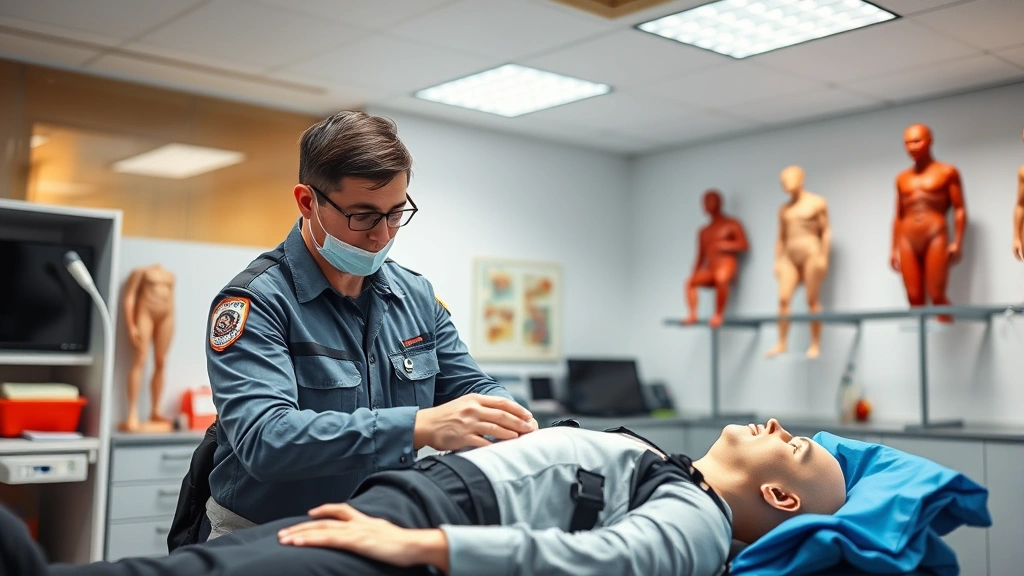
Find EMT Courses Near You: Expert Advice for Emergency Medical Training
Emergency Medical Technician (EMT) certification opens doors to a rewarding career in healthcare and emergency response. Whether you’re passionate about saving lives, seeking job security, or looking to advance in the medical field, finding the right EMT course near you is the crucial first step. This comprehensive guide walks you through locating accredited programs, understanding certification levels, and making informed decisions about your emergency medical training journey.
The demand for qualified EMTs continues to grow across the United States, with the Bureau of Labor Statistics projecting steady employment growth in emergency medical services. Your local area likely has multiple training options available, from community colleges to private training centers. Understanding how to evaluate these programs ensures you invest your time and money in quality education that meets industry standards and prepares you for real-world emergency response scenarios.
Understanding EMT Certification Levels
Before searching for an EMT course near me, it’s essential to understand the three primary certification levels in emergency medical services. Each level requires different training hours, skills, and knowledge, so knowing your career goals helps you select the appropriate program.
EMT-Basic represents the foundational certification level, typically requiring 110-150 hours of instruction. EMT-Basic training focuses on patient assessment, CPR, oxygen administration, and basic life support interventions. This level is ideal for individuals entering the field or seeking volunteer opportunities in their communities.
EMT-Intermediate bridges the gap between basic and advanced care, requiring approximately 200-400 hours of training depending on your state. This certification permits additional skills like intravenous access, medication administration, and advanced airway management. Many paramedic students complete intermediate certification as a stepping stone.
Paramedic represents the highest EMT certification level, demanding 1,200 hours or more of comprehensive training. Paramedics perform advanced life support, administer medications, interpret ECGs, and manage complex medical emergencies. This certification typically requires EMT-Basic certification as a prerequisite and often involves college-level coursework.
Your choice depends on career aspirations, available time, and educational background. Many professionals start with EMT-Basic, gain field experience, then pursue higher certifications. Understanding these distinctions helps you evaluate whether local programs match your professional objectives.
How to Search for EMT Courses in Your Area
Locating quality EMT training requires systematic searching using multiple resources. Start by checking your state’s EMS office website, which maintains lists of approved training providers. Most states have dedicated EMS regulatory agencies that publish current program information, ensuring you find officially recognized courses.
Community colleges represent excellent training sources, offering affordable, accredited EMT programs with flexible scheduling. These institutions often provide evening and weekend classes accommodating working adults. Contact your local community college’s continuing education or health sciences departments directly.
Fire departments frequently offer EMT training, particularly in areas where firefighters provide emergency medical services. Many departments welcome community members into their classes, providing hands-on training from experienced professionals. This path often leads to employment opportunities within the department.
Private training companies specialize in EMT certification courses, sometimes offering accelerated schedules or specialized instruction. While potentially more expensive than community college options, private providers often feature flexible scheduling and focused curriculum delivery. Research their accreditation status and student success rates thoroughly.
Online search strategies should include terms like “EMT certification near me,” “emergency medical technician training [your city],” and “paramedic courses [your state].” Combine searches with local medical facilities, hospitals, and ambulance services, which often sponsor or recommend training programs.
Networking within healthcare communities provides valuable insights. Contact local hospitals’ human resources departments, speak with paramedics and EMTs working in your area, and ask about programs they recommend. Personal recommendations often reveal program quality that doesn’t appear in online searches.
Accreditation and Program Quality Standards
Choosing an accredited program ensures your certification meets national standards and is recognized across state lines. The National Highway Traffic Safety Administration (NHTSA) establishes national standard curricula for EMT training, though individual states maintain authority over certification requirements.
Verify that your chosen program follows the current NHTSA EMT curriculum, which provides standardized competencies all EMTs should master. Programs should clearly communicate their curriculum alignment and provide documentation of accreditation status.
Commission on Accreditation of Allied Health Education Programs (CAAHEP) accreditation indicates rigorous program standards and regular quality assessments. Many community college programs hold CAAHEP accreditation, though state-approved programs without this credential may still provide excellent training.
Instructor qualifications matter significantly for training quality. Ask programs about instructor credentials, experience levels, and ongoing professional development. Instructors should hold current certifications and possess substantial field experience.
Student success metrics reveal program effectiveness. Request information about certification exam pass rates, graduate employment rates, and student satisfaction scores. Programs achieving high pass rates on the National Registry of Emergency Medical Technicians (NREMT) examination demonstrate strong educational outcomes.
State approval status proves essential. Your program must be approved by your state’s EMS office to issue certifications recognized within your state. Verify this status directly with state regulators rather than relying solely on program claims.
Course Formats and Schedule Options
Modern EMT training accommodates diverse schedules through varied course formats. Understanding available options helps you select a program fitting your lifestyle and learning preferences.
Full-time intensive programs compress training into 3-6 weeks of daily classes. These accelerated courses suit career-changers and individuals without work obligations. While demanding, intensive formats allow rapid certification completion and immediate employment entry.
Part-time evening and weekend classes span 8-16 weeks, perfect for working professionals. These programs typically meet 2-4 evenings weekly plus weekend sessions, allowing continued employment during training. This format requires strong self-discipline but provides income stability during career transition.
Hybrid online-classroom combinations increasingly popular, deliver theory online while maintaining essential hands-on clinical practice in person. This format maximizes flexibility while preserving crucial practical skill development that cannot occur remotely.
Weekend warrior programs concentrate instruction into consecutive weekends over several months. Though time-intensive on weekends, this format allows weekday work continuation and suits individuals with predictable weekend availability.
Clinical practicum requirements cannot be completed online. All programs include mandatory ride-alongs with operating ambulance services and emergency department rotations. These hands-on experiences are non-negotiable components of legitimate EMT training.
Consider your learning style, work schedule, family obligations, and financial situation when evaluating formats. The best program is one you can complete successfully while maintaining personal and professional responsibilities.
Cost Factors and Financial Assistance
EMT training costs vary significantly based on program type, location, and certification level. Community college basic EMT programs typically cost $500-$1,500, while paramedic programs range from $3,000-$8,000. Private training companies may charge $800-$2,500 for basic certification.
Additional expenses beyond tuition include textbooks ($100-$200), uniforms and equipment ($150-$300), certification exam fees ($100-$200), and background check requirements ($50-$100). Budget comprehensively to avoid financial surprises during your training journey.
Financial assistance opportunities reduce training costs significantly. Many employers offer tuition reimbursement for employees pursuing EMT certification, particularly healthcare facilities and fire departments. Ask your current employer about educational benefits.
Scholarships and grants from EMS organizations, healthcare foundations, and community groups support EMT training. Research local and national opportunities through your state EMS office, professional associations, and community foundations.
Payment plans and financing options allow spreading costs across months. Community colleges often provide payment plans, while private lenders offer education loans specifically for medical training programs.
Veterans benefits may cover EMT training through VA education programs. Military service members and veterans should contact their VA representative to explore available educational funding.
Prerequisites and Entry Requirements
Most EMT programs require high school diploma or GED completion as baseline qualification. Some programs accept students without these credentials but may require additional preparation coursework.
Age requirements typically mandate minimum age of 18 years at program completion. Some programs accept younger students but delay certification until reaching 18.
Physical requirements ensure candidates can perform demanding emergency medical work. Programs may assess lifting capacity (typically 100+ pounds), standing tolerance, and ability to work extended shifts. Individuals with physical limitations should discuss accommodations with program directors.
Background checks are standard requirements. Most programs require clean criminal records, though minor infractions may not disqualify candidates. Programs vary regarding which offenses cause automatic disqualification.
Drug screening occurs in most programs and employment settings. Maintain sobriety throughout training and maintain employment eligibility status.
CPR certification is often required before or during EMT training. Obtain CPR certification through American Heart Association or American Red Cross if not already current.
Medical clearance may be required, particularly for programs with extensive clinical components. Programs may require documentation that you’re medically capable of performing EMT duties.
Specific prerequisite courses vary by program. Some paramedic programs require anatomy, physiology, or chemistry courses. Clarify prerequisites before enrolling to avoid enrollment delays.
Preparing for Your EMT Journey
Successful EMT training requires more than enrollment. Strategic preparation enhances learning outcomes and accelerates certification achievement.
Academic preparation strengthens your foundation. Review basic anatomy and physiology before starting. Many programs provide preparatory materials; study these thoroughly. Strong anatomy knowledge accelerates learning of EMT-specific pathophysiology.
Physical preparation ensures you handle training demands. EMT training involves extensive standing, walking, lifting, and practicing emergency procedures. Maintain cardiovascular fitness and upper body strength before starting.
Time management planning prevents overwhelm. Calculate total weekly hours including class time, study, clinical shifts, and personal commitments. Ensure realistic scheduling without excessive stress.
Financial planning prevents mid-program stress. Gather tuition, secure financial assistance, and budget for additional expenses. Avoid financial surprises derailing your progress.
Mental preparation readies you for challenging content. EMT training covers trauma, death, and difficult patient scenarios. Prepare emotionally for these realities and understand that some stress during training is normal.
Professional networking begins before training. Connect with local EMS professionals, attend ride-alongs if possible, and understand workplace culture. These connections often lead to employment opportunities post-certification.
Study strategies optimize learning. Utilize active recall, practice questions, and group study sessions. Form study groups with classmates to reinforce learning and build professional relationships.
Remember that choosing the right course offerings through our comprehensive course offerings guide helps you identify quality programs matching your needs.
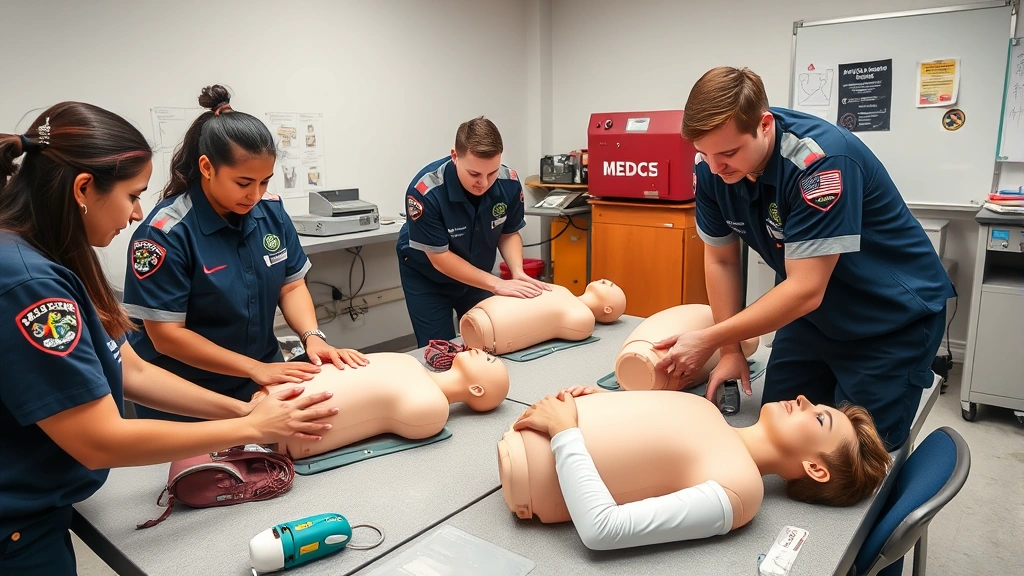
” alt=”EMT student practicing patient assessment techniques on manikin during hands-on training session in clinical simulation lab”>
Post-certification success depends on early preparation and intentional skill development. Many successful EMTs began preparation months before formal training, creating strong foundations for accelerated learning.
Advancing Your EMT Career
EMT certification opens diverse career pathways beyond traditional ambulance services. Understanding advancement opportunities motivates continued professional development.
Fire department careers represent primary EMT employment. Most fire departments require EMT certification for firefighter positions, combining emergency response with medical care. These positions offer competitive salary, benefits, and job security.
Hospital-based roles utilize EMT skills in emergency departments, trauma centers, and patient transport services. Hospital employment often provides regular hours, continuing education support, and advancement opportunities.
Private ambulance services employ the majority of working EMTs. These companies range from small local services to large national organizations, offering varied schedules and specialization opportunities.
Specialized EMS roles include flight paramedics, tactical EMS, wilderness medicine, and community paramedicine. These specialized positions often require additional certification beyond standard paramedic training.
Educational positions allow experienced EMTs to train future generations. Many EMTs transition to instructor roles, combining patient care with teaching responsibilities.
Paramedic advancement represents the most common career progression. EMT-Basic certification serves as foundation for paramedic training, which significantly increases earning potential and clinical responsibility.
Professional development through continuing education maintains current knowledge and develops specialized skills. Many states require ongoing education for certification renewal, encouraging lifelong learning within the profession.
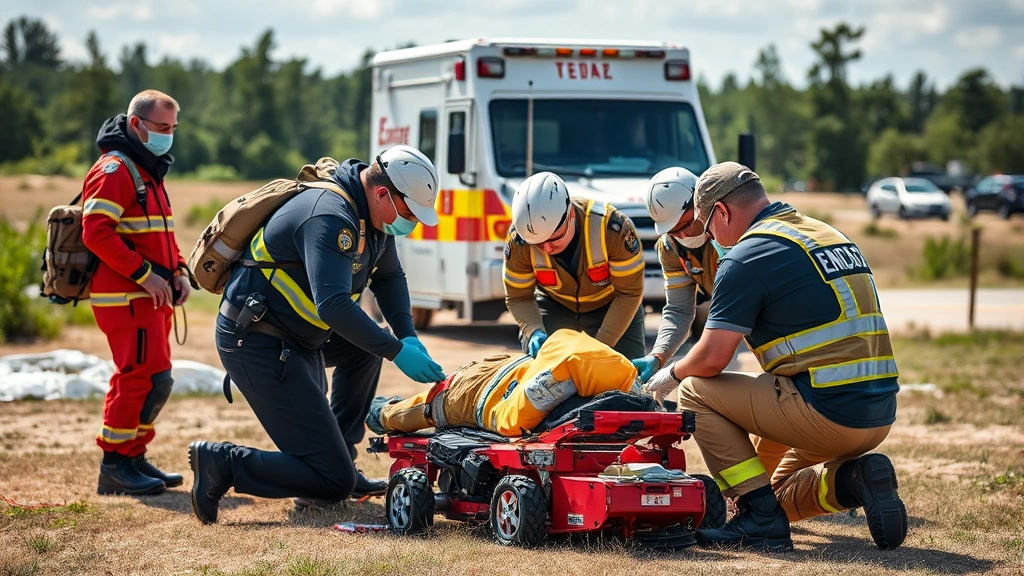
” alt=”Paramedic team performing cardiopulmonary resuscitation on patient during emergency response training demonstration outdoors”>
FAQ
How long does it take to become an EMT?
Basic EMT certification typically requires 4-16 weeks depending on program format. Intensive full-time programs complete in 3-6 weeks, while part-time evening programs span 8-16 weeks. Paramedic certification requires 6-24 months including prerequisites and field experience.
Can I take EMT courses online?
Hybrid programs deliver theory content online while requiring in-person clinical practice and skills labs. Pure online EMT certification is not possible because hands-on clinical experience is mandatory. Verify that online components meet your state’s requirements before enrolling.
What’s the difference between EMT-Basic and Paramedic?
EMT-Basic provides foundational emergency medical care including CPR, oxygen administration, and basic life support. Paramedics complete advanced training enabling medication administration, IV access, ECG interpretation, and advanced airway management. Paramedic training requires significantly more hours and typically requires EMT-Basic certification first.
Do I need a high school diploma for EMT training?
Most programs require high school diploma or GED. Some programs accept students without these credentials but may require additional preparation. Contact programs directly regarding specific diploma requirements.
How much does EMT certification cost?
Community college basic EMT programs cost $500-$1,500. Paramedic programs range $3,000-$8,000. Private training companies may charge $800-$2,500 for basic certification. Additional expenses include books, uniforms, exam fees, and background checks totaling $300-$600.
What’s the NREMT exam?
The National Registry of Emergency Medical Technicians (NREMT) examination is the standardized assessment most states require for EMT certification. The computer-adaptive test evaluates knowledge and clinical decision-making across emergency medical scenarios.
Can I work while taking EMT courses?
Yes, many students work while pursuing EMT certification through part-time evening and weekend programs. Full-time intensive programs may not accommodate outside employment. Plan your schedule carefully to balance work, study, and clinical requirements.
What happens after I complete my EMT course?
After course completion, you register for the NREMT examination. Upon passing, you apply for state certification through your EMS office. Once certified, you’re eligible for EMT employment with ambulance services, fire departments, hospitals, and other healthcare organizations.
Are there continuing education requirements?
Yes, most states require continuing education for certification renewal. Requirements vary but typically include 24-72 hours every 2-4 years. Many employers provide continuing education opportunities as part of employment benefits.
Can I transfer my EMT certification to another state?
NREMT certification facilitates interstate transfer. Most states recognize NREMT certification for reciprocal certification. Contact your destination state’s EMS office regarding specific transfer requirements and any additional state-specific testing needed.


