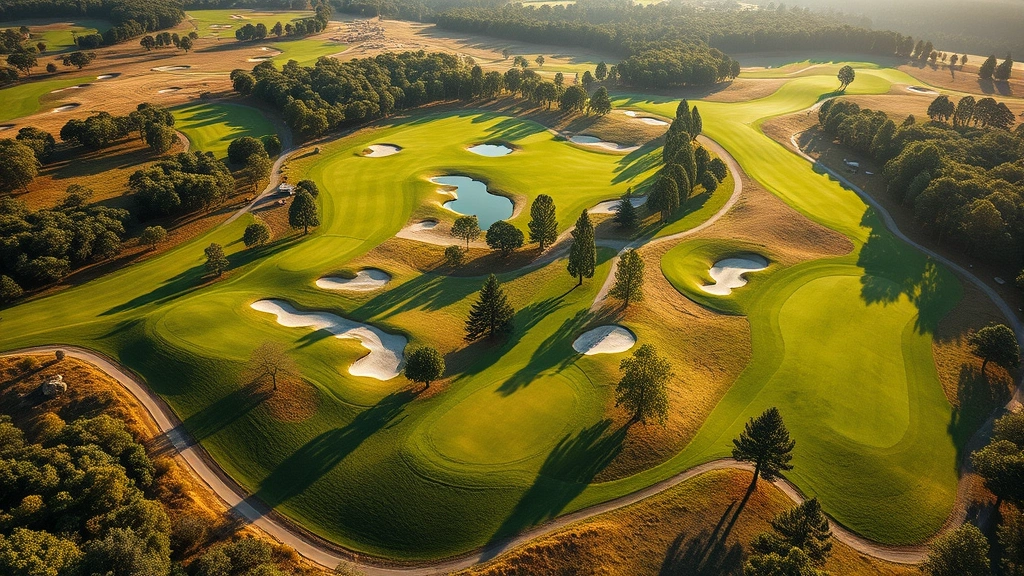
Golf Course Design: Expert Insights and Modern Approaches
Golf course design represents a sophisticated blend of art, science, and environmental stewardship that transforms raw land into a challenging yet enjoyable recreational landscape. Whether you’re studying landscape architecture, pursuing a career in golf management, or simply curious about how courses like the Diablo Creek Golf Course come to life, understanding the principles behind course design provides valuable insight into this specialized field. The design process involves careful consideration of terrain, drainage, vegetation, player experience, and sustainability—factors that separate exceptional courses from mediocre ones.
Modern golf course designers face unprecedented challenges, including environmental regulations, water conservation requirements, and the need to create layouts that accommodate players of varying skill levels. Historical courses built decades ago, such as those found in Bergen County Golf Courses, often showcase design principles that have evolved significantly. Today’s designers build upon this legacy while incorporating contemporary knowledge about turf management, ecological preservation, and player psychology to create courses that are both beautiful and sustainable.

Fundamental Principles of Course Design
The foundation of excellent golf course design rests on several core principles that experienced designers use consistently. Strategic challenge means creating holes that reward good shots while penalizing poor ones without becoming unfairly punitive. Visual appeal ensures that players enjoy the aesthetic experience of moving through the landscape, with attractive vistas and interesting elevation changes. Player accessibility requires designing courses where golfers of different abilities can enjoy the game—typically achieved through varying tee positions and strategic hazard placement.
Expert designers also prioritize playability consistency, ensuring that each hole’s difficulty relates logically to par and that the overall course difficulty progresses sensibly. This principle applies whether you’re designing a championship layout or a more modest facility where golf course jobs focus on daily operations and member satisfaction. The best designs create what professionals call strategic variety—each hole presents different challenges requiring different approaches, preventing the course from becoming monotonous.
According to research from the American Society of Landscape Architects, successful golf course design balances aesthetic considerations with functional requirements. Historical analysis of courses demonstrates that layouts emphasizing natural features over excessive earthmoving tend to age better and require less intensive maintenance over decades of play.
Site Analysis and Master Planning
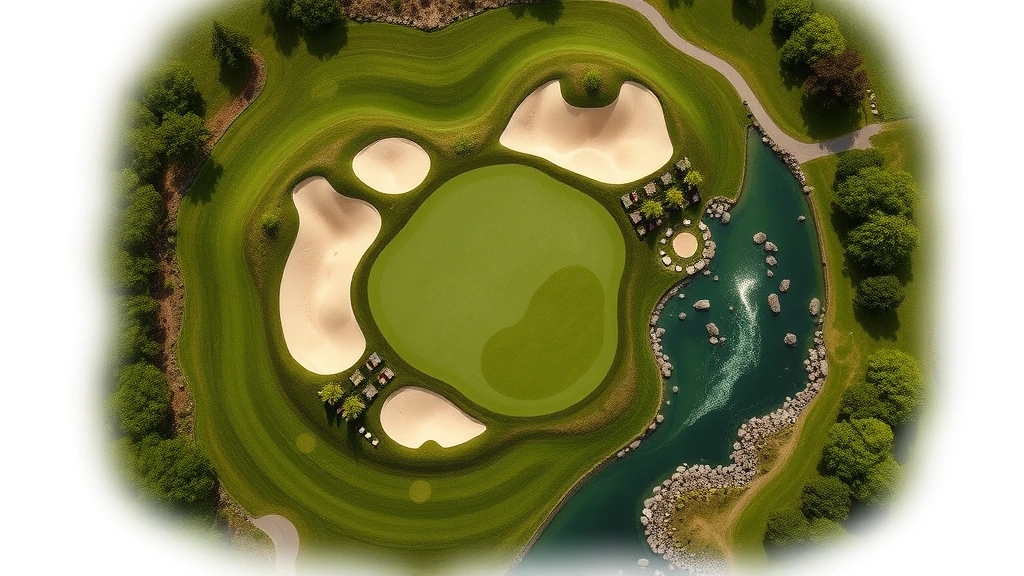
Before a single shovel touches the ground, professional designers conduct exhaustive site analysis examining topography, soil composition, hydrology, vegetation, and existing structures. This phase determines what’s possible on a given property and identifies constraints that will shape the final design. Topographic surveys reveal elevation changes that can be leveraged for dramatic holes or that present challenges requiring creative solutions.
Soil analysis proves critical because different soil types affect drainage, compaction, and turf establishment differently. A site with naturally poor drainage might require extensive subsurface work, while another location might feature ideal conditions for quick establishment. Designers study Golf Course Superintendents Association guidelines to understand how soil characteristics influence long-term maintenance requirements and costs.
Master planning involves creating a comprehensive vision for the property that addresses not only the 18 holes but also clubhouse location, practice facilities, parking, and support areas. This holistic approach ensures efficient operations and prevents costly conflicts between functional areas. Experienced designers consider future expansion possibilities, maintenance accessibility, and spectator flow if tournament play is anticipated.
Environmental assessment during master planning identifies sensitive areas requiring protection—wetlands, endangered species habitat, groundwater recharge zones, and view corridors. Many jurisdictions now require detailed environmental impact assessments before approval, making this phase increasingly important for legal and regulatory compliance.
Routing and Hole Configuration
Routing—determining how the course flows across the property—represents one of design’s most critical decisions. Expert designers balance numerous competing interests: aesthetic variety, difficulty progression, natural feature integration, and operational efficiency. The traditional routing pattern moves outward from the clubhouse for the front nine and returns for the back nine, though modern designs sometimes employ different patterns to maximize land use or create distinctive experiences.
Hole configuration involves determining each hole’s length, par, and basic shape. Designers typically include variety—some short par 3s that don’t require long carries, medium par 4s emphasizing accuracy, longer par 4s and par 5s testing power and strategy. Balanced hole distribution ensures the course doesn’t become weighted toward one par type, which would reduce strategic variety and playability satisfaction.
Effective routing considers hole sequencing, with difficult holes strategically placed rather than clustered. Many designers place a particularly challenging hole early to establish respect for the course while avoiding excessive difficulty that discourages continued play. Similar principles apply to courses like Forest Dale Golf Course, where routing through varied terrain creates natural visual interest and strategic options.
Modern routing also accounts for traffic flow efficiency, ensuring that maintenance vehicles can access all areas, spectators can view tournament play effectively, and pace of play remains reasonable. Poor routing can create bottlenecks where groups wait excessively, diminishing the playing experience significantly.
Shaping and Grading Strategies
Shaping and grading transform the raw site into playable holes with interesting contours, strategic features, and proper drainage. Expert designers use grading to create visual drama—elevated tees overlooking valleys, dramatic elevation changes from green to next tee, and strategic mounding that frames shots without appearing artificial. The goal involves making earth movement appear natural, as though the landscape always possessed these features.
Bunker placement demonstrates design sophistication clearly. Strategic bunkers reward good shots by providing safe landing areas while penalizing poor shots. Bunker positioning relates to typical player distances at different skill levels—bunkers placed where average golfers miss shots prove more effective than those positioned at distances most players won’t reach. Modern designers study PGA Tour statistics regarding player distances to position hazards effectively across different tee distances.
Green contouring requires particular expertise, as green complexity directly affects playability and maintenance difficulty. Excessive slope makes greens virtually unplayable, while flat greens eliminate strategic putting interest. Expert designers create functional green complexes with moderate slope that provides strategic interest while remaining playable and maintainable. Slope typically ranges from 2-4% for most greens, with specific slopes near edges and pin positions.
Fairway shaping employs several techniques: crowned fairways shed water naturally, side-slope fairways encourage shots toward preferred landing areas, and width variation creates strategic options where wider areas reward aggressive play while narrower sections encourage conservative approaches. The best designs use these techniques subtly so they feel natural rather than contrived.
Drainage and Water Management
Proper drainage represents perhaps the most essential technical requirement in golf course design, determining whether courses remain playable year-round or become unusable during wet periods. Expert designers implement comprehensive drainage systems combining surface drainage (slopes directing water toward collection points), subsurface drainage (tile systems removing excess groundwater), and strategic pond placement that serves both drainage and aesthetic functions.
Modern drainage design increasingly incorporates Low Impact Development (LID) principles, which manage stormwater on-site rather than directing it off-property. Rain gardens, bioswales, and constructed wetlands filter stormwater while recharging groundwater, reducing environmental impact. These features also create visual interest and wildlife habitat, enhancing course aesthetics while addressing regulatory requirements.
Water feature integration serves multiple purposes: drainage management, aesthetic enhancement, and strategic challenge. Ponds and streams positioned thoughtfully create dramatic holes while managing water flow. However, poorly positioned water features can create maintenance nightmares and excessive difficulty. Expert designers use hydrologic modeling to predict water behavior during various rainfall events, ensuring systems function properly year-round.
Irrigation system design works in concert with drainage—efficient irrigation prevents oversaturation while maintaining playable conditions during dry periods. Modern systems employ soil moisture sensors and weather-based controllers that adjust watering based on actual conditions rather than fixed schedules, reducing water consumption significantly while improving turf quality.
Turf Selection and Maintenance Integration
Successful course design requires intimate knowledge of turf species and their maintenance requirements. Designers select grasses based on climate, soil type, traffic patterns, and maintenance budget. Cool-season grasses like bentgrass and fescue thrive in northern regions but require intensive management, while warm-season grasses like bermuda and zoysia suit southern climates with lower maintenance demands.
Expert designers consider maintenance integration throughout the design process, not as an afterthought. Course layouts that facilitate efficient maintenance—clear access routes, manageable slope angles, logical bunker placement—reduce long-term costs and environmental impact. Courses with poor design from a maintenance perspective often require excessive chemical inputs, water use, and equipment wear to remain playable.
Designers also specify transition zones between different turf types, rough areas that filter stormwater while reducing mowing requirements, and native plantings that require minimal maintenance while enhancing habitat value. These elements, seen in quality facilities like Reeves Golf Course, demonstrate how thoughtful design reduces operational burden while improving environmental performance.
Specifications developed during design phase guide superintendents regarding acceptable turf quality, irrigation timing, and pest management approaches. Good design documents communicate designer intent regarding appearance, playability, and maintenance philosophy, enabling long-term consistency even as different superintendents manage the course.
Environmental Considerations
Contemporary golf course design emphasizes environmental stewardship, recognizing that courses must coexist harmoniously with surrounding ecosystems. Wildlife habitat creation involves preserving existing native vegetation, restoring degraded areas, and designing features that support beneficial species. Native plant buffers around water features, diverse rough areas, and strategic tree preservation enhance biodiversity while reducing maintenance requirements.
Water conservation has become increasingly critical, particularly in arid and semi-arid regions. Expert designers incorporate drought-tolerant turf varieties, efficient irrigation technologies, and landscape designs that minimize water demand. Some modern courses achieve playability with 30-40% less water than traditionally designed courses through careful species selection and design approach.
Chemical use reduction represents another important environmental consideration. Strategic bunker placement and design minimizes pest pressure, while diverse plant communities reduce disease incidence naturally. Designers increasingly specify organic management approaches and integrated pest management (IPM) strategies that reduce or eliminate pesticide and fungicide applications.
Stormwater management design prevents pollution of downstream water bodies by filtering runoff through vegetated areas before entering water features or leaving the property. This approach, supported by EPA environmental guidelines, protects water quality while managing runoff volume effectively.
Player Experience Design
Ultimately, golf course design succeeds or fails based on player experience. Expert designers understand that memorable rounds combine physical challenge with visual beauty, strategic interest, and emotional satisfaction. This requires understanding psychology—how players perceive difficulty, how visual features influence decision-making, and how course flow affects enjoyment across 18 holes.
Strategic design creates multiple play options on most holes, allowing different players to approach shots differently based on ability and risk tolerance. A par 4 might allow aggressive players to attempt reaching the green in two while encouraging conservative players to lay up safely—both strategies remain viable. This inclusive design philosophy, demonstrated by quality courses across various regions, accommodates diverse playing abilities while maintaining challenge for skilled players.
Visual design influences perception significantly. Framing features like trees and mounding create visual corridors that guide players’ attention toward strategic targets. Strategic use of elevation change, water features, and bunker placement creates drama without excessive difficulty. The best courses feel challenging yet fair, with difficulty arising from strategy rather than trickery.
Pace of play receives increasing attention in modern design, with efficient routing, appropriate hole spacing, and strategic bunker placement helping maintain reasonable play speed. Poor design can create bottlenecks where groups wait excessively, diminishing enjoyment significantly. Designers now model expected play times during design phases, adjusting routing or hole configuration to optimize pace.
Memorable holes—those that players remember and discuss long after play—often feature distinctive characteristics: dramatic elevation change, interesting water features, or challenging strategic decisions. Expert designers deliberately create 3-4 signature holes per course that become memorable while maintaining excellent design quality throughout all 18 holes.
FAQ
What qualifications do professional golf course designers need?
Professional golf course designers typically possess landscape architecture degrees, often with golf-specific specialization. Many have apprenticed under established designers before establishing independent practices. Organizations like the American Society of Landscape Architects provide professional credentials and continuing education. Successful designers combine technical knowledge with artistic sensibility and business acumen.
How long does typical golf course design take?
From initial site analysis through construction completion typically requires 2-4 years for an 18-hole course. Design phases span 6-12 months, including site analysis, master planning, detailed design, and permit acquisition. Construction generally requires 18-36 months depending on site complexity, weather, and contractor capabilities.
What’s the average cost of designing a golf course?
Design fees typically range from $200,000-$500,000 for an 18-hole course, representing 2-3% of total project costs. Construction costs vary dramatically based on site conditions, environmental requirements, and quality level—ranging from $3-8 million for modest public courses to $15+ million for championship private courses. Undeveloped land with challenging topography costs more to develop than relatively flat, cleared sites.
How do designers handle environmental regulations?
Modern designers work closely with environmental consultants to ensure compliance with federal, state, and local regulations. This includes wetland protection, endangered species habitat preservation, stormwater management, and water quality standards. Regulatory compliance is incorporated from initial site analysis through final design, with permits obtained before construction begins.
Can older courses be redesigned effectively?
Yes, many established courses undergo renovation that updates design elements while preserving character. Renovations might involve reshaping bunkers, adjusting green contours, modifying drainage, or updating turf varieties. The best renovation projects respect the course’s history while incorporating modern design principles and environmental standards.
What role does technology play in modern course design?
Advanced software enables designers to model drainage, visualize final results in 3D, analyze sight lines, and predict player distances. Drone surveys provide detailed topographic information efficiently, while hydraulic modeling predicts water behavior during various rainfall scenarios. These tools improve design quality and reduce environmental risk significantly.


