Improve Your Golf Swing: Thorncreek Tips for Better Performance
Thorncreek Golf Course in Thornton has become a destination for golfers seeking to refine their craft and elevate their game. Whether you’re a beginner picking up clubs for the first time or an experienced player working to break your personal record, understanding the fundamentals of a proper golf swing is essential. The challenges presented by Thorncreek’s layout—with its varied terrain, strategic hazards, and well-maintained fairways—provide the perfect environment to practice and improve. This comprehensive guide explores proven techniques, training methodologies, and practical strategies that can help you develop a more consistent and powerful swing while enjoying everything Thorncreek Golf Course has to offer.
The golf swing is a complex athletic movement that requires coordination, flexibility, strength, and mental focus. Many golfers struggle with inconsistency, poor ball striking, or difficulty maintaining proper form under pressure. The good news is that improvement is achievable through deliberate practice, proper instruction, and understanding the biomechanics of an effective swing. Thorncreek Golf Course provides an excellent training ground where you can apply these principles in a real course environment.

Understanding Your Current Swing
Before making significant changes to your golf swing, you need to understand what you’re currently doing and identify areas for improvement. Many golfers make the mistake of attempting multiple corrections simultaneously, which creates confusion and inconsistency. Instead, focus on one or two key improvements at a time, allowing your muscle memory to adapt gradually.
Video analysis has become an invaluable tool for swing improvement. Modern smartphones allow you to record your swing from multiple angles and review the footage in slow motion. Look for common issues such as an over-the-top move (where the club approaches the ball from outside the target line), poor weight transfer, or inconsistent clubface alignment at address. Professional instructors at Thorncreek can provide personalized feedback and identify swing flaws that aren’t always apparent to the naked eye.
Consider taking lessons from a certified golf instructor who understands your specific goals and limitations. Different body types, flexibility levels, and athletic backgrounds require customized approaches. What works perfectly for one golfer might not be ideal for another. Recording baseline measurements—such as ball speed, launch angle, and spin rate using launch monitors—helps you track progress objectively over time.

The Foundation: Grip, Stance, and Posture
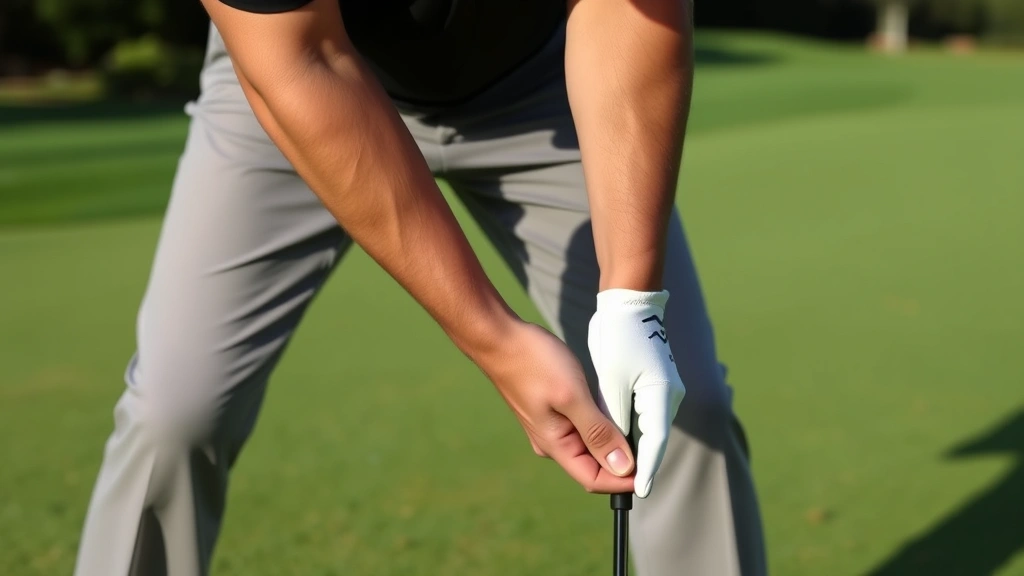
The grip is where every golf swing begins, yet many golfers overlook its importance. Your hands are the only point of contact between your body and the club, making grip quality fundamental to consistency. There are three primary grip styles: the overlapping grip (where the pinky of your trailing hand overlaps the index finger of your lead hand), the interlocking grip (where the pinky interlocks with the index finger), and the ten-finger or baseball grip (where all fingers maintain contact with the club).
Your grip pressure significantly influences shot quality. Excessive tension restricts the natural hinging of your wrists and prevents proper clubhead speed development. Conversely, a grip that’s too light allows the club to slip during the swing. Aim for moderate pressure—firm enough to maintain control but relaxed enough to allow fluid motion. Think of holding a bird: tight enough that it won’t escape, but gentle enough that you won’t harm it.
Stance width and foot positioning establish your foundation for balance and power generation. Your feet should be shoulder-width apart for full swings, with your lead foot flared slightly open (approximately 20 degrees) to facilitate rotation through impact. Your trailing foot should be nearly perpendicular to your target line. Weight distribution at address should be relatively even, with perhaps 55% on your lead side.
Posture determines whether you can swing the club on plane and maintain proper spine angles throughout the motion. Stand tall with your chest up, not hunched over. Your spine should tilt away from the target (for right-handed golfers, your spine tilts to the right), creating space for proper rotation. Your arms should hang naturally, with your hands positioned slightly ahead of the ball at address. This forward shaft lean creates a descending blow, which is essential for solid ball striking.
When visiting golf courses in San Diego or other facilities, pay attention to how experienced players position themselves at address. Consistent setup is the foundation upon which all other improvements are built.
Mastering the Backswing
The backswing initiates the golf swing and sets the stage for everything that follows. Many swing problems originate during the backswing, making this phase critical for improvement. The backswing should be a coordinated sequence of movements that builds tension and positions the club for an efficient downswing.
During the first movement—called the takeaway—the club should move away from the ball along your target line, with the club face maintaining its relationship to your body. Avoid immediately rotating your hands, which causes an inside takeaway that leads to poor positions later. Instead, focus on a low, wide takeaway where the club stays low to the ground for the first 12 inches of the swing.
Rotation is essential during the backswing. Your shoulders should rotate approximately 90 degrees while your hips rotate approximately 45 degrees, creating what’s called “separation.” This differential rotation between your upper and lower body generates significant coil tension—the energy that powers your swing. Your lead arm should remain relatively straight (though not rigid), while your trailing arm naturally bends.
Wrist hinge occurs naturally as a result of proper sequencing. During the backswing, your wrists should gradually hinge, reaching maximum hinge at the top of your swing. Your lead wrist should maintain a flat or slightly bowed position throughout, preventing the cupped wrist position that causes inconsistent ball striking. The trailing wrist should hinge naturally, creating an angle of approximately 90 degrees between your forearm and the shaft at the top of your swing.
At the top of your backswing, your club should be positioned on plane—an imaginary line extending from your target line through your shoulders. If your club is above or below this plane, you’ll have difficulty returning it to the proper impact position. Your weight should have shifted approximately 70-80% onto your trailing side, and your lower body should be ready to initiate the downswing.
The Downswing and Impact
The downswing is where power is generated and where many amateur golfers struggle with sequencing. The proper sequence begins with the lower body, followed by the torso, then the arms, and finally the hands. This “kinetic sequence” allows each segment to accelerate before the next segment begins moving, building maximum club head speed at impact.
The first move down should be a lateral shift of your hips toward your target. This initiates lower body rotation while maintaining the coil created during your backswing. Your shoulders should lag behind your hips, increasing the separation between them. This lag angle—the angle between your lead arm and the shaft—is what creates leverage and club head speed. Maintaining this angle until late in the downswing is crucial for power and consistency.
As your hips continue rotating and your shoulders begin following, your arms naturally drop into a shallower plane. This “dropping the club” into the slot is essential for an inside-out swing path, which produces a more consistent ball flight for most golfers. The hands should remain ahead of the club head approaching impact, maintaining that forward shaft lean established at address.
Impact is the moment when your club face contacts the ball. At this critical point, your lead arm should be relatively straight, your hands should be ahead of the club head, and your club face should be aligned with your target. Your weight should have shifted to your lead side, with approximately 90% of your weight on your lead foot. Your hips should be open to the target line, and your chest should face slightly left of target (for right-handed golfers).
The quality of impact determines shot outcome more than any other factor. A square club face combined with proper swing path and club head speed produces the desired ball flight. Understanding your miss patterns—whether you tend to slice, hook, or pull shots—helps you identify specific corrections needed.
Follow-Through and Finish
What happens after impact is often overlooked, yet the follow-through reveals important information about your swing quality. A balanced, complete follow-through indicates that you’ve executed a proper swing sequence. Conversely, an abrupt stop or loss of balance suggests that something went wrong earlier in the swing.
During the follow-through, your club should continue accelerating past impact, with your arms extending toward the target. Your body rotation should continue, with your hips fully rotating to face the target. Your weight should continue transferring to your lead side until it reaches 95-100% on your lead foot by the finish.
The finish position—where you complete your swing—should be balanced and athletic. Your chest should face the target, your trailing foot should be up on its toe, and your trailing arm should be bent comfortably. You should be able to hold your finish position for several seconds without losing balance. If you find yourself stumbling or catching yourself, this indicates a swing sequence issue that needs correction.
Practice Drills for Consistent Results
Deliberate practice focused on specific swing elements accelerates improvement far more effectively than mindless ball striking. The following drills target common swing issues and develop the muscle memory necessary for consistency:
- Alignment Stick Drill: Place an alignment stick on the ground along your target line and another stick along your foot line. Practice hitting shots while ensuring your feet, hips, and shoulders align properly. This develops awareness of your body alignment and prevents the closed or open stances that cause directional inconsistency.
- Half-Swing Drill: Practice swinging to waist height on both the backswing and follow-through. This develops rhythm, timing, and proper sequencing without the complexity of a full swing. Focus on smooth acceleration and complete weight transfer.
- One-Handed Drills: Hit shots using only your lead arm, then only your trailing arm. Lead arm drills develop proper swing path and club face control. Trailing arm drills develop lag and proper release mechanics.
- Impact Bag Drill: Hit an impact bag (a heavy, sand-filled training tool) with various clubs. This develops power, proper impact position, and provides immediate feedback on your swing mechanics without the variability of actual ball flight.
- Tempo and Rhythm Drill: Practice swinging to a metronome set at 60 beats per minute. This develops consistent tempo, which is fundamental to repeatable ball striking. A 60 BPM tempo typically means one beat for the backswing and one beat for the downswing.
When practicing at par 3 courses near you, focus on short game consistency before moving to longer shots. Short game excellence significantly impacts scoring, making it worthy of practice emphasis.
Mental Game and Course Management
Technical swing improvements mean little without proper mental approach and course management strategy. Golf is as much a mental game as it is physical, with confidence, focus, and emotional control significantly influencing performance.
Develop a pre-shot routine that you perform before every shot. This routine should include visualizing your desired shot, selecting a specific target, and committing fully to your shot selection. A consistent routine calms your nervous system, reduces overthinking, and promotes confidence. Your routine might include taking two practice swings, checking your alignment, and taking a deep breath before addressing the ball.
Accept that poor shots will happen. Rather than dwelling on mistakes, develop a recovery mindset where you focus on the next shot. Professional golfers miss fairways, hit poor shots, and face challenging situations regularly. What separates excellent players from average ones is their ability to recover and maintain focus.
Course management involves playing strategically rather than trying to hit maximum distance on every shot. Understand your distances, identify hazards, and plan shot patterns that minimize risk. If your miss is a fade, aim at the left side of the fairway, giving yourself margin for error. If a water hazard guards the left side of a green, approach from the right side even if it requires an extra club.
Thorncreek Golf Course presents varied challenges that reward strategic thinking. Study the course layout, understand where hazards are positioned, and develop a game plan before each round. This deliberate approach improves scoring far more effectively than simply trying to hit the ball farther.
Utilizing Thorncreek’s Facilities
Thorncreek Golf Course offers excellent facilities for practice and improvement. The driving range provides ample space for developing swing mechanics with feedback from experienced staff. Range sessions should be purposeful rather than casual—focus on specific drills, work with different clubs, and practice various shot shapes.
The practice green at Thorncreek allows you to develop short game skills, which directly impact scoring. Spend time practicing chip shots, pitch shots, and putting from various distances and angles. The short game—shots within 100 yards of the green—accounts for approximately 60% of strokes in a typical round, making practice emphasis essential.
Playing rounds at Thorncreek provides real-world application of your improvements. Challenge yourself by playing different tees, competing against your previous scores, and practicing course management strategies. Each round offers learning opportunities if you approach it with a development mindset.
Consider booking lessons with Thorncreek’s golf professionals. Professional instruction accelerates improvement by identifying specific issues and providing customized corrections. Research shows that golfers receiving regular professional instruction improve significantly faster than those practicing independently.
Thorncreek’s location in Thornton makes it convenient for regular practice. Consistency matters significantly in golf improvement—practicing weekly produces far better results than sporadic practice sessions. Establish a regular schedule that allows you to work on fundamentals while enjoying the game you love.
If you’re exploring other quality courses in the area, Sunflower Hills Golf Course provides another excellent venue for practice and play. Playing different courses exposes you to varied challenges and conditions, which develops adaptability and course management skills.
FAQ
How long does it take to see improvement in my golf swing?
Improvement timelines vary based on your starting point, practice frequency, and focus. Many golfers notice improvements in 2-4 weeks of consistent practice, though significant swing changes may require 8-12 weeks for muscle memory to fully develop. Consistency matters more than intensity—practicing three times weekly for six weeks produces better results than one intensive practice session.
Should I take lessons from a professional instructor?
Professional instruction significantly accelerates improvement by identifying specific issues and providing customized corrections. Research from the Professional Golfers’ Association demonstrates that golfers receiving regular professional instruction improve 3-5 times faster than those practicing independently. At minimum, consider initial lessons to establish proper fundamentals.
What’s the most important aspect of the golf swing?
While all elements matter, proper setup (grip, stance, and posture) and sequencing (lower body initiating the downswing) are foundational. These elements are easier to correct than complex swing issues, making them the logical starting point for improvement efforts.
How can I practice more effectively?
Deliberate practice focused on specific elements produces better results than casual ball striking. Use alignment sticks, practice specific drills, video record your swing for analysis, and track metrics like distances and accuracy percentages. Focus on one or two improvements at a time rather than attempting multiple corrections simultaneously.
What should my practice schedule look like?
Ideally, practice three times weekly—perhaps two focused practice sessions at the range and one round of golf. Each practice session should include warm-up, specific drills targeting identified issues, and short game practice. Consistency matters far more than duration; 45 minutes of focused practice produces better results than three hours of unfocused ball striking.
How do I manage my mental game during competition?
Develop a consistent pre-shot routine, practice visualization techniques, and cultivate a recovery mindset where you focus on the next shot rather than past mistakes. Consider working with a sports psychologist who specializes in golf, as mental skills can be developed through training just like physical skills. The American Psychological Association provides resources on sports psychology research and applications.
Should I change my swing significantly or make gradual adjustments?
Gradual adjustments generally work better than dramatic swing overhauls. Your current swing represents years of muscle memory development. Making small, targeted changes allows your neuromuscular system to adapt without creating confusion. Major swing changes should only be undertaken under professional guidance with clear understanding of expected timelines and progression.
How do I know if my practice is paying off?
Track specific metrics including driving distance, driving accuracy, greens in regulation percentage, and scoring average. Video record your swing periodically to compare technique progression. Notice improvements in consistency, confidence, and ability to execute shots under pressure. Many golfers improve significantly without realizing it until they compare current scores with baseline measurements from months earlier.


