
Master Golf Techniques: Coach Insights for Every Skill Level
Golf is more than just a sport—it’s a lifelong learning journey that combines physical technique, mental discipline, and strategic thinking. Whether you’re a beginner picking up clubs for the first time or an experienced player looking to refine your game, understanding the fundamentals and advanced techniques can significantly improve your performance on the course. Many golfers overlook the importance of structured learning and professional guidance, missing opportunities to develop proper form and consistency that lead to lower scores and greater enjoyment of the game.
At facilities like Gannon Municipal Golf Course, golfers of all abilities have access to well-maintained playing surfaces and learning environments where they can practice and apply new techniques. This comprehensive guide explores essential golf techniques, coaching strategies, and the science behind improvement, drawing on insights from experienced golf instructors and sports psychology research to help you elevate your game.

The Fundamentals: Grip, Stance, and Posture
The foundation of any solid golf technique begins with three critical elements: your grip, stance, and posture. These fundamentals are non-negotiable because they directly influence every aspect of your swing, from clubhead speed to accuracy. Many golfers rush through learning these basics, eager to hit the ball farther, but experienced coaches emphasize that investing time in proper fundamentals pays dividends throughout your golfing career.
The Grip is your only connection to the club, making it paramount to get it right. There are three primary grip styles: the overlapping grip (Vardon grip), the interlocking grip, and the ten-finger grip. Most professional golfers and coaches recommend the overlapping or interlocking grip for better control and consistency. Your grip pressure should be firm enough to maintain control but not so tight that it creates tension in your forearms and shoulders. Research from the Professional Golfers’ Association indicates that proper grip technique reduces unwanted hand movements during the swing by up to 40 percent.
Stance and Alignment determine your body’s relationship to the target line. Your feet should be shoulder-width apart for full swings, with your weight distributed evenly. Your shoulders, hips, and feet should form a line parallel to your intended target line—a common mistake is aiming your body directly at the target rather than parallel to it. For par 3 course play, where precision is critical, proper stance becomes even more important.
Posture affects your ability to rotate properly and maintain balance throughout the swing. Stand with a slight knee flex, bend from the hips (not the waist), and keep your spine relatively straight with a natural arch. Your arms should hang naturally from your shoulders, and your head should be positioned so you can see the ball clearly without straining your neck. Poor posture leads to compensatory movements and inconsistency, which is why many coaches spend considerable time correcting this foundational element.
When practicing at facilities like Gannon Municipal Golf Course, dedicate specific practice sessions to these fundamentals. Use alignment rods, mirrors, or video recording to check your positions. This deliberate practice approach, supported by learning science research from the American Psychological Association, accelerates skill development.
Understanding the Golf Swing Mechanics
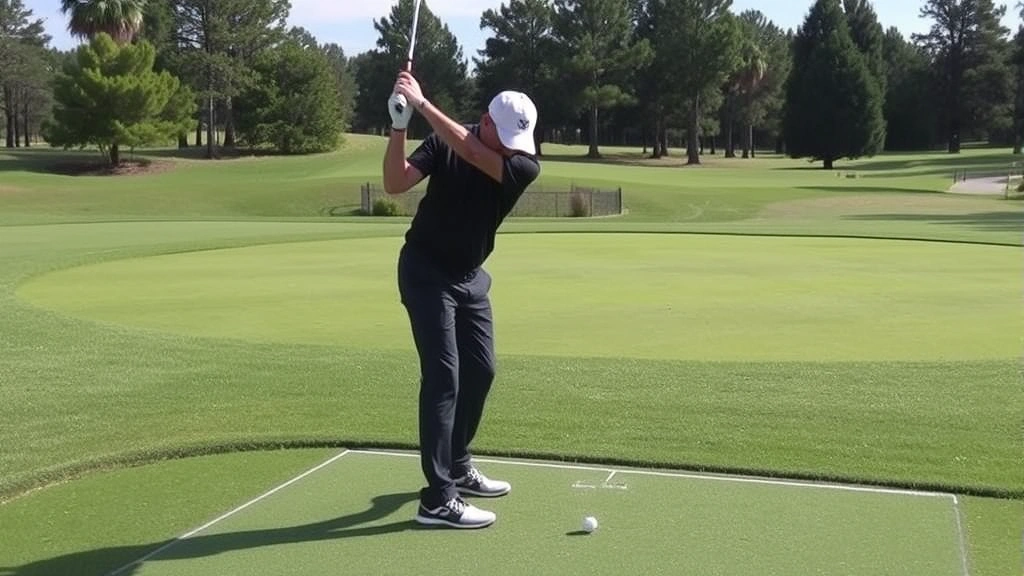
The golf swing is a complex sequence of movements that must work in harmony to produce consistent results. Breaking it into distinct phases—the address, backswing, transition, downswing, and follow-through—helps golfers understand and improve each component.
The Backswing initiates the swing sequence. Your takeaway should be smooth and one-piece, meaning your shoulders, arms, and club move together initially. The club should travel along your target line for the first 12-18 inches, then naturally inside that line as you rotate your shoulders. Your backswing length should be determined by your flexibility and control, not by trying to achieve maximum length. A shorter, controlled backswing is far more effective than a long, loose one that sacrifices accuracy.
During the backswing, your weight gradually shifts to your back foot, and your hips rotate approximately 45 degrees while your shoulders rotate approximately 90 degrees. This differential rotation creates coil, which is the stored energy that powers your downswing. Many golfers fail to achieve sufficient coil, limiting their distance and consistency.
The Transition is the critical moment between backswing and downswing. Rather than immediately starting your downswing with your upper body, the transition should be initiated by your lower body—your hips begin rotating back toward the target while your shoulders remain coiled. This sequence, known as “lag,” is what separates amateur golfers from skilled players. Biomechanical studies published in sports medicine journals show that proper sequencing increases clubhead speed by 15-20 percent.
The Downswing and Impact represent where power is generated and transferred to the ball. Your downswing should feel like an acceleration rather than a conscious effort to hit hard. The sequence—lower body, then core, then arms—naturally creates increasing velocity through impact. At impact, your hands should be slightly ahead of the ball, your weight should be shifting toward your front foot, and your body should be rotating toward the target.
The Follow-Through isn’t just about looking good; it’s an indicator of swing quality. A full, balanced follow-through suggests that you maintained good sequencing and didn’t decelerate through impact. If your follow-through is short or off-balance, it often indicates swing flaws that need correction.
When exploring best golf courses in Wisconsin, consider courses that offer coaching opportunities. Professional instruction can help you ingrain proper swing mechanics through video analysis and immediate feedback.
Mastering Short Game Skills
While driving and long irons capture attention, the short game—within 100 yards of the green—determines your scores more than any other aspect of golf. Statistically, golfers spend approximately 60 percent of their strokes within 100 yards, yet many dedicate only 20 percent of their practice time to this area.
Chipping and Pitching are distinct techniques. Chips are low-trajectory shots played with less wrist action and minimal swing, typically from within 30 yards of the green. Pitches are higher, fuller shots that cover 30-60 yards. The key to both is controlling distance through swing length rather than swing speed. Most golfers try to control distance with their hands, creating inconsistency. Instead, use a clock system: a 7 o’clock swing length produces approximately half the distance of a 9 o’clock swing.
Bunker Play intimidates many golfers, but it’s actually one of the most learnable skills. The fundamental principle is that you don’t hit the ball directly—you hit the sand behind the ball, allowing the sand to propel the ball out. Aim for approximately two inches behind the ball, open your stance and clubface, and accelerate through the sand. The most common mistake is decelerating or trying to “scoop” the ball, which produces poor contact.
Putting is where consistency matters most. Your putting stroke should be a pendulum motion controlled by your shoulders and arms, with minimal wrist involvement. The putter face angle at address and through impact is more important than path for accuracy. Distance control comes from swing length—a longer stroke produces a longer putt. Practice reading greens by examining the slope from multiple angles and considering how grain affects roll.
Dedicated short game practice at Gannon Municipal Golf Course or similar facilities accelerates improvement. Spend 30-45 minutes daily on these skills for measurable results within weeks.
Mental Game and Course Management
Technical skill alone doesn’t produce low scores. The mental aspect of golf—managing emotions, maintaining focus, and making strategic decisions—separates good golfers from great ones. Sports psychology research demonstrates that mental training produces performance improvements comparable to technical instruction.
Shot Selection and Strategy require understanding your capabilities and playing to your strengths rather than attempting heroic shots. Know your distances with each club within 5 yards. Understand that a bogey is only one stroke worse than a par, but attempting a risky shot that produces a double bogey is far more costly. Play away from trouble when possible, even if it means hitting a longer second shot. This conservative approach paradoxically produces lower scores.
Managing Emotions during rounds is critical. Frustration after a poor shot leads to rushed decision-making and poor concentration on the next shot. Develop a pre-shot routine that includes breathing exercises and positive self-talk. Accept that poor shots happen to all golfers—what matters is how you respond.
Course Management involves understanding how weather, course conditions, and hazard placement affect your strategy. On windy days, play for the wind’s effect rather than fighting it. On firm courses, expect more roll and position your shots accordingly. Understand which hazards are most dangerous and play away from them, even if it means sacrificing distance.
Practice Strategies for Continuous Improvement
Deliberate practice—focused, purposeful work with immediate feedback—is essential for improvement. Simply hitting balls without specific objectives produces minimal gains.
Structured Practice Sessions should include warm-up, skill work, and pressure situations. Dedicate 20 minutes to warm-up, hitting a variety of clubs to assess your swing that day. Spend 40-50 minutes on specific skills requiring improvement, using drills with clear objectives. Finish with 20 minutes of pressure practice, such as playing imaginary holes or competitive games against yourself.
Tracking Progress through statistics provides objective feedback. Record fairways hit, greens in regulation, putts per round, and scoring in specific distance categories. This data reveals which areas need work and whether your practice is producing results.
Video Analysis is invaluable for identifying swing flaws. Record your swing from down-the-line and face-on angles, then compare to proper technique. Many modern smartphones have slow-motion capability sufficient for basic analysis. Share videos with instructors for professional feedback.
Facilities offering golf course prints and memorabilia often provide excellent learning environments where you can study course layouts and strategy.
Common Mistakes and How to Correct Them
Slice or Hook Issues typically stem from grip, alignment, or swing path problems. A slice usually indicates an open clubface at impact or an out-to-in swing path. Strengthen your grip slightly, check your alignment, and focus on rotating your body through impact rather than throwing your hands at the ball. A hook usually indicates a closed clubface or in-to-out path—weaken your grip slightly and focus on maintaining lag through impact.
Inconsistent Distance often results from poor tempo or swing speed variations. Develop a consistent rhythm by counting “one” during your backswing and “two” during your downswing. This 1-to-1 or 1-to-1.5 tempo ratio maintains consistency across all clubs.
Poor Contact and “fat” or “thin” shots indicate timing issues between body rotation and arm swing. Focus on rotating your body through the shot rather than trying to guide the club with your hands. Use drills like hitting shots with your feet together to develop better coordination.
Loss of Distance as you age is normal but can be minimized through flexibility and strength training. Incorporate dynamic stretching before rounds and strength work focusing on core rotation, hip stability, and shoulder mobility.
Understanding these common issues helps you self-diagnose problems and seek targeted instruction. Many coaches recommend periodic lessons—even experienced golfers benefit from annual check-ins to ensure fundamentals remain solid.
FAQ
How often should I practice to improve my golf game?
For meaningful improvement, practice at least 3-4 times weekly, with each session lasting 1-2 hours. Consistency matters more than marathon sessions. Daily practice produces faster results, but even dedicated weekend practice yields noticeable improvement within 8-12 weeks.
What’s the best way to choose a golf coach?
Look for coaches with PGA certification, experience teaching your skill level, and teaching philosophies aligned with your goals. Request trial lessons before committing to extended instruction. Reviews and recommendations from other golfers provide valuable insights.
Should beginners take lessons before playing full rounds?
Yes, 3-5 lessons on fundamentals before playing full rounds accelerates learning and prevents ingrained bad habits. Learning proper grip, stance, and swing foundation in a lesson environment is far more efficient than struggling through rounds.
How can I improve my mental game?
Develop pre-shot routines, practice breathing exercises for stress management, and work with sports psychologists if available. Meditation and visualization practice strengthen mental resilience. Keep a golf journal tracking emotional responses and performance to identify patterns.
What equipment matters most for beginners?
Quality fundamentals matter far more than equipment. A basic set of clubs suited to your swing speed and height is sufficient. Focus on developing technique before upgrading equipment, as better technique produces more noticeable improvements than new clubs.
How long does it take to reach proficiency in golf?
Reaching proficiency—shooting consistently in the 80s—typically requires 2-3 years of dedicated practice. Reaching advanced proficiency—consistently shooting under 80—requires 5-7 years of focused work. Golf is a lifetime learning sport; improvement never truly stops.


