Golf Skills Development: Coach Insights from Rouge Park Golf Course
Golf is more than just a recreational sport—it’s a comprehensive learning experience that teaches discipline, patience, strategic thinking, and physical coordination. Whether you’re a beginner picking up clubs for the first time or an intermediate player looking to refine your technique, understanding the fundamentals of skill development is crucial. Rouge Park Golf Course offers an excellent environment for golfers of all levels to practice and improve their game under professional guidance.
At its core, golf instruction combines biomechanics, psychological resilience, and deliberate practice. Coaches at facilities like Rouge Park recognize that effective skill development requires a structured approach grounded in evidence-based teaching methodologies. The learning process in golf mirrors educational principles found in cognitive science and motor learning research, where repetition, feedback, and progressive challenge create lasting improvements.
This comprehensive guide explores how golf coaches develop player skills, the science behind effective instruction, and practical strategies you can implement at Rouge Park Golf Course or other facilities to accelerate your improvement.
Fundamentals of Golf Instruction and Motor Learning
Golf instruction is fundamentally rooted in motor learning—the process by which individuals acquire and refine physical skills through practice and experience. Research from the American Alliance for Health, Physical Education, Recreation and Dance demonstrates that effective physical education follows principles applicable to golf coaching.
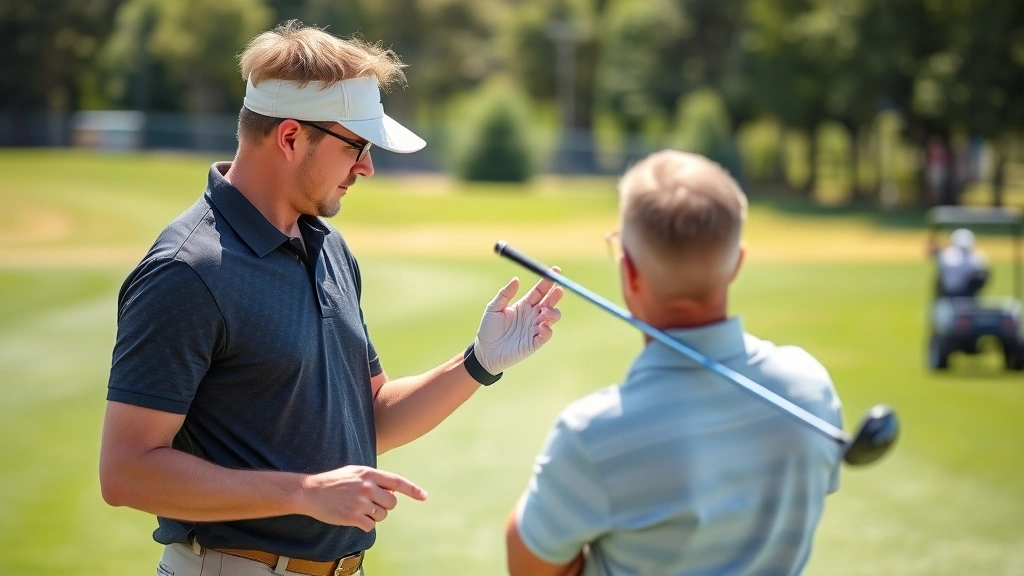
When coaches at Rouge Park or similar facilities design instruction, they typically follow a progression that aligns with established learning theory. The initial phase focuses on cognitive understanding—students learn what the movement should accomplish and why specific techniques matter. A coach might explain how grip pressure affects shot accuracy or how stance width influences stability.
The second phase involves associative learning, where golfers begin connecting their movements to outcomes through repeated practice with corrective feedback. This is where practice at driving ranges becomes invaluable. The third phase, autonomous learning, occurs when skilled movements become automatic, requiring less conscious attention.
Understanding these phases helps golfers appreciate why improvement takes time and why certain practice structures prove more effective than others. When you’re learning at facilities like Walter Hall Golf Course or Lomas Santa Fe Executive Golf Course, quality instruction accelerates progression through these learning stages.

The Role of Deliberate Practice in Skill Development
Not all practice produces equal results. Deliberate practice—purposeful, structured training with specific goals—separates developing golfers from stagnating ones. The American Psychological Association’s research on learning and practice confirms that practice quality matters far more than quantity.
Effective golf practice at Rouge Park or any course should include:
- Clear objectives: Rather than hitting balls aimlessly, set specific targets. Work on 20-yard accuracy one session, then progress to 40-yard precision.
- Immediate feedback: Video analysis, launch monitors, or coach observation provides crucial feedback about what’s working and what needs adjustment.
- Progressive difficulty: Start with controlled conditions, then introduce variables like wind, slopes, or pressure situations.
- Mental engagement: Practice should challenge cognitive abilities alongside physical execution.
Coaches understand that golfers who practice with purpose improve 3-5 times faster than those engaging in casual practice. This principle applies whether you’re working with instructors at Pecan Valley Golf Course or training independently.
Technical Components: Grip, Stance, and Alignment
The foundation of any sound golf swing rests on three technical elements: grip, stance, and alignment. These fundamentals are non-negotiable, and coaches prioritize their mastery before advancing to swing mechanics.
Grip Fundamentals: The grip is your only contact with the club, making it critically important. A neutral grip—where hands sit naturally without excessive rotation—allows for consistent clubface control. Coaches teach that grip pressure should feel firm but not tense, often comparing it to holding a bird: secure enough that it can’t escape, but gentle enough that it can breathe.
Different grip styles (overlapping, interlocking, ten-finger) exist, but the fundamental principle remains constant: hands must work as a unified system. New golfers often struggle here because proper grip feels unnatural initially. This illustrates why motor learning progression matters—what feels wrong initially becomes natural through repetition.
Stance and Weight Distribution: A proper stance provides the foundation for power and control. Feet should align with shoulders, with weight distributed evenly between feet at address. During the swing, weight transfers follow a specific sequence that coaches emphasize during instruction.
Alignment and Aim: Surprisingly, many golfers struggle with aiming correctly. The brain often deceives us about what constitutes straight alignment. Coaches use alignment sticks and visual references to train accurate aim, which directly impacts shot accuracy regardless of swing mechanics.
Swing Mechanics and Biomechanical Analysis
Modern golf coaching incorporates biomechanical analysis to optimize swing mechanics. Understanding the physics and body mechanics involved transforms coaching from abstract instruction to precise, measurable improvement.
The golf swing can be broken into distinct phases:
- Address: The setup position establishing foundation and aim
- Takeaway: Initial movement from address to waist height
- Backswing: Continuation from waist height to top of swing
- Transition: Change of direction from backswing to downswing
- Downswing: Movement toward impact
- Impact: Club-ball contact moment
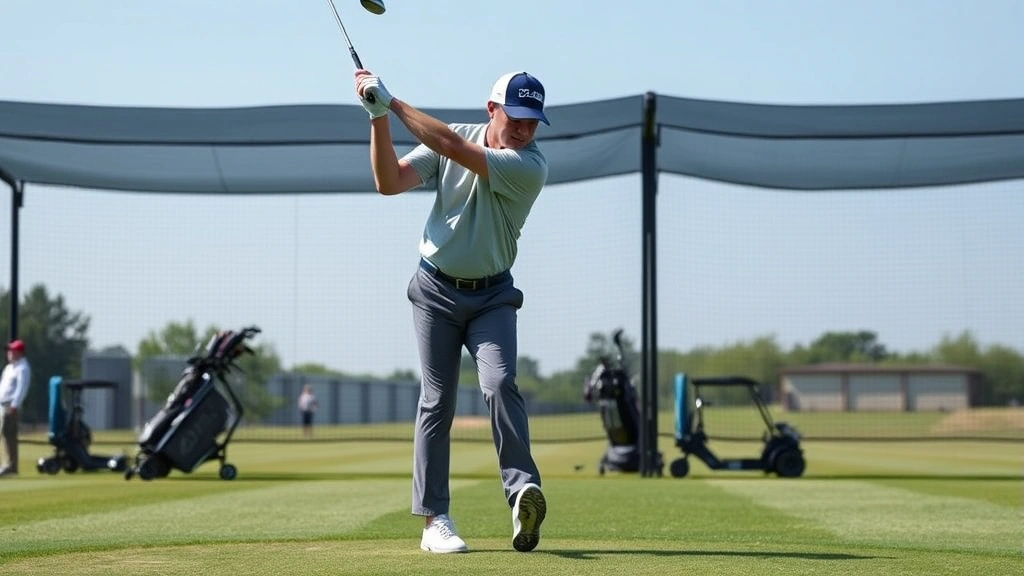
- Follow-through: Continuation after impact to completion
Coaches at facilities like Rouge Park analyze each phase, identifying inefficiencies that limit distance, accuracy, or consistency. Common issues include:
- Overactive hands during takeaway, disrupting club path
- Insufficient weight transfer, reducing power generation
- Early extension, where the body straightens prematurely at downswing
- Casting, where the wrists unhinge too early, losing lag and power
Modern coaching tools like launch monitors and 3D swing analysis provide objective data about club speed, ball speed, launch angle, spin rate, and shot shape. This data-driven approach removes guesswork, allowing coaches to prescribe specific corrections with measurable outcomes.
Mental Game and Psychological Preparation
Golf’s mental dimension separates elite players from average ones. Unlike team sports where momentum can be maintained through teammates, golf requires sustained individual focus across 18 holes. Psychological resilience, concentration, and emotional regulation directly impact performance.
Research from the American Psychological Association’s education resources on performance psychology applies directly to golf coaching. Effective coaches address mental aspects including:
Confidence Building: Confidence develops through successful experiences. Coaches structure practice progressions ensuring achievable challenges that build mastery and self-efficacy. When you improve your short game at Rouge Park through deliberate practice, confidence naturally increases.
Focus and Attention Control: Golf requires sustained attention despite distractions. Pre-shot routines—consistent behavioral sequences before each shot—train attention management. Elite golfers develop routines that filter distractions and center focus.
Emotional Regulation: Frustration, anger, and discouragement harm performance. Coaches teach techniques for managing emotions, including breathing exercises, positive self-talk, and perspective shifts. Understanding that bad shots happen to everyone reduces the emotional impact of individual mistakes.
Pressure Management: Performance under pressure separates competitive golfers from recreational ones. Coaches introduce pressure situations during practice—betting on putts, playing for small stakes, simulating tournament conditions—so actual competition feels familiar rather than overwhelming.
Personalized Coaching Approaches
Effective coaching recognizes individual differences in learning styles, physical capabilities, and personality. A one-size-fits-all approach fails because golfers bring varied backgrounds, physical attributes, and learning preferences.
Similar to how personalized learning management systems customize educational experiences, golf coaches tailor instruction to individual needs. Some golfers learn best through visual demonstration, others through kinesthetic experience, and still others through verbal explanation.
Physical Assessment: Coaches evaluate flexibility, strength, balance, and coordination to understand physical limitations. A golfer with limited hip flexibility might require modified swing mechanics compared to someone with excellent mobility. Rather than forcing a textbook swing, coaches adapt instruction to individual physiology.
Learning Style Adaptation: Video analysis helps visual learners understand corrections. Kinesthetic learners benefit from guided practice with immediate physical feedback. Analytical learners appreciate biomechanical explanations of why specific adjustments improve performance.
Personality and Motivation: Some golfers respond to competitive challenges, others to skill mastery, and still others to social connection. Effective coaches understand motivational drivers and structure coaching accordingly. This personalization principle mirrors evidence-based educational practices emphasizing individual learning differences.
Course Management and Strategic Play
Technical skill alone doesn’t guarantee good scores. Strategic course management—understanding how to play courses intelligently—separates good golfers from great ones. Coaches teach strategic thinking alongside technical instruction.
Smart course management includes:
- Risk-reward assessment: Understanding when aggressive play makes sense versus when conservative strategy minimizes damage
- Hole-by-hole planning: Before each shot, considering wind, terrain, hazards, and pin position
- Strength exploitation: Playing to your strengths while avoiding situations where you’re weakest
- Scoring strategy: Understanding that par is just a number—focus on playing your game rather than chasing arbitrary targets
Coaches at Rouge Park emphasize that strategy is learned skill, not innate talent. Deliberate practice analyzing course conditions, making strategic decisions, and evaluating outcomes builds this expertise.
Understanding how to practice different course conditions separates practicing golfers from learning ones. Rather than hitting balls at a range indefinitely, practicing on actual courses—or at least simulating course conditions—accelerates strategic learning.
Practice Variety: Effective practice includes driving ranges, short game areas, practice greens, and actual course play. Each environment teaches different skills. Range practice develops swing mechanics, short game practice develops touch and feel, and course play develops strategy and pressure management.
When you combine technical instruction with strategic understanding and mental preparation, you develop as a complete golfer. Coaches at facilities like Rouge Park understand this integration, structuring comprehensive instruction that addresses all dimensions of golf performance.
FAQ
How long does it typically take to develop basic golf competency?
Most golfers develop functional basic competency—the ability to hit consistent shots and score reasonably—within 50-100 hours of deliberate practice. However, this assumes quality instruction and purposeful practice. Without structured learning, improvement plateaus quickly. The learning curve accelerates significantly with professional coaching, which explains why instructional programs at facilities like Rouge Park produce faster results than self-taught approaches.
What’s the difference between practice and deliberate practice in golf?
Regular practice involves repetition without specific goals or feedback. You hit balls, hoping improvement happens. Deliberate practice involves clear objectives, immediate feedback, progressive challenge, and mental engagement. A golfer doing deliberate practice might spend 30 minutes on 20-yard chip shots with specific targets, analyzing each shot and adjusting technique. The same golfer doing regular practice might spend two hours hitting random shots at a range. Deliberate practice produces dramatically better results in equivalent time.
Can adults learn golf as effectively as younger golfers?
Absolutely. While younger learners sometimes acquire motor skills faster, adult learners often excel due to superior strategic thinking and mental discipline. Adults typically progress faster through deliberate practice because they understand the value of focused effort. Research in motor learning shows that age matters less than practice quality and consistency. Coaches adapt instruction to adult learners’ needs, often achieving excellent results.
How important is equipment in golf skill development?
Equipment matters, but less than many golfers believe. Proper fitting—ensuring clubs match your swing characteristics—provides real benefits. However, using well-fitted clubs with poor technique produces worse results than using standard clubs with excellent technique. Coaches recommend prioritizing skill development before investing heavily in premium equipment. As skills improve, equipment upgrades become more valuable because you’ll better utilize improved clubs’ capabilities.
What role does video analysis play in modern golf coaching?
Video analysis is transformative. Comparing your swing to models, seeing angles and positions you can’t feel, and reviewing corrections immediately accelerates learning. Research in motor learning confirms that visual feedback enhances skill acquisition. Most modern coaching programs incorporate video analysis because it provides objective information that improves coaching effectiveness and learner understanding. This mirrors how educational research demonstrates video-based feedback enhances learning outcomes across domains.
How does temperature and weather affect skill development practice?
Weather significantly impacts golf. Cold temperatures reduce ball flight distance, wind affects shot accuracy, and wet conditions change turf interaction. Effective coaching includes practicing in varied conditions, not just ideal weather. This builds adaptability and resilience. Practicing exclusively in perfect conditions creates fragile skills that collapse when conditions change. Coaches structure practice across seasons and weather patterns, ensuring developed skills transfer to real competitive conditions.


