
Golf Techniques for Beginners: Shadow Lakes Insights
Shadow Lakes Golf Course offers an ideal learning environment for beginners looking to master fundamental golf techniques. Whether you’re picking up clubs for the first time or seeking to refine your foundational skills, understanding the core mechanics of golf is essential to building confidence and consistency on the course. This comprehensive guide explores evidence-based golf techniques specifically tailored for beginners, drawing on best practices used by golf instructors and sports science research.
Learning golf techniques requires patience, proper instruction, and consistent practice. At Shadow Lakes, beginners benefit from well-maintained fairways and varied hole designs that challenge different skill levels while remaining accessible to newcomers. The course’s layout provides excellent opportunities to practice driving, approach shots, and putting—the three fundamental pillars of golf instruction.
Understanding Golf Fundamentals
Golf fundamentals form the foundation upon which all advanced techniques are built. Similar to how Miami Golf Courses serve different skill levels, Shadow Lakes welcomes beginners with open arms by offering courses that teach the basics systematically. The fundamental elements include grip, stance, posture, alignment, and swing plane—each contributing to consistent ball striking.
Research in sports pedagogy emphasizes that beginners benefit most from focused instruction on one fundamental at a time rather than attempting to correct multiple elements simultaneously. This progressive approach prevents overwhelming new golfers and builds motor memory more effectively. A proper grip pressure, for instance, should feel like holding a bird—firm enough that it doesn’t escape, yet gentle enough that it remains unharmed.
Understanding ball position relative to your stance is crucial. For drivers, the ball should align with your front heel; for mid-irons, it should sit in the center; and for short irons, it moves slightly back. This positioning directly affects trajectory and distance, making it one of the most important beginner lessons.
The concept of clubface angle at address determines whether your shot will curve left (closed face) or right (open face). Beginners often struggle with this because they fail to recognize how grip and stance interact to create the clubface angle. Shadow Lakes’ practice facilities allow ample opportunity to experiment with these variables under professional guidance.

The Golf Grip and Stance
Your grip is literally where the golf club meets your hands, making it the most direct connection to shot control. There are three primary grip styles: the overlapping grip (Vardon grip), the interlocking grip, and the ten-finger grip. Most beginners find success with the interlocking grip, where the pinky of the trailing hand interlocks with the index finger of the lead hand, creating unified hand action.
Grip pressure deserves special attention because many beginners hold the club too tightly, creating tension that restricts the swing. Just as instructors at Raleigh Golf Courses emphasize relaxation, Shadow Lakes professionals recommend maintaining light grip pressure—approximately 4 out of 10 on a tension scale. This allows the club to swing freely while maintaining control.
Your stance provides the stable base from which your swing operates. For most full swings, your feet should be shoulder-width apart, with knees slightly flexed. This athletic position allows for proper weight transfer during the swing. Your shoulders should align parallel to your target line, with your hips also square to the target. Many beginners fail to recognize that their stance directly influences their swing plane and ultimately their accuracy.
Weight distribution at address should favor the balls of your feet rather than your heels. This positioning enables dynamic movement during the swing and prevents the common beginner mistake of swaying backward during the backswing. Like the carefully maintained courses at Aruba Golf Courses, your body positioning requires intentional setup and adjustment.
Posture is equally critical. Your spine should tilt forward from the hips at approximately 20-30 degrees, with arms hanging naturally. Your head should remain in a neutral position, neither tucked nor extended. This posture allows for a proper swing arc and encourages the club to move on the correct plane.
Mastering the Swing Mechanics
The golf swing comprises two distinct phases: the backswing and the downswing. Understanding the mechanics of each phase is essential for beginners seeking consistency.
The Backswing initiates with a one-piece takeaway, where your shoulders, arms, and club move together as a unit for the first 12-18 inches. This coordinated movement prevents the common beginner error of the club moving independently from the body. As the backswing continues, your shoulders rotate approximately 90 degrees while your hips rotate about 45 degrees, creating what instructors call coil—the tension that powers the downswing.
Your hands should reach approximately chest height at the top of the backswing for most clubs. The club shaft should be parallel to the ground (for most golfers), indicating a proper swing plane. Many beginners either overswing or underswing; finding your natural swing length through practice at Shadow Lakes is crucial to developing consistency.
The Downswing is initiated by the lower body, not the hands. This sequence—lower body first, then torso, then arms and hands—is fundamental to generating power like professionals at Harding Park Golf Course demonstrate. Beginners often make the mistake of starting the downswing with their hands and arms, which causes casting and loss of power.
The concept of lag is critical during the downswing. Lag refers to the angle between your arms and the club shaft maintained as you transition from backswing to downswing. Maintaining lag allows for acceleration through the impact zone and generates clubhead speed efficiently. Players at Patty Jewett Golf Course work extensively on this timing element.
Impact is the moment of truth—when the clubface contacts the ball. At impact, your hands should be ahead of the ball (forward shaft lean), your body should be rotating through the shot, and your weight should be transferring to your front foot. This is not a static position but rather the result of proper sequencing during the downswing.
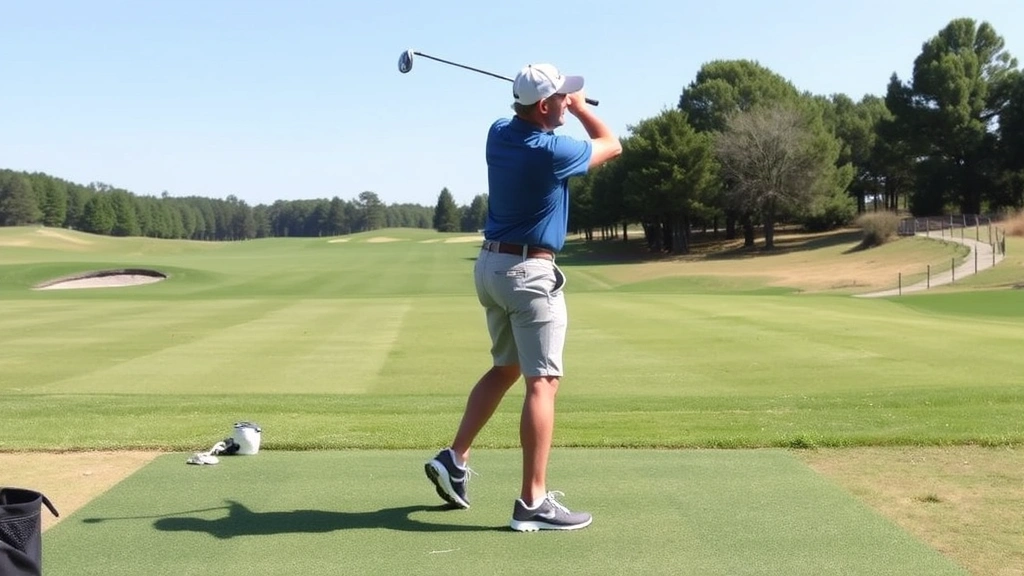
The Follow-Through completes the swing and demonstrates that you’ve maintained balance and control throughout. A complete follow-through, where your torso faces the target and your hands finish high, indicates a proper swing sequence. The follow-through isn’t about hitting the ball harder; rather, it’s evidence of a well-executed swing.
Short Game Essentials
The short game—shots within 100 yards—accounts for approximately 60% of your total strokes on any given round. Beginners often neglect short game practice in favor of hitting drivers, but this is a critical mistake. Shadow Lakes provides excellent practice areas for developing chipping, pitching, and putting skills.
Chipping involves shots from just off the green, typically requiring a short swing with a club ranging from 7-iron to wedge. The key to chipping is maintaining a consistent rhythm and allowing the club to do the work. Your weight should favor your front foot, and your hands should stay ahead of the ball throughout the stroke. Unlike full swings, chipping requires minimal wrist action; instead, your shoulders and arms move as a unit.
Pitching encompasses shots from 30-100 yards, requiring a more complete swing than chipping but shorter than a full swing. The pitch shot requires similar fundamentals to the full swing but with reduced backswing length. Distance control in pitching comes from swing length and rhythm rather than hitting harder.
Putting is perhaps the most important short game skill. A proper putting stroke uses a pendulum motion, where your shoulders rock back and forth while your hands remain relatively quiet. Alignment is critical—your putter face must point at your target, and your eyes should be directly over the ball. Many beginners grip the putter too tightly; maintaining light pressure allows for a smooth, consistent stroke.
Reading greens is a skill that develops over time. Beginners should start by understanding basic break principles: water flows downhill, so your ball will roll in that direction. Looking at the green from multiple angles helps identify the slope.
Mental Game and Course Management
Golf is unique among sports because it’s played against the course and yourself, not against opponents in direct competition. This psychological element makes mental game training essential for beginners. The challenging layouts found at Monarch Beach Golf Course require not just technical skill but also mental resilience.
Beginners often struggle with course management—the strategic decisions about which clubs to use and where to aim. Rather than always attempting to hit the longest drive or most aggressive shot, beginners should focus on hitting fairways and greens. This conservative approach builds confidence and leads to lower scores more reliably than heroic attempts.
Understanding your capabilities is crucial. If you’re a beginner, acknowledge that you’ll occasionally hit poor shots. Rather than becoming frustrated, treat each shot as an opportunity to execute your fundamentals. Routine development helps manage emotions: establish a pre-shot routine that includes alignment checks, a specific number of practice swings, and a consistent breath pattern.
Visualization techniques, supported by sports psychology research, help beginners prepare for shots mentally before executing them physically. Spend a few seconds visualizing your intended shot before addressing the ball. This mental rehearsal activates neural pathways similar to physical practice, improving performance.
Training at Shadow Lakes
Shadow Lakes Golf Course provides an excellent training ground for beginners due to its well-maintained facilities and beginner-friendly design. The course layout includes several shorter holes that build confidence while also presenting challenges that teach valuable lessons.
Taking advantage of Shadow Lakes’ practice facilities is essential. Most courses offer driving ranges where you can work on your full swing, practice greens for chipping and pitching, and putting greens for stroke development. Beginners benefit from structured practice rather than simply hitting balls randomly.
Consider organizing your practice sessions by skill: dedicate 20% of practice time to long game (drivers and long irons), 40% to mid-range shots (mid-irons and wedges), and 40% to short game (chipping, pitching, and putting). This distribution reflects the actual demands of a golf round and accelerates skill development.
Professional instruction at Shadow Lakes can accelerate learning significantly. PGA professionals can identify swing flaws that beginners might not recognize and provide corrective exercises. Video analysis technology allows instructors to show you exactly what’s happening in your swing, making feedback more concrete and actionable.
Playing practice rounds with experienced golfers provides invaluable learning opportunities. Observing how experienced players manage the course, read greens, and handle pressure offers practical insights that range instruction cannot fully provide.
FAQ
What’s the best grip for beginners?
The interlocking grip is recommended for most beginners because it unifies hand action and promotes consistency. However, some beginners with smaller hands prefer the overlapping grip. Experiment during practice sessions to determine which feels most natural.
How long does it take to become proficient at golf?
Research suggests that consistent practice—approximately 500 hours—is required to develop genuine proficiency. However, beginners can enjoy golf and score respectably much sooner. Most beginners see significant improvement within 2-3 months of regular practice.
Should beginners use expensive equipment?
No. Beginners should focus on fundamentals rather than equipment. Once you’ve developed consistent technique, upgrading to higher-quality clubs suited to your swing may provide marginal improvements. Many quality beginner sets are available at reasonable prices.
Is golf harder than other sports?
Golf has a steep initial learning curve compared to some sports, but this reflects its technical complexity rather than inherent difficulty. With proper instruction and consistent practice, beginners can achieve enjoyable proficiency relatively quickly.
Can I learn golf without lessons?
While self-teaching is possible, professional instruction accelerates learning and helps prevent ingrained bad habits. Even a few lessons with a qualified instructor can establish proper fundamentals that serve you for years.
What’s the most important fundamental to master first?
Grip and stance are foundational because they influence everything else in your swing. Master these before focusing extensively on swing mechanics. Many swing problems trace back to improper grip or stance.
How often should beginners practice?
Consistency matters more than duration. Practicing 2-3 times weekly for 1-2 hours is more effective than occasional lengthy sessions. This frequency allows your nervous system to consolidate learning and develop motor memory.


