
Golf Skills for Beginners: Soldier Hill Insights
Learning to play golf is an exciting journey that combines physical skill, mental strategy, and outdoor enjoyment. Whether you’re considering Soldier Hill Golf Course or exploring other beginner-friendly venues, understanding fundamental golf skills will accelerate your learning curve and increase your enjoyment of the game. Soldier Hill offers an excellent environment for newcomers to develop their abilities while appreciating a well-maintained course that challenges without overwhelming inexperienced players.
Golf instruction for beginners requires a systematic approach grounded in proven learning methodologies. Much like educational psychology emphasizes scaffolding and progressive skill development, golf instruction builds from basic fundamentals toward more complex techniques. This article explores evidence-based approaches to developing golf skills, drawing insights from how Soldier Hill and similar courses support beginner golfers in their developmental journey.

Understanding Golf Fundamentals for Beginners
The foundation of golf instruction rests on mastering five essential fundamentals: grip, stance, posture, alignment, and swing mechanics. Research in motor learning and skill acquisition demonstrates that breaking complex movements into component parts helps learners achieve competence faster. When beginning your golf journey at a course like Soldier Hill, instructors typically emphasize these foundational elements before advancing to course strategy.
Beginner golfers often make the mistake of focusing immediately on distance rather than accuracy and consistency. This represents a fundamental misunderstanding of skill progression. Accuracy precedes distance in effective golf development. By concentrating on hitting the ball consistently in the intended direction, even at reduced distances, you build the neural pathways necessary for more powerful swings later. This principle aligns with cognitive learning science research showing that distributed practice on fundamental skills produces superior long-term retention.
Soldier Hill Golf Course provides an ideal learning environment because its layout accommodates various skill levels. The course design allows beginners to experience real golf situations without the intimidation factor of championship-length layouts. Understanding how to navigate such courses teaches valuable lessons about course management and strategic thinking that transfer to more challenging venues like Harding Park Golf Course.
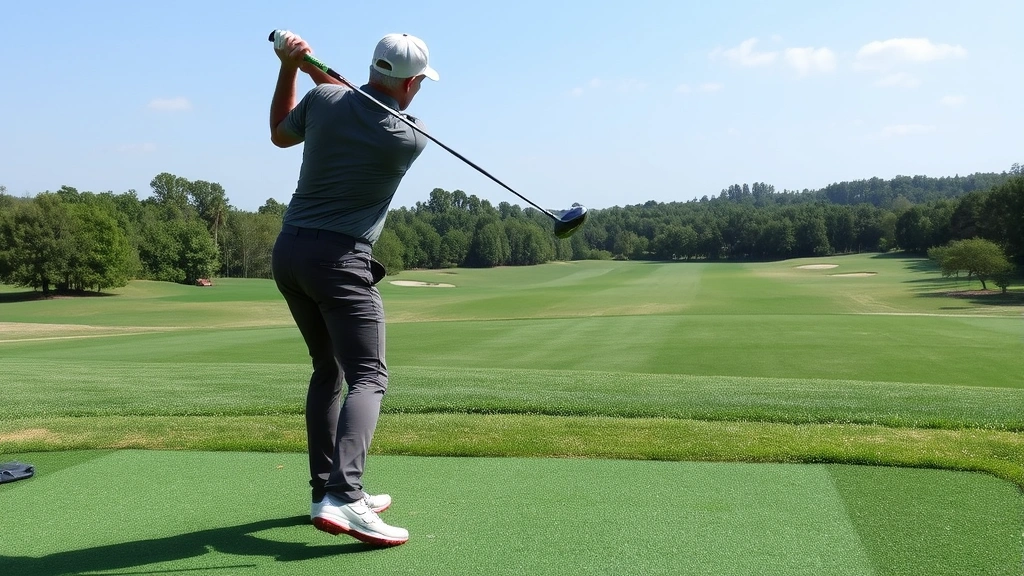
The Grip: Your Foundation for Control
Your grip fundamentally determines what happens to the golf ball. An incorrect grip can produce compensatory movements throughout your swing, leading to inconsistent results and ingrained bad habits. There are three primary grip styles: the overlapping grip (Vardon grip), the interlocking grip, and the ten-finger grip. Most professional and amateur golfers use the overlapping or interlocking grip.
The overlapping grip involves placing your pinky finger from the lower hand between the index and middle fingers of the upper hand. This creates a unified hand position where both hands work as a single unit. For the interlocking grip, you interlock the pinky finger of the lower hand with the index finger of the upper hand. The ten-finger grip, where all ten fingers contact the club, suits some golfers with smaller hands or those returning to golf after extended breaks.
Grip pressure significantly impacts swing quality. Many beginners grip too tightly, creating tension that restricts the natural swing motion. Professional golf instruction resources recommend a grip pressure of about 4 out of 10, where 10 represents maximum tension. This moderate grip pressure allows the club to swing freely while maintaining control. When practicing at Soldier Hill or any course, focus on maintaining consistent grip pressure throughout your swing.
Hand position also matters critically. Your hands should be positioned slightly ahead of the ball at address, creating what instructors call a “forward press.” This positioning encourages solid contact and helps prevent the common beginner error of “scooping” at the ball. The grip fundamentals you develop early in your learning journey become automatic with practice, freeing your conscious attention for strategy and course management.
Stance and Posture: Building Stability
Proper stance and posture create the stable foundation necessary for repeatable golf swings. Your stance width should approximate shoulder width, with your feet positioned to support your swing’s rotational forces. For most shots with mid-range clubs, your feet should be about shoulder-width apart, with your weight distributed evenly between both feet at address.
Ball position varies depending on which club you’re using. For driver shots, position the ball inside your front heel. For mid-range irons, place it in the center of your stance. For short irons and wedges, position it slightly toward your back foot. This progressive ball positioning helps optimize the club’s angle of attack for each club type, maximizing both distance and accuracy.
Posture involves bending from your hips rather than your waist, maintaining a straight spine angle throughout your swing. This hip bend creates what instructors call athletic posture, similar to a basketball player preparing to jump. Your knees should have a slight flex, and your arms should hang naturally from your shoulders. Many beginners make the mistake of standing too upright, which restricts rotation and creates tension.
The relationship between posture and swing quality has been extensively documented in biomechanics research. Sports Medicine and Orthopedic Research journals demonstrate that proper posture reduces injury risk while improving mechanical efficiency. When you practice at Soldier Hill or other beginner-friendly courses, instructors will emphasize these postural elements because they form the foundation for all subsequent skill development.
The Swing Mechanics Explained
The golf swing consists of distinct phases: address, takeaway, backswing, transition, downswing, impact, and follow-through. Understanding each phase helps you develop a repeatable swing that produces consistent results. The swing operates on principles of physics and biomechanics that apply regardless of your athletic background.
The takeaway initiates the swing with a low, slow movement where the club moves away from the ball while your shoulders begin rotating. This phase establishes the swing plane, the imaginary line along which the club travels. The backswing continues this rotation, with your shoulders rotating approximately 90 degrees while your hips rotate only 45 degrees. This differential rotation creates what instructors call coil, storing energy for the downswing.
The transition represents the crucial moment where you change direction from backswing to downswing. A smooth transition, initiated by your lower body rather than your upper body, allows you to generate power efficiently. Many beginners start their downswing with their hands and arms, creating an over-the-top motion that produces slices and weak shots. Biomechanical analyses of expert golfers consistently show that lower body sequencing precedes upper body movement in efficient swings.
The downswing accelerates the club toward the ball while maintaining the swing plane established during the takeaway. Your hips continue rotating, your knees flex slightly, and your weight shifts toward your front foot. Impact occurs when the club strikes the ball, ideally with the club face square to your intended target line and the club head moving along your swing plane.
The follow-through completes the swing, with your body rotating fully toward the target and your weight finishing on your front foot. Your back foot should come up on its toe naturally. A complete, balanced follow-through indicates that you’ve made an efficient swing and transferred your energy effectively to the ball. When learning at Soldier Hill, instructors will use video analysis and feedback to help you develop these swing mechanics consistently.
Short Game Mastery
Professional golf instruction emphasizes that short game skills determine scores more than long game abilities. While driving receives glamorous attention, chipping, pitching, and putting account for approximately 60% of strokes in a typical round. Beginners who focus on short game development improve their scores dramatically compared to those who emphasize distance.
Chipping involves shots from just off the green, typically within 30 yards. The chip shot uses a short, controlled swing with minimal wrist action. Your weight should favor your front foot, and you should strike the ball with a descending blow, similar to your full swing but abbreviated. The goal is rolling the ball along the ground toward the hole, minimizing the carry portion of the shot.
Pitching refers to shots from 30 to 100 yards, requiring more club face loft and swing length than chips. Pitch shots combine elements of full swings with controlled distances. The key to effective pitching involves matching your swing length to your desired distance, creating a consistent relationship between effort and result.
Putting represents the most critical short game element because you use it on every hole. Putting mechanics differ significantly from full swing mechanics. Your stroke should operate like a pendulum, with your shoulders rocking back and forth while your wrists remain relatively firm. Consistency in putting comes from developing a repeatable routine and maintaining proper alignment to your intended line. Many beginners struggle with putting because they focus on distance rather than direction, when in reality, reading the green’s slope and speed precedes actual stroke execution.
Mental Game and Course Management
Golf differs from many sports because you control the pace and rhythm of play. This unique characteristic means your mental state and strategic thinking significantly impact performance. Research in sports psychology demonstrates that emotional regulation and positive self-talk enhance athletic performance across various sports, and golf is no exception.
Course management involves planning your approach to each hole based on your abilities and the hole’s characteristics. Rather than always attempting maximum distance, experienced golfers select clubs and targets that position them optimally for their next shot. When playing at Soldier Hill or comparable courses, beginners should ask themselves strategic questions: Where should I aim? Which club gives me the best chance of advancing the ball appropriately? What hazards should I avoid?
Developing resilience after poor shots represents another crucial mental skill. Every golfer hits poor shots; professionals and amateurs alike experience wayward drives and mishits. The difference lies in how quickly you move past the mistake mentally and refocus on the next shot. This psychological skill transfers to many life domains and represents one of golf’s valuable lessons beyond the sport itself.
Choosing the Right Course for Learning
Selecting appropriate courses for skill development accelerates learning while maintaining motivation. Soldier Hill Golf Course provides an ideal beginner environment, but understanding what makes a course suitable for newcomers helps you identify other learning opportunities. Beginner-friendly courses typically feature:
- Reasonable length – Courses under 6,000 yards from the front tees
- Forgiving layouts – Wide fairways with manageable rough
- Minimal water hazards – Fewer opportunities for catastrophic shots
- Accessible green complexes – Straightforward approach shots without excessive bunkers
- Good course conditioning – Well-maintained playing surfaces that reward solid contact
As your skills develop, you might explore courses like Hermitage Golf Course in Nashville or Bully Pulpit Golf Course, which present increased difficulty while remaining playable for developing golfers. The progression from beginner-friendly courses to more challenging layouts mirrors educational scaffolding principles, where difficulty increases gradually as competence develops.
Geographic considerations also matter. Raleigh Golf Courses and Banff Golf Courses Alberta offer diverse playing environments that help you adapt to different course conditions. Playing various courses exposes you to different grass types, elevation changes, and weather conditions, broadening your adaptability and course management skills.
Practice Strategies That Work
Effective practice differs fundamentally from merely hitting balls at a range. Learning science research demonstrates that purposeful practice with specific objectives produces superior results compared to unfocused repetition. When practicing golf, adopt these evidence-based strategies:
- Set specific targets – Rather than hitting random shots, aim at specific distance markers or targets
- Vary practice conditions – Practice different clubs and shot types rather than repeating identical shots
- Use feedback loops – Video analysis or instructor feedback helps correct errors
- Practice short game extensively – Allocate at least 50% of practice time to shots within 100 yards
- Simulate course conditions – Practice pressure situations and course-like scenarios
- Keep practice records – Track which areas improve and which need continued focus
The principle of distributed practice suggests that practicing multiple times per week for shorter periods produces better results than massed practice (one long session). This aligns with cognitive science research showing that spacing practice sessions allows your brain to consolidate skills more effectively. When developing golf skills at Soldier Hill or elsewhere, commit to consistent practice schedules rather than occasional intensive sessions.
Mental practice, or visualization, complements physical practice effectively. Research in sports psychology shows that vividly imagining successful shots activates similar neural pathways as physical practice. Spend time visualizing successful shots, smooth swings, and positive course outcomes. This mental rehearsal enhances confidence and performance when you actually play.
FAQ
How long does it take to develop basic golf competence?
Most beginners require 6-12 months of consistent practice to develop fundamental competence, defined as hitting the ball reasonably straight and managing a full 18-hole round. However, golf improvement continues throughout your playing life, with even professional golfers constantly refining their techniques.
What’s the best age to start learning golf?
Golf is accessible at virtually any age. Children as young as four can begin learning basic concepts, while adults regularly begin golf in their 50s, 60s, and beyond. The fundamentals remain consistent regardless of age, though physical limitations may require modifications for older players.
Should beginners take lessons or teach themselves?
Professional instruction accelerates learning dramatically. While self-teaching is possible, instructors identify and correct errors before they become ingrained habits. This prevents the frustration of unlearning poor technique later. Most golf facilities, including Soldier Hill, offer instruction programs specifically designed for beginners.
What equipment do beginners need?
You need 14 clubs maximum (the legal limit). A beginner set typically includes a driver, putter, several irons, and a wedge or two. Quality beginner sets cost $300-600 and perform adequately while you develop skills. Expensive equipment doesn’t improve scores if fundamentals aren’t solid.
How do I reduce my golf handicap?
Handicap reduction requires consistent practice on fundamentals, particularly short game skills. Focus on accuracy before distance, develop solid course management strategies, and maintain mental resilience. Tracking your scores and analyzing patterns helps identify areas needing improvement. Most players reduce their handicaps through deliberate practice and instruction rather than simply playing more rounds.
Can golf be played competitively without joining a club?
Yes, public courses like Soldier Hill welcome casual players without club membership. Many courses host tournaments and competitive events open to the public. As your skills develop, you can explore competitive opportunities ranging from local tournaments to sectional championships.


