Thriving with Plants: Expert Course Insights from Thrive Institute
Plant-based learning has emerged as one of the most transformative educational movements in contemporary professional development. The Thrive Institute offers comprehensive courses designed to help educators, gardeners, and environmental enthusiasts understand the science, psychology, and practical applications of plant cultivation and sustainable living. Whether you’re looking to enhance classroom instruction, develop horticultural expertise, or simply deepen your connection with nature, these courses provide evidence-based frameworks grounded in botanical science and educational psychology.
The intersection of plant education and pedagogical excellence creates unique opportunities for learners at all levels. Thrive Institute courses emphasize hands-on experience combined with rigorous scientific understanding, making them particularly valuable for educators seeking to integrate nature-based learning into their curricula. This comprehensive guide explores what makes these courses exceptional, who benefits most from enrollment, and how they compare to other professional development opportunities in the education sector.
Understanding plant science through formal coursework transforms not only individual knowledge but also teaching practices and student engagement. The Thrive Institute recognizes that effective plant education requires mastery of multiple domains: botanical knowledge, environmental stewardship, pedagogical strategy, and sustainable practice implementation.
What Makes Thrive Institute Courses Unique
Thrive Institute distinguishes itself through a commitment to evidence-based botanical education combined with pedagogical excellence. Unlike generic gardening courses or superficial environmental programs, Thrive courses integrate research from plant biology, environmental science, and learning science to create transformative educational experiences. The curriculum development process involves collaboration with university botanists, experienced educators, and sustainability experts.
The courses emphasize the interconnection between plant science and human wellbeing, drawing on research from environmental psychology and biophilic design. Students learn not only how plants grow but why understanding plant systems matters for environmental sustainability, food security, and educational outcomes. This holistic approach sets Thrive Institute apart from programs that focus narrowly on horticultural technique without addressing the broader educational and environmental context.
Instructors bring authentic expertise from diverse backgrounds: classroom teachers who’ve successfully implemented plant-based curricula, professional botanists with field research experience, and sustainability practitioners working on real-world environmental challenges. This diversity ensures that course content remains both academically rigorous and practically applicable across various educational contexts and professional settings.
The platform also prioritizes accessibility and inclusive design. Courses accommodate different learning styles, offer flexible pacing options, and provide supplementary resources for learners with varying levels of prior knowledge. This commitment to universal design principles reflects current best practices in educational technology and adult learning theory.
Core Learning Outcomes and Curriculum Structure
Thrive Institute courses are structured around clearly defined learning outcomes aligned with educational standards and professional competencies. Students completing foundational courses typically demonstrate mastery in plant anatomy and physiology, ecological relationships, sustainable cultivation practices, and instructional strategies for plant-based learning.
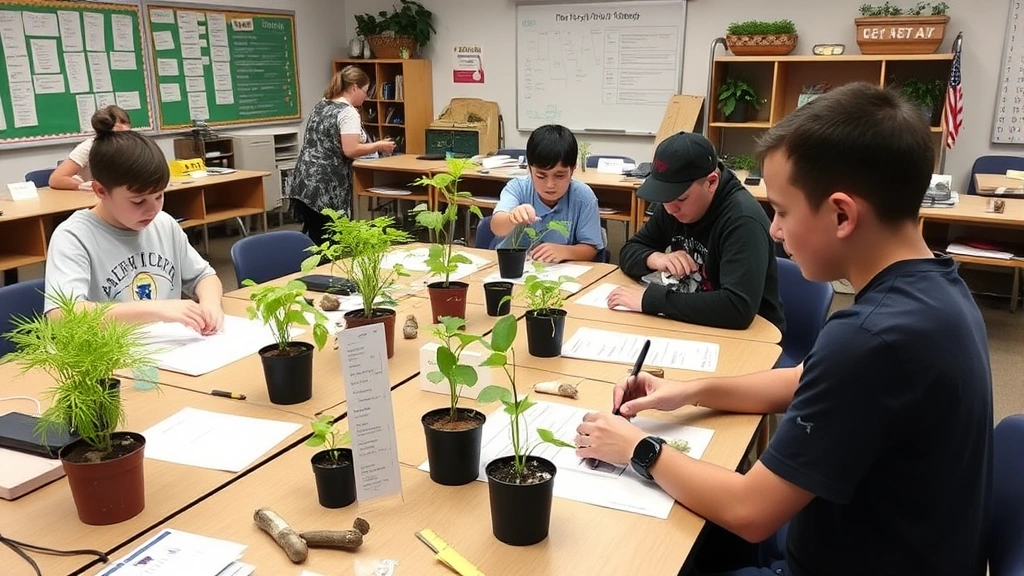
The curriculum follows a scaffolded approach, beginning with fundamental concepts and progressively building toward complex applications. Early modules establish botanical foundations: plant cell structure, photosynthesis mechanisms, nutrient cycling, and plant classification systems. These fundamentals are taught through interactive visualizations, virtual laboratory experiences, and hands-on activities that reinforce conceptual understanding.
Intermediate sections explore ecological relationships, including plant-pollinator interactions, soil biology, water cycles, and climate adaptation. Students examine case studies of ecosystem restoration projects and learn how to design classroom investigations that illuminate these complex relationships. This section emphasizes systems thinking and helps educators understand how to teach environmental concepts that demonstrate real-world relevance.
Advanced modules address practical implementation: designing classroom gardens, integrating plant science into various subject areas, assessing student learning in plant-based contexts, and addressing common challenges in horticultural education. Students develop lesson plans, create assessment tools, and design complete unit sequences that incorporate plant-based learning objectives.
The assessment structure combines multiple modalities: knowledge checks, practical demonstrations, reflective essays, and capstone projects. This varied approach acknowledges different ways of demonstrating competence and allows learners to showcase their developing expertise through formats aligned with their professional contexts. Many courses culminate in projects that participants can immediately implement in their own educational settings.
Who Should Enroll in These Programs
Thrive Institute courses serve diverse learner populations, each with distinct professional goals and educational backgrounds. K-12 educators represent a significant enrollment group, particularly those teaching science, environmental studies, or integrated curricula. Teachers seeking to develop comprehensive course catalogs that incorporate plant-based learning find these programs invaluable for curriculum development and instructional strategy enhancement.
Higher education faculty and university educators benefit from advanced modules focusing on research methods in plant science, student-centered learning approaches, and environmental education pedagogy. These courses help university instructors develop more engaging and relevant plant science instruction for undergraduate and graduate students.
Homeschooling families and educational coordinators use Thrive courses to develop robust science curricula that engage multiple learning modalities. The hands-on, project-based structure aligns well with homeschool educational philosophies emphasizing experiential learning and real-world application.
Environmental educators, nature center staff, and outdoor education specialists enroll to deepen botanical knowledge and develop more sophisticated educational programming. These professionals recognize that strong plant science understanding enhances their ability to design meaningful outdoor learning experiences that foster environmental stewardship.
Administrators and curriculum directors pursue these courses to support school-wide sustainability initiatives and develop coherent plant science pathways across grade levels. Understanding plant education helps leaders allocate resources effectively, support teacher professional development, and advocate for environmental education within institutional structures.
Individuals pursuing careers in environmental education, botanical gardens, nature centers, and conservation organizations use Thrive courses as professional development that strengthens their expertise and career prospects. These programs provide credentials that enhance employment opportunities in education-focused environmental organizations.
Practical Applications in Educational Settings
The true value of Thrive Institute courses emerges when educators apply learning in classroom and community contexts. Successful implementations demonstrate how plant-based education addresses multiple educational objectives simultaneously, enhancing student engagement while advancing content mastery.
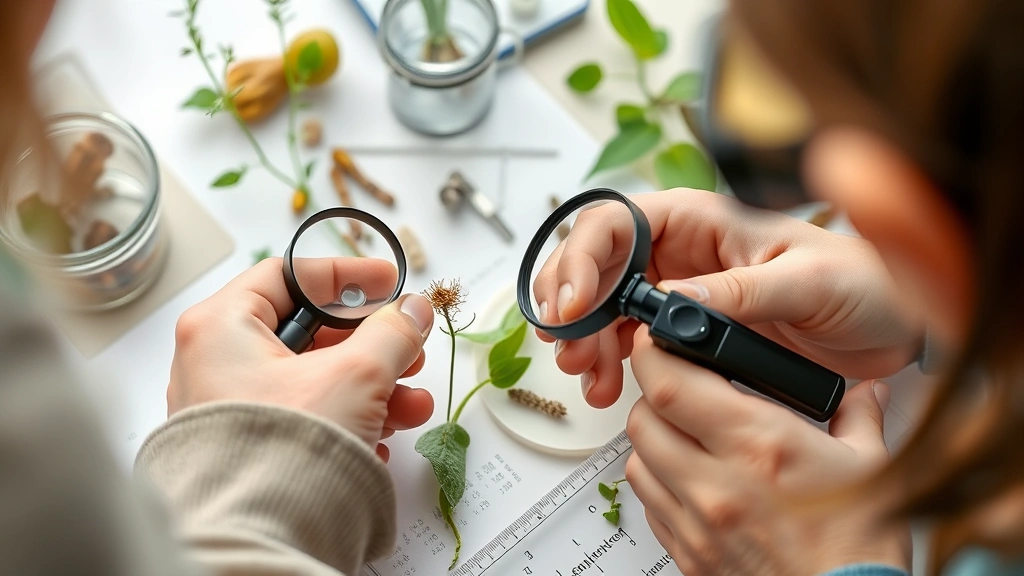
Science teachers integrate plant investigation into standard curricula by designing inquiry-based activities where students pose questions about plant growth, design experiments, collect data, and draw evidence-based conclusions. Rather than passive reading about photosynthesis, students observe actual light-dependent processes and measure variables affecting plant development. This approach aligns with Next Generation Science Standards and develops scientific thinking skills essential for future STEM learning.
English language arts educators incorporate plant-based learning through descriptive writing, botanical poetry, and literature analysis examining human-nature relationships. Students writing detailed botanical observations develop precise vocabulary and careful observation skills while engaging with meaningful content. Plant-focused literature units deepen environmental awareness alongside literary analysis competencies.
Mathematics instruction benefits from plant-based contexts for quantitative reasoning. Students measure plant growth rates, calculate percentages of germination success, analyze data distributions from classroom plant experiments, and model population growth using botanical examples. These authentic mathematical applications help students understand why mathematical skills matter beyond abstract problem sets.
Social studies and environmental justice curricula incorporate plant science when examining food systems, indigenous plant knowledge, agricultural economics, and environmental sustainability. Students investigate how plant cultivation practices connect to cultural traditions, economic systems, and environmental outcomes. This interdisciplinary approach develops critical thinking about complex real-world systems.
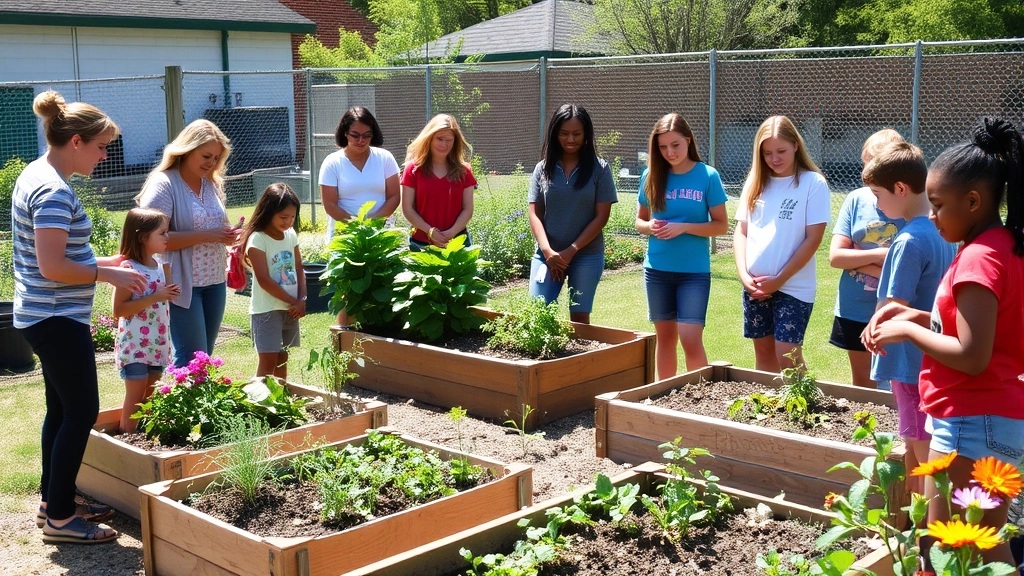
School garden development represents a significant practical application where Thrive-trained educators establish outdoor learning spaces. These gardens serve multiple functions: outdoor classroom for science instruction, food production supporting school nutrition and community food security, habitat for pollinator and biodiversity study, and therapeutic green space supporting student mental health and wellbeing. Research from environmental psychology consistently demonstrates benefits of nature-based learning environments for student engagement, academic achievement, and social-emotional development.
Comparing Professional Development Options
Educators evaluating professional development investments should consider how Thrive Institute courses compare to alternative options. While data-focused course reviews help assess technical programs, plant education requires different evaluation criteria emphasizing pedagogical content knowledge and real-world application.
Traditional university extension programs offer botanical education with strong scientific foundations but may lack explicit pedagogical training for classroom application. Thrive courses integrate both dimensions: rigorous science combined with instructional design specifically for educational contexts. This dual focus distinguishes Thrive from purely botanical programs that assume participants will independently translate scientific knowledge into teaching strategies.
Local horticultural societies and master gardener programs provide valuable community-based learning but typically emphasize cultivation techniques over educational pedagogy or environmental systems understanding. Thrive courses complement these programs by providing deeper scientific frameworks and explicit teaching methods applicable across educational settings.
General environmental education workshops often address plant topics superficially within broader environmental themes. Thrive’s plant-focused specialization allows deeper exploration of botanical concepts, more sophisticated understanding of plant-based learning strategies, and development of expertise specifically in plant science education rather than generalized environmental instruction.
Online learning platforms offer convenience but may lack the expert instruction, community engagement, and rigorous assessment that characterize Thrive programs. The platform’s emphasis on qualified instructors, interactive learning experiences, and meaningful assessment distinguishes it from mass-market online education providers. For educators seeking credentials reflecting genuine expertise development rather than simple course completion, this distinction matters substantially.
When comparing investments across professional development options, consider not only direct course costs but also time requirements, credential value, applicability to your specific educational context, and potential impact on student learning outcomes. Thrive courses typically demonstrate strong return on investment through immediately implementable strategies, enhanced teaching effectiveness, and increased student engagement with science content.
Student Success Stories and Real-World Impact
Educators completing Thrive Institute courses report significant transformations in their teaching practice and student engagement. These success stories illuminate the practical impact of systematic plant science education training combined with pedagogical expertise.
Elementary science teachers describe how plant-based inquiry units dramatically increase student engagement with scientific thinking. Rather than struggling to maintain attention during textbook-based lessons, students eagerly conduct plant experiments, observe growth changes, and propose explanations for their observations. Teachers report that plant science serves as a gateway to broader science engagement, with students who become excited about plant investigations subsequently showing increased interest in other science topics.
Secondary biology educators note that plant physiology becomes less abstract and more compelling when students can observe actual processes in classroom investigations. Students who grew up with plant-based learning frameworks in elementary years arrive in high school with intuitive understanding of concepts like photosynthesis and cellular respiration, requiring less remediation and allowing deeper exploration of complex topics.
School garden projects initiated by Thrive-trained educators demonstrate measurable impacts on school culture and student wellbeing. Gardens become outdoor classrooms supporting instruction across multiple subject areas while providing therapeutic green space that reduces student stress and supports mental health. Schools report that gardens strengthen community engagement, with families participating in planting and harvest events that connect school learning to home environments.
Environmental educators using Thrive training to enhance nature center programming report increased participant engagement and more sophisticated understanding of ecological concepts. Visitors experience nature centers not as passive observation spaces but as active learning environments where they investigate botanical relationships and develop environmental literacy. This transformation strengthens environmental centers’ educational missions and increases community support for conservation.
Teachers implementing plant-based curricula observe improvements in student achievement on standardized assessments, particularly in science and quantitative reasoning. When students engage with meaningful, hands-on content, they develop stronger conceptual understanding and retention compared to traditional instruction. The authentic applications of mathematics and scientific thinking in plant-based contexts help students understand why these skills matter.
Investment and Accessibility Considerations
Professional development requires investment of both time and financial resources. Understanding costs, accessibility options, and potential funding sources helps educators make informed decisions about Thrive Institute enrollment.
Course pricing varies based on program depth and duration, with foundational courses typically ranging from moderate to substantial investments. However, many educators find the cost justified by immediate applicability and significant impact on teaching effectiveness. Unlike some professional development that produces minimal classroom change, Thrive courses typically generate clear, observable improvements in instruction and student engagement.
Multiple funding pathways can support enrollment. Many school districts allocate professional development budgets for teacher training, particularly when courses address curricular priorities like science instruction or environmental education. Grant programs from environmental organizations, educational foundations, and sustainability-focused funders often support teacher training in plant-based education. Individual educators can sometimes access tuition assistance through professional associations or education nonprofits.
Flexible scheduling options accommodate educators’ complex schedules. Self-paced online modules allow teachers to progress through courses during available time windows, while live virtual sessions provide interactive learning experiences for those able to attend scheduled meetings. This flexibility removes barriers that prevent many educators from accessing professional development opportunities.
Prior knowledge requirements remain accessible for educators without formal botany backgrounds. Courses are designed for adult learners approaching plant science from diverse educational starting points. Supplementary resources support those needing additional foundational knowledge while advanced options challenge experienced educators. This scaffolding ensures appropriate challenge levels for diverse learner populations.
Many educators pursuing professional development through specialized skill courses recognize that targeted investment in content expertise and pedagogical training yields substantial returns. Similarly, Thrive Institute enrollment represents strategic investment in developing expertise that directly enhances teaching effectiveness and student outcomes. When considering course costs, factor in the value of improved instruction delivered to dozens or hundreds of students over career spans.
Employers increasingly recognize plant science education as valuable professional development contributing to institutional goals around environmental sustainability, student engagement, and science achievement. Some institutions provide tuition support or compensation for educators completing relevant professional development. Discussing potential institutional support before enrolling can sometimes reduce individual financial burden.
FAQ
What prior knowledge do I need to succeed in Thrive Institute plant courses?
No formal botanical background is required. Courses are designed for educators and learners approaching plant science from various starting points. Foundational modules establish essential concepts, and supplementary resources support those needing additional background. Instructors are experienced in meeting learners where they are and scaffolding toward mastery.
How quickly can I implement what I learn in my classroom?
Many strategies are implementable immediately. Simple plant investigations can begin within days of course enrollment, while more comprehensive garden projects require longer planning and development. The course curriculum is specifically designed with classroom application in mind, so educators typically find practical applications throughout their learning journey.
Do Thrive Institute courses provide formal credentials or certificates?
Yes, course completion generates certificates documenting the learning outcomes achieved. These credentials document professional development engagement and expertise development, valuable for career advancement and demonstrating commitment to instructional improvement. Some courses may offer continuing education credits applicable to state teacher certification requirements, though this varies by location and course.
Can homeschooling families use these courses effectively?
Absolutely. Homeschool families find Thrive courses particularly valuable for developing comprehensive science curricula with strong hands-on components. The flexibility and self-directed nature of online learning aligns well with homeschool educational structures, and the practical focus supports families implementing experiential learning approaches.
How do plant-based courses support environmental education goals?
Plant science education naturally develops environmental literacy by helping learners understand ecological relationships, sustainability principles, and human-environment interactions. Courses explicitly address environmental applications, helping educators connect plant science to broader environmental education outcomes like environmental stewardship and systems thinking.
What ongoing support is available after course completion?
Many programs offer community forums, alumni networks, and supplementary resources supporting continued learning beyond formal course completion. These communities allow educators to share classroom experiences, troubleshoot challenges, and access updated resources. Some programs offer advanced courses allowing continued specialization.
How do I know if plant-based education aligns with my curriculum standards?
Plant science addresses learning standards across science, mathematics, language arts, and social studies. Thrive instructors help educators identify alignment between plant-based learning and their specific curricular frameworks and standards. The interdisciplinary nature of plant education means you can likely integrate it across your existing curriculum rather than treating it as an isolated topic.


