Golf Course Design Tips: Expert Insights
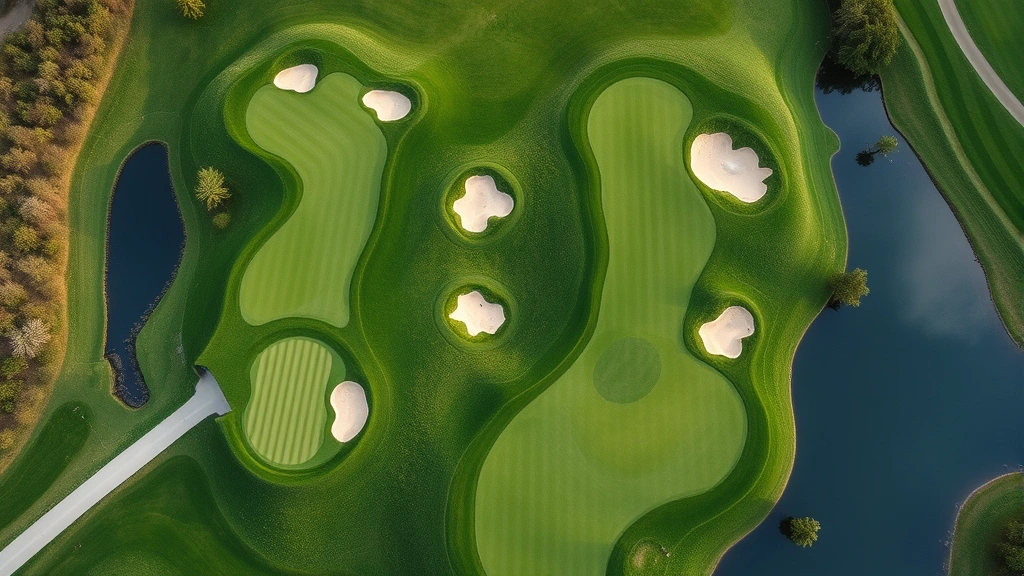
Golf course design represents one of the most intricate and rewarding disciplines in sports architecture. Creating a memorable playing experience requires a deep understanding of landscape architecture, turf management, player psychology, and environmental stewardship. Whether you’re designing a championship-caliber layout or a modest nine-hole community course, the principles that distinguish exceptional golf courses remain consistent: strategic challenge, aesthetic beauty, and sustainable playability.
The art and science of golf course design has evolved dramatically over the past century, from the links courses of Scotland to modern championship venues that showcase cutting-edge design philosophy. Today’s designers must balance playability for golfers of all skill levels while maintaining the integrity and challenge that serious players expect. Understanding these fundamental principles will help you appreciate why certain courses become legendary destinations while others fade into obscurity.
This comprehensive guide explores the essential elements that separate world-class golf courses from mediocre layouts. We’ll examine design strategies employed by legendary architects, discuss how to evaluate terrain and environmental factors, and provide actionable insights for anyone involved in course development or renovation.
Understanding Golf Course Design Fundamentals
Exceptional golf course design begins with a thorough understanding of fundamental principles that have proven successful across decades of architectural evolution. The foundation of any great course rests on several core concepts that experienced designers apply consistently, regardless of geography or climate conditions.
The most critical element is establishing clear design intent from the outset. Before any earth moves, successful designers articulate a specific vision for their course. Will it be a championship layout that challenges professional golfers, a playable public course that welcomes all skill levels, or a specialized venue like the par 3 golf courses that focus on specific shot-making skills? This foundational decision influences every subsequent design choice, from hole lengths to hazard placement.
Variety represents another cornerstone principle. The best courses feature diverse hole designs that prevent monotony and maintain player engagement throughout the round. A strong design includes a mix of par 3s, par 4s, and par 5s distributed strategically across the course. Each hole should present unique challenges, requiring different strategic approaches and shot selections. Top hundred golf courses consistently demonstrate this variety principle through thoughtful hole sequencing.
Understanding the relationship between difficulty and playability proves essential. Challenging courses that remain fair and enjoyable will attract repeat rounds. Courses that feel punitive or frustrating, conversely, discourage return visits. The best designers create courses that reward good shots while remaining accessible enough that average golfers can complete rounds in reasonable time with acceptable scores.

Strategic Hole Layout and Flow
The sequence and flow of holes dramatically impact the overall course experience. Designers must consider not only individual hole quality but also how each hole transitions to the next, creating a cohesive narrative throughout the round.
Strategic hole sequencing typically begins with a relatively approachable opening hole that allows players to settle into their rhythm without overwhelming pressure. Many championship courses follow this pattern, easing players into the round before introducing more substantial challenges. Following the opening hole, designers typically progress through a series of varied challenges that build interest and engagement.
The back nine presents opportunities for dramatic escalation in difficulty. Many courses feature their most challenging holes in this section, as players have warmed up and become more engaged with the course. However, the final holes require careful consideration—ending on an overly difficult hole can leave players frustrated, while concluding too easily can feel anticlimactic.
A well-designed course creates natural momentum and rhythm. Players should experience alternating levels of difficulty rather than consecutive hard holes or a string of easy ones. This variation maintains engagement and prevents fatigue or frustration from accumulating. When examining courses like those featured in Sedona golf courses, you’ll notice how desert terrain influences hole sequencing and strategic flow.
Routing and Navigation Principles
Routing—the path golfers travel from tee to green across the property—represents one of a designer’s most consequential decisions. Effective routing maximizes property usage while creating logical, efficient player flow.
The most successful routing strategies minimize backtracking and create a natural progression across the landscape. Golfers should move generally forward through the course rather than repeatedly reversing direction, which wastes time and disrupts rhythm. A nine-hole loop that returns to the clubhouse, then begins a second loop, represents a classic routing approach that works effectively for most properties.
Elevation changes and natural topography heavily influence routing decisions. Designers working with PGA West Pete Dye Mountain Course style properties understand how dramatic terrain creates both opportunities and constraints for routing. Steep elevation changes can create spectacular visual drama but may also present maintenance and accessibility challenges.
Water features, whether existing or created, significantly impact routing possibilities. Courses designed around natural water bodies must route holes to incorporate these features strategically. New courses often create water hazards and retention ponds as integral routing elements, simultaneously solving drainage requirements while enhancing course playability.
Practical considerations also drive routing decisions. Routing should minimize sight lines between holes to maintain safety and aesthetic separation. Players shouldn’t feel crowded by adjacent holes or distracted by play occurring on parallel fairways. Effective routing creates distinct spaces where each hole feels like its own universe within the larger course.
Hazard Placement and Risk-Reward Strategy
Strategic hazard placement distinguishes exceptional design from mediocre layouts. Hazards—including bunkers, water features, rough terrain, and native vegetation—should reward accurate shot-making while penalizing poor execution in ways that feel fair rather than arbitrary.
The most effective hazard strategies incorporate risk-reward principles that offer multiple playing options. A skilled golfer might take a more aggressive line over a hazard to gain distance or better position, while a less skilled player can choose a safer route requiring additional strokes. This design philosophy allows courses to challenge excellent golfers while remaining playable for average players.
Bunker placement requires particular finesse. Well-positioned bunkers should guard key strategic areas—landing zones for aggressive shots, approach areas to greens, or angles that tempt players into poor decisions. Bunkers placed randomly or solely for aesthetic purposes frustrate rather than challenge players. The best bunker placement makes strategic sense within the context of the hole’s overall design.
Water hazards demand even greater strategic consideration. Water features carry psychological weight that bunkers don’t, making their placement particularly influential on player behavior and course difficulty. Effective water hazard design uses water to define strategic corridors rather than simply blocking play. A water feature that crosses the fairway strategically creates decision points without making the hole feel impossible.
Native vegetation and rough terrain represent often-underutilized hazard opportunities. Allowing natural vegetation or rough native areas to frame holes and penalize wayward shots creates character while reducing maintenance requirements compared to purely manicured approaches.
Turf Selection and Maintenance Considerations
Golf course design cannot be separated from turf management realities. Selecting appropriate grass species for your climate and maintenance budget proves essential for long-term course success and playability.
Fairway and rough grass selection should match your regional climate zone. Cool-season grasses thrive in northern climates but struggle in heat, while warm-season varieties excel in southern regions. Understanding your specific microclimate—elevation, drainage patterns, sun exposure—helps identify optimal grass species. Many courses employ multiple grass types across different areas, using species best suited to specific microclimatic conditions.
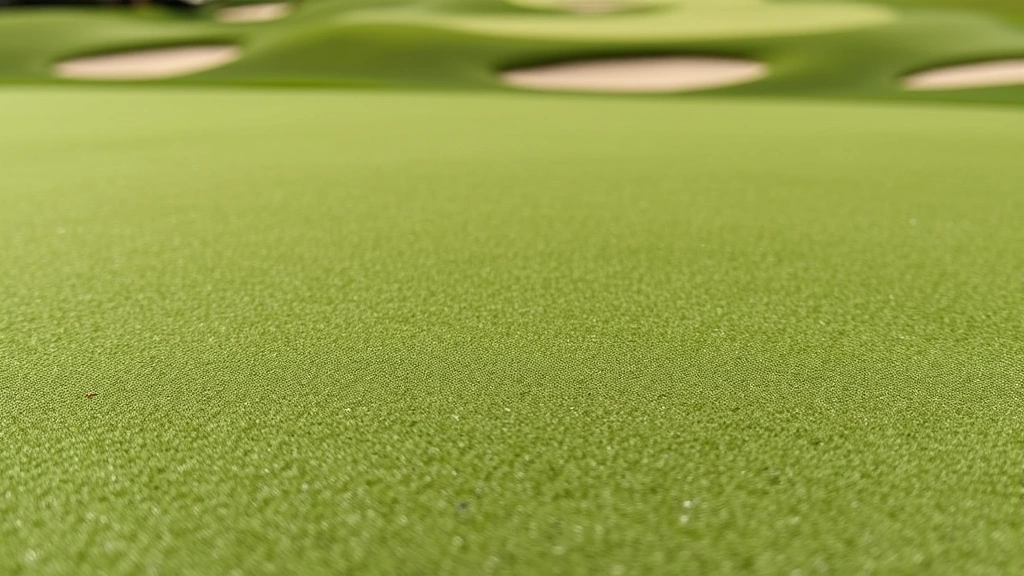
Greens represent the most maintenance-intensive component of any course. Selecting bent grass versus bermuda versus other species for greens depends on climate, desired playing characteristics, and maintenance budget. Bent greens typically putt smoother but require more intensive management, while bermuda greens offer durability and heat tolerance but may putt less smoothly.
Rough grass management significantly impacts both playability and maintenance costs. Some courses maintain fine-textured rough that provides reasonable playability for errant shots, while others allow rougher, more penalizing vegetation. This choice affects both course difficulty and maintenance requirements. Courses like Roosevelt Golf Course Los Angeles must carefully balance rough management given their specific climate and use patterns.
Irrigation system design directly impacts both course quality and sustainability. Modern efficient irrigation systems allow precise water application to different course areas, reducing overall water consumption while maintaining playable conditions. Designers must coordinate with irrigation specialists to ensure adequate coverage while minimizing waste.
Accessibility and Player Experience
Championship golf course design must balance difficulty with accessibility for players of varying abilities. The best courses accommodate golfers from scratch handicaps to high-handicap recreational players without compromising design integrity.
Multiple tee locations represent the primary tool for managing difficulty across skill levels. Courses typically feature championship tees for scratch golfers, middle tees for intermediate players, and forward tees for beginners and seniors. Strategic tee positioning changes not only distance but also angles and hazard exposure, allowing each group to experience appropriately calibrated challenge.
Fairway width and rough severity can be designed to accommodate varying skill levels. Wider fairways with gentler rough edges forgive errant shots, while tighter fairways with penalizing rough challenge better players. Some courses employ specialized course design approaches that emphasize accessibility alongside challenge.
Green size and contour significantly impact playability across skill levels. Oversized greens with gentle contours allow diverse playing abilities to approach pin positions successfully, while smaller greens with dramatic breaks challenge better players while potentially frustrating higher handicaps. Balanced green design accommodates both perspectives.
Cart path placement and course walking routes should minimize fatigue while maintaining efficient play. Accessibility for golfers with mobility limitations represents an increasingly important design consideration, requiring thoughtful routing and facility placement.
Environmental Sustainability in Design
Modern golf course design increasingly prioritizes environmental stewardship alongside playability. Sustainable design practices reduce operational costs while protecting natural ecosystems and water resources.
Native plant utilization represents a cornerstone of sustainable course design. Rather than replacing all native vegetation with manicured turf, contemporary designers preserve native areas where appropriate, reducing maintenance requirements while supporting local ecosystems. Native plants also require less water and chemical inputs than non-native ornamental species.
Water conservation strategies have become essential in most regions. Modern courses employ efficient irrigation systems, drought-tolerant grass species, and strategic water feature design that minimizes consumption. Some courses utilize recycled water or stormwater capture systems to reduce freshwater demands.
Chemical reduction through integrated pest management and organic turf care practices protects water quality and surrounding ecosystems. Modern designers work with agronomists to minimize pesticide and fertilizer applications while maintaining playable conditions.
Habitat preservation and creation represent important sustainability goals. Well-designed courses can actually enhance local biodiversity by preserving native vegetation corridors and creating diverse habitat types. This approach requires understanding local ecology and designing courses that coexist with rather than dominate natural systems.
Budgeting and Construction Planning
Successful golf course development requires realistic budgeting and comprehensive construction planning. Design excellence means little if financial constraints prevent proper execution.
Construction costs vary dramatically based on terrain difficulty, environmental requirements, and desired finish quality. Courses built on relatively flat, well-drained land cost significantly less than those requiring extensive earthwork, drainage systems, or environmental remediation. Budget planning should account for site-specific challenges identified during design phases.
Phased development approaches allow courses to open with reduced hole counts while completing full development over multiple seasons. A nine-hole opening can generate revenue and establish the course brand while full eighteen-hole development continues. This approach reduces initial capital requirements while allowing course refinement based on early operational experience.
Contingency budgeting for unexpected conditions proves essential. Discovering poor soil conditions, unexpected water tables, or environmental constraints during construction can substantially increase costs. Industry standards typically include 10-15% contingency reserves for such discoveries.
Long-term maintenance budget planning should be established before construction completion. Understanding annual operating costs for turf management, irrigation, facility maintenance, and staffing helps ensure financial sustainability. Some courses fail not due to design quality but because maintenance budgets prove inadequate for proper upkeep.
FAQ
What are the most important factors in golf course design?
Strategic hole layout, hazard placement, routing efficiency, and playability across skill levels represent the most critical design factors. Additionally, environmental sustainability and long-term maintenance feasibility significantly impact overall course success and longevity.
How do designers choose between championship and public course design?
Design intent should be established before any physical work begins. Championship courses emphasize difficulty and strategic challenge, featuring tight fairways, demanding hazards, and complex greens. Public courses prioritize accessibility and enjoyment for diverse skill levels while still providing adequate challenge for better players.
What role does terrain play in golf course design?
Terrain fundamentally influences routing possibilities, visual appeal, drainage requirements, and construction costs. Dramatic elevation changes create spectacular courses but present construction and maintenance challenges. Relatively flat terrain simplifies construction but requires more creative design to maintain visual interest.
How important is water in golf course design?
Water features provide strategic challenge, visual appeal, and often serve practical drainage functions. However, water represents only one hazard option—excellent courses can be designed with minimal water features if terrain and bunker placement provide adequate strategic challenge.
What sustainability practices should modern courses implement?
Native plant preservation, efficient irrigation systems, chemical reduction through integrated pest management, and habitat preservation represent key sustainability practices. Additionally, stormwater management and water conservation strategies reduce environmental impact while often lowering operational costs.
How do multiple tee locations improve course design?
Multiple tees allow courses to accommodate golfers of varying abilities without compromising design integrity. Championship tees challenge scratch golfers, middle tees suit intermediate players, and forward tees allow beginners and seniors to enjoy appropriate challenge levels.
For additional research on golf course design principles and best practices, consult the American Society of Golf Course Architects, which maintains comprehensive resources on design standards and sustainability practices. The USGA Course Care Resource Center provides detailed guidance on turf management and course maintenance. Additionally, Golf Course Industry publications regularly feature case studies and expert commentary on contemporary design trends. The International Turfgrass Society offers evidence-based research on grass species selection and turf management innovation. Finally, Golf Course Superintendents Association of America provides professional resources connecting design principles with practical maintenance execution.


