
Golf is more than just a recreational activity—it’s a sport that combines physical skill, mental discipline, and strategic thinking. Whether you’re a complete beginner or an experienced golfer looking to refine your technique, El Dorado Park Golf Course offers an ideal setting to develop and improve your abilities. Located in a picturesque environment, this facility provides golfers of all skill levels with the resources and conditions necessary to progress in this challenging sport. Learning golf effectively requires understanding the fundamentals, practicing with intention, and receiving proper guidance—much like how structured learning through quality platforms can accelerate personal development in any field.
Improving your golf game is a journey that demands patience, consistent practice, and access to quality instruction. El Dorado Park provides an excellent environment where both beginners and seasoned players can work toward their goals. The park’s well-maintained course, professional instructors, and supportive community create the perfect conditions for skill development. This comprehensive guide explores how you can maximize your learning potential at El Dorado Park, incorporating evidence-based teaching methods and practical strategies that educational research has shown to be effective for skill acquisition.
Understanding Golf Fundamentals at El Dorado Park
The foundation of any successful golf game rests upon mastering the fundamental techniques that govern how the ball moves through the air. At El Dorado Park, you’ll discover that understanding these basics is essential before attempting more advanced shots and strategies. The grip is your only connection to the club, making it perhaps the most critical fundamental to master. A proper grip ensures that your hands work together as a unified system, allowing for consistent club face alignment at impact.
Beyond the grip, your stance—the positioning of your feet relative to the ball and target line—determines your ability to generate power and maintain balance throughout your swing. The posture you adopt at address influences your spine angle, shoulder turn, and hip rotation, all of which contribute to consistency and distance. Educational research on skill acquisition, particularly in sports contexts, emphasizes that understanding how to structure learning effectively applies equally to physical skills like golf.
El Dorado Park’s experienced instructors can help you establish these fundamentals correctly from the start. This early investment in proper technique prevents the development of compensatory movements that become increasingly difficult to correct as you progress. Many golfers who struggle with their game years into their golfing journey do so because fundamental flaws were never addressed during their initial learning phase.
Grip, Stance, and Posture: The Foundation of Your Swing
Your grip style significantly influences every shot you’ll play at El Dorado Park. The three primary grip styles—overlapping, interlocking, and ten-finger—each have advantages depending on your hand size and personal preference. The overlapping grip, favored by many professional golfers, involves overlapping your right pinky finger over the left index finger (for right-handed golfers). This configuration promotes a unified hand action and is particularly effective for golfers with larger hands.
The interlocking grip, where the right pinky interlocks with the left index finger, provides excellent hand unity and is often recommended for golfers with smaller hands or shorter fingers. The ten-finger grip, sometimes called the baseball grip, involves all ten fingers on the club and is frequently recommended for beginners or those with limited hand strength. Regardless of which grip you choose, pressure is equally important. Your grip pressure should be firm enough to maintain control but relaxed enough to allow for fluid motion—typically rated around 4 or 5 on a scale of 1 to 10.
Stance width and foot positioning form the next critical component. Your feet should be positioned approximately shoulder-width apart for a standard full swing, with the inside of your heels aligned roughly with your shoulders. The ball position varies depending on which club you’re using: for longer clubs like drivers, position the ball near your left heel (for right-handed golfers), while shorter clubs are typically played from the center of your stance. This variation in ball position naturally adjusts your swing plane and angle of attack for different clubs.
Posture deserves special attention because it affects every aspect of your swing mechanics. Your spine should maintain a slight forward tilt from the hips, with your shoulders slightly rounded. Your arms should hang naturally from your shoulders, and your knees should show a slight flex rather than being rigidly locked. This athletic posture position allows for proper weight transfer and rotation throughout your swing. Many golfers at El Dorado Park discover that simply correcting their posture eliminates numerous swing faults that seemed impossible to fix through other means.
The Importance of Professional Instruction
While self-teaching through observation and practice has value, research in educational psychology consistently demonstrates that professional instruction accelerates learning and prevents the development of incorrect habits. At El Dorado Park, qualified instructors provide personalized feedback that you cannot obtain through self-observation alone. A professional can identify subtle flaws in your technique that you’re completely unaware of, correcting them before they become ingrained patterns.
Professional instructors at El Dorado Park utilize various teaching methodologies to accommodate different learning styles. Some golfers learn best through verbal instruction, others through visual demonstration, and still others through kinesthetic feedback—feeling the correct movement in their body. A skilled instructor recognizes these differences and adapts their teaching approach accordingly. This personalized instruction is comparable to how professional development through quality education accelerates career advancement more effectively than random self-study.
Video analysis has become an increasingly valuable tool in golf instruction. Many instructors at El Dorado Park use slow-motion video to show you exactly what your swing looks like compared to an ideal swing model. Seeing your actual swing versus your perceived swing often reveals surprising discrepancies that explain performance issues. This visual feedback, combined with expert interpretation, allows you to make conscious adjustments that lead to rapid improvement.
Regular lessons with a consistent instructor also provide accountability and motivation. Knowing that you have a lesson scheduled encourages dedicated practice between sessions and helps maintain focus on your development goals. The instructor-student relationship creates a learning partnership where your progress becomes a shared investment.
Structured Practice Routines for Skill Development
Practice quality matters far more than practice quantity. Mindless repetition at El Dorado Park’s range produces minimal improvement, while structured, purposeful practice yields dramatic results. Effective practice involves breaking your game into distinct components and focusing on one element at a time. This approach aligns with established principles from sports education and professional development in golf industries, where deliberate practice is recognized as the primary driver of expertise development.
Begin each practice session with a warm-up routine that gradually increases in intensity. Start with short chips and pitches using your wedges, progressing to mid-range irons, and finishing with longer clubs. This warm-up prepares your muscles, establishes rhythm, and builds confidence. Dedicate specific practice sessions to particular skills: one session might focus entirely on short-game proficiency, another on driving accuracy, and another on iron consistency.
For short-game practice, establish specific targets rather than simply hitting shots in a general direction. Place alignment sticks on the ground to create target corridors, or use cones to mark specific distances. Practice hitting shots from various lies and distances, simulating actual course conditions. This specificity transforms practice from vague repetition into purposeful skill development.
Long-game practice should emphasize consistency over distance. Many golfers make the mistake of trying to hit the ball as far as possible during practice, which often leads to poor technique and inflated expectations on the course. Instead, focus on hitting a specific target at a realistic distance with a specific club. This approach builds confidence in your ability to execute shots under pressure, which directly translates to better on-course performance.
Keep detailed practice notes documenting what you worked on, specific drills you performed, and observations about your performance. These notes provide valuable information about your progress patterns and help identify areas that need additional attention. Over time, reviewing your practice journal reveals which practice methods most effectively improve your game.

Mental Game and Course Management
Golf is unique among sports in that the mental challenge often exceeds the physical challenge. At El Dorado Park, developing mental resilience and strategic course management abilities is as important as perfecting your swing mechanics. The ability to maintain focus, manage pressure, and make sound decisions under stress separates consistently good golfers from those who experience dramatic performance fluctuations.
Pre-shot routines are fundamental to mental game development. A consistent pre-shot routine—the specific sequence of actions you perform before executing each shot—anchors your focus and builds confidence. Your routine might include assessing wind conditions, selecting a target line, taking practice swings, and then executing your shot. This consistent routine reduces anxiety by providing structure and familiarity in potentially stressful situations.
Visualization techniques, supported by extensive sports psychology research, enhance performance by mentally rehearsing successful shots before executing them. Before each shot, spend a few seconds vividly imagining the ball’s flight path, its landing location, and the result you desire. This mental rehearsal activates the same neural pathways as actual physical practice, improving performance without requiring additional physical repetition.
Course management involves strategic decision-making about which shots to play based on your abilities, course conditions, and current score. Rather than always attempting aggressive shots, successful golfers recognize when conservative play offers better risk-reward ratios. At El Dorado Park, practice rounds provide opportunities to develop this strategic thinking without the pressure of competition.
Emotional regulation is equally critical. Golf inevitably produces frustrating moments when shots don’t execute as planned. Developing the ability to accept these moments without allowing them to derail your focus and confidence is essential for consistent performance. Many golfers benefit from developing specific coping strategies—breathing techniques, positive self-talk, or refocusing routines—that help them recover mentally after disappointing shots.
Tracking Progress and Setting Realistic Goals
Establishing measurable goals provides direction for your practice efforts and motivation as you work toward improvement. Rather than vague goals like “get better at golf,” establish specific, measurable objectives such as “reduce handicap by 5 strokes within six months” or “hit 70% of fairways consistently.” These concrete targets guide your practice focus and allow you to assess progress objectively.
Keep a detailed scorecard and statistics for every round you play at El Dorado Park. Track fairways hit, greens in regulation, putts per round, and performance from various distances. Over time, these statistics reveal your strengths and weaknesses with precision. Perhaps your data shows that you’re excellent from 100-150 yards but struggle with longer irons. This insight allows you to concentrate practice efforts where they’ll produce the greatest improvement in your overall game.
Progress rarely follows a linear trajectory. You’ll experience plateaus where improvement seems to stall, followed by breakthrough periods where rapid improvement occurs. Understanding this pattern prevents discouragement during plateau phases. These plateaus often represent periods where your body is integrating new neural patterns and muscle memory, even though immediate performance improvements aren’t apparent.
Celebrate milestone achievements regardless of how small they may seem. Whether it’s hitting your first fairway consistently, breaking 90 for the first time, or improving your approach shot accuracy by 10%, acknowledging these accomplishments maintains motivation and reinforces the progress you’re making.
Community and Peer Learning Benefits
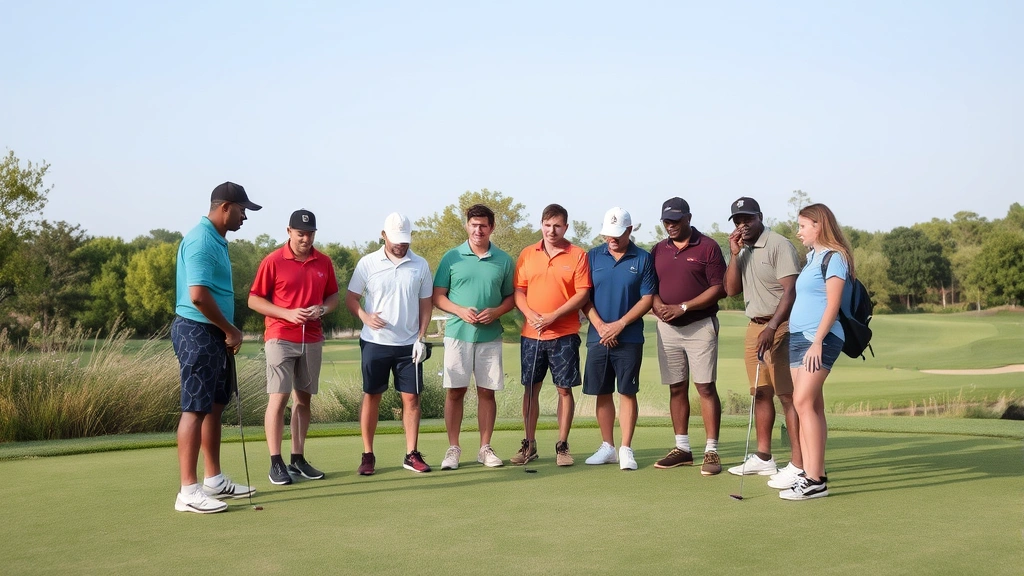
Learning golf doesn’t occur in isolation. The community at El Dorado Park provides invaluable peer learning opportunities and social motivation. Playing with other golfers of similar skill levels exposes you to different techniques, strategies, and approaches to the game. Observing how others manage specific situations or execute particular shots often provides insights that accelerate your own development.
Participating in club events, tournaments, or casual group outings creates accountability and motivation. Knowing that you’ll be playing with others encourages consistent practice and commitment to improvement. The social aspect of golf—playing with friends, competing in tournaments, and celebrating victories together—provides intrinsic motivation that sustains long-term dedication to skill development.
Joining golf clubs or groups often provides access to group lessons at reduced rates compared to private instruction. Group lessons offer the advantage of observing how instructors address similar issues in other golfers’ games, providing multiple perspectives on common problems. Additionally, group lessons typically cost less than private instruction while still providing professional guidance.
Online communities and forums dedicated to golf skill development provide additional resources for learning and improvement. These communities allow you to share experiences with golfers worldwide, ask questions, and access instructional content from recognized experts. Combining in-person instruction at El Dorado Park with online learning resources creates a comprehensive development program.
FAQ
What is the best age to start learning golf?
Golf can be learned at any age, though younger learners often develop more naturally flexible and adaptable swings. Research on motor skill development suggests that starting during childhood allows for optimal neural pathway development, but adult learners can achieve excellent results through dedicated practice and quality instruction. El Dorado Park welcomes learners of all ages.
How often should I practice to improve my golf game?
Most golf professionals recommend practicing at least three to four times weekly for noticeable improvement. However, practice quality matters more than frequency. Consistent, focused practice sessions of 60-90 minutes are more valuable than lengthy, unfocused sessions. The specific frequency should align with your improvement goals and available time.
Can I improve my golf game without professional instruction?
While self-teaching is possible, professional instruction significantly accelerates improvement and prevents the development of incorrect habits. Educational research consistently demonstrates that expert guidance produces faster, more substantial learning gains. Even experienced golfers benefit from periodic professional instruction to refine technique and address emerging issues.
What equipment do I need to start playing golf at El Dorado Park?
Essential equipment includes golf clubs (a starter set is sufficient initially), golf balls, golf shoes (optional but recommended for stability), and a golf bag for carrying equipment. El Dorado Park may offer rental equipment for beginners, allowing you to start without significant equipment investment.
How long does it typically take to reach a respectable skill level?
Development timelines vary based on starting point, practice frequency, and instruction quality. Most dedicated learners practicing three to four times weekly with professional instruction can achieve respectable intermediate skill levels within 6-12 months. Reaching advanced levels typically requires 2-3 years or more of consistent effort.
Are there specific drills that improve golf performance most effectively?
Highly effective drills include the gate drill for accuracy (placing alignment sticks to create a target corridor), distance control drills with specific yardage targets, and pressure simulation drills where you practice shots with specific success criteria. The most effective drills address your identified weaknesses and require focused, intentional execution.


