
How to Learn Golf? Pro Insights for Beginners and Intermediate Players
Golf is a sport that combines technical skill, mental discipline, and physical coordination. Whether you’re interested in playing casually at local courses like Plum Creek Golf Course or pursuing competitive play, learning golf requires a structured approach and consistent practice. Unlike many sports, golf offers the unique advantage of being playable across different skill levels, making it accessible to learners of all ages. The journey from complete beginner to competent golfer typically requires dedication, quality instruction, and understanding the fundamental principles that govern the game.
The beauty of golf lies in its continuous learning curve. Even professional golfers with decades of experience continue refining their techniques and developing new strategies. This article explores evidence-based methods for learning golf effectively, drawing on insights from certified golf instructors, sports psychology research, and proven training methodologies. By understanding the core principles and implementing structured practice routines, you can accelerate your progress and develop a sustainable golf game.
Understanding Golf Fundamentals
Mastering golf fundamentals is the foundation upon which all other skills are built. The grip, stance, alignment, and posture form the basic technical elements that every golfer must understand thoroughly. According to research from the Professional Golfers’ Association, proper grip technique alone can reduce scoring errors by up to 40% in beginning golfers. Your grip determines how the clubface contacts the ball and influences shot accuracy, distance, and consistency.
The stance in golf refers to how you position your feet relative to the target line. A proper stance provides stability, balance, and the foundation for an efficient swing. Most instructors recommend a shoulder-width stance for mid-iron shots, with adjustments for longer clubs (wider stance) and shorter clubs (narrower stance). Alignment, often overlooked by beginners, involves positioning your body, feet, hips, and shoulders parallel to your intended target line. Poor alignment is one of the most common reasons golfers struggle to improve, as it causes compensatory swing movements.
Understanding ball position is equally crucial. The ball should be positioned differently depending on which club you’re using. For drivers, the ball typically sits inside your front heel, while for short irons, it moves toward the center of your stance. This adjustment affects the angle of attack and the quality of contact. Additionally, learning about the different clubs in your bag—drivers, woods, hybrids, irons, wedges, and putters—helps you understand when and how to use each tool effectively.
Getting Proper Instruction and Equipment
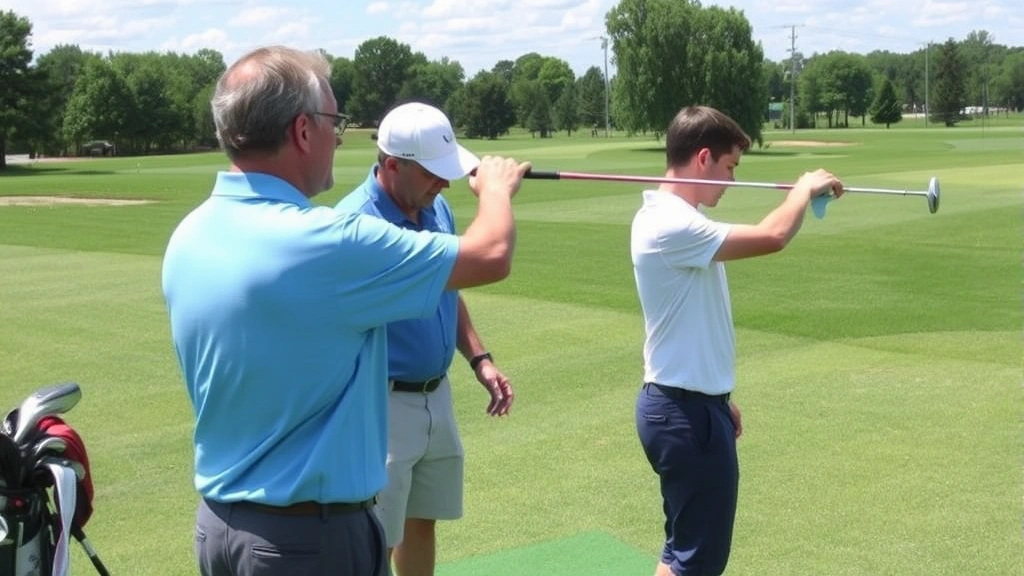
One of the most important decisions you’ll make as a beginning golfer is seeking quality instruction. While online tutorials and videos provide valuable information, working with a certified PGA professional offers personalized feedback that accelerates learning. A qualified instructor can identify swing flaws, provide corrective exercises, and create a customized learning plan aligned with your goals. Research from sports science publications demonstrates that golfers receiving professional instruction improve their handicap 30% faster than self-taught golfers.
When selecting equipment, beginners should focus on quality over quantity. You don’t need a full 14-club set immediately; starting with seven or eight clubs allows you to focus on fundamentals without overwhelming yourself with choices. Proper club fitting is essential—clubs should match your height, arm length, and swing speed. Many golf retailers offer free fitting services, which ensures your equipment supports rather than hinders your development. Additionally, investing in quality golf shoes with proper support prevents fatigue during practice sessions and rounds.
Consider practicing at facilities like Plum Creek Golf Course, which often provides excellent practice ranges and instruction opportunities. Range facilities allow you to work on specific shots in a controlled environment before applying them on the course. Many courses offer group lessons, clinics, and junior programs that provide structured learning within a supportive community. The social aspect of learning at established courses enhances motivation and provides opportunities to learn from other golfers at various skill levels.
Developing Your Practice Routine
Deliberate practice—focused, structured training targeting specific weaknesses—is more effective than casual practice. According to American Psychological Association research on skill acquisition, golfers who practice with clear objectives improve twice as fast as those engaging in random practice. Your practice routine should balance three key areas: full swing development, short game mastery, and putting proficiency.
The full swing encompasses drives, fairway woods, hybrids, and iron shots from 150 yards and beyond. Dedicate 50% of your practice time to the full swing, focusing on consistency and distance control. Use training aids like alignment sticks, impact bags, and launch monitors (available at many facilities) to provide immediate feedback. Practice different lies—uphill, downhill, sidehill—to develop adaptability.
The short game, including shots from 100 yards and closer, plus chipping and pitching, demands 30% of your practice attention. This area offers the greatest scoring improvement potential. Many golfers neglect short game practice despite its critical importance. Developing touch and distance control around the greens directly translates to lower scores. Practice different chip trajectories, pitch distances, and bunker shots to build versatility.
Putting, representing 40% of your score, deserves 20% of practice time. Focus on developing a consistent stroke, reading greens accurately, and building confidence on short putts. Practice three-to-six-foot putts extensively, as these represent the most common distances in actual rounds. Use training tools like alignment guides and distance markers to develop speed control.
Incorporate online courses for personal development focused on golf psychology and mental training. These resources complement physical practice by developing the mental resilience essential to competitive golf. Additionally, reviewing best online learning websites for golf instruction provides supplementary video content and technique analysis.
Mental Game and Course Management
Golf is fundamentally a mental game. The physical components—swing mechanics, fitness, and technique—represent only 30% of golfing success. The remaining 70% involves mental discipline, emotional control, emotional resilience, and strategic decision-making. Professional golfers understand that managing expectations, maintaining focus, and recovering from poor shots directly influence performance.
Developing a pre-shot routine establishes consistency and confidence. Your routine should include target selection, alignment verification, and a specific trigger movement before initiating your swing. This routine creates a psychological framework that reduces anxiety and promotes consistency. Most successful golfers follow identical routines regardless of pressure situations, which helps compartmentalize stress and maintain focus.
Course management involves making intelligent decisions about shot selection, risk assessment, and strategic positioning. Rather than always attempting aggressive shots, experienced golfers play to their strengths and avoid unnecessary risks. Understanding your typical shot distances, accuracy percentages, and comfortable conditions helps you make decisions that maximize scoring opportunities while minimizing mistakes. This strategic approach transforms golf from a purely technical challenge into a mental puzzle requiring problem-solving and adaptability.
Learning to manage emotions—frustration after poor shots, overconfidence after good ones—separates advancing golfers from those who plateau. Techniques from sports psychology, including visualization, breathing exercises, and positive self-talk, help maintain emotional equilibrium throughout your round. Many golfers find that understanding online degree accreditation helps them identify legitimate psychology and sports science courses that teach evidence-based mental training methods.
Progressive Training Methods
Structured progression accelerates improvement significantly. Beginning golfers should follow a logical sequence: grip and stance mastery, basic swing mechanics, distance and accuracy development, short game proficiency, and finally, course management under pressure. Attempting advanced techniques before mastering fundamentals creates frustration and poor habits that require correction later.
Video analysis has revolutionized golf instruction. Recording your swing and comparing it to professional examples provides immediate visual feedback. Many facilities now offer 3D swing analysis using sophisticated technology that measures swing plane, club head speed, and impact characteristics. This data-driven approach eliminates guesswork and focuses your practice on specific, measurable improvements.
Tournament play, even in informal settings, accelerates learning dramatically. The pressure and emotional demands of competitive rounds reveal mental weaknesses and technical inconsistencies that practice rounds don’t expose. Starting with friendly club competitions and gradually progressing to sanctioned tournaments provides increasingly challenging learning environments. The United States Golf Association offers handicap systems that track improvement objectively and provide meaningful competition frameworks.
Cross-training in complementary activities strengthens golf-specific abilities. Flexibility and mobility work improve swing mechanics and reduce injury risk. Strength training, particularly core and rotational exercises, increases club head speed and stability. Cardiovascular fitness prevents fatigue-related performance decline during long rounds. Many golfers benefit from working with fitness professionals who understand golf-specific conditioning requirements.
Exploring our blog provides ongoing learning resources and insights from education experts. Additionally, how to create online courses information helps golfers interested in teaching others structure their knowledge effectively. Understanding learning principles from best online courses for digital marketing teaches communication strategies useful for sharing golf knowledge and improvements with peers.

FAQ
How long does it take to learn golf?
Learning golf is a continuous process. Most golfers achieve basic competency—consistently breaking 100—within 6-12 months of regular practice. Reaching intermediate proficiency (breaking 90) typically requires 2-3 years of dedicated practice. Professional-level skill requires 10,000+ hours of deliberate practice, consistent with research on expertise development across domains.
What’s the best age to start learning golf?
Golf is playable at virtually any age. Children as young as 4-5 years old can begin with modified equipment and instruction. Older adults often find golf more accessible than high-impact sports. While starting younger provides advantages in developing physical skills, the mental discipline required in golf means older beginners often progress quickly through superior decision-making and focus.
Is golf an expensive sport to learn?
Golf has variable costs. Basic instruction and practice range access are relatively affordable. Green fees range widely depending on course type and location. However, you can learn golf economically by using public courses, group lessons, and practice facilities. Many courses offer discounted rates for beginners and junior players, making the sport more accessible.
How important is physical fitness for golf?
While golf doesn’t require athletic conditioning comparable to team sports, fitness significantly impacts performance. Flexibility prevents swing restrictions, core strength improves power and consistency, and cardiovascular fitness prevents fatigue-related decline. Golfers who incorporate fitness training improve faster and maintain their game longer throughout life.
Can I learn golf through online instruction alone?
Online instruction provides valuable supplementary learning, but in-person instruction is superior for identifying and correcting individual faults. Many successful golfers combine online learning with periodic professional lessons, using online resources to reinforce concepts between professional coaching sessions. This hybrid approach optimizes learning efficiency.


