Why Study Geography? Expert Insights into a Vital Academic Discipline
Geography stands as one of the most comprehensive and dynamic disciplines in modern education, yet many students and educators underestimate its profound relevance to contemporary life. Far beyond memorizing capital cities or coloring maps, geography serves as a bridge between natural sciences, social sciences, and humanities, offering students critical tools to understand our increasingly complex world. Whether you’re considering geography as a career path, seeking to enhance your teaching methodology, or simply curious about how geographic literacy shapes informed citizenship, this exploration reveals why geography deserves prominent placement in educational curricula worldwide.
The study of geography has transformed dramatically over recent decades, evolving from a descriptive discipline focused on places and locations into an analytical field that examines human-environment interactions, cultural diversity, economic systems, and global interconnectedness. Today’s geographers employ sophisticated research methods, spatial analysis technologies, and interdisciplinary approaches to address pressing global challenges including climate change, resource management, urbanization, and social inequality. Understanding geography’s contemporary relevance helps educators and learners appreciate why this discipline remains essential for developing critical thinking skills and global awareness.
The Foundation of Geographic Literacy in Modern Education
Geographic literacy represents a fundamental competency for navigating the twenty-first century, yet many education systems have marginalized geography or reduced instructional time dedicated to this essential subject. Comprehensive educational resources and course materials increasingly emphasize the importance of geographic knowledge as foundational to understanding global systems. Geographic literacy encompasses not merely factual knowledge about locations and physical features, but rather the ability to interpret spatial patterns, understand relationships between places, and recognize how local actions have global consequences.
The discipline provides students with frameworks for understanding how human societies organize themselves across space, how natural systems function and interact, and how these elements interconnect in complex ways. Students who develop strong geographic literacy can better comprehend international news, make informed decisions about environmental issues, and appreciate the diversity of human cultures and economies. Research from the National Geographic Society demonstrates that geographically literate individuals demonstrate stronger critical thinking abilities and greater engagement with global issues.
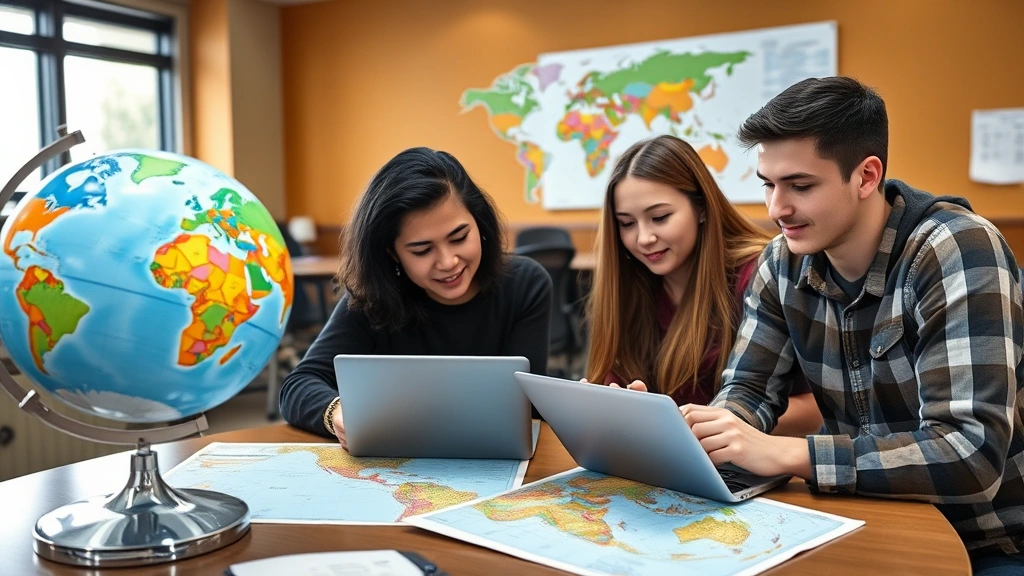
Geography education also develops spatial reasoning skills—the ability to visualize, interpret, and manipulate spatial information—which research shows correlates with success in mathematics, science, and technology fields. Students who study geography learn to work with maps, remote sensing data, geographic information systems (GIS), and other spatial technologies that have become increasingly important across numerous professional domains.

Developing Critical Thinking and Analytical Skills
One of geography’s most significant contributions to education lies in its capacity to develop rigorous analytical and critical thinking skills. Unlike disciplines that may emphasize memorization or procedural learning, geography inherently requires students to ask complex questions about causation, consequence, and interconnection. When studying a region experiencing economic development, for example, geographers must consider environmental impacts, cultural changes, social equity implications, and long-term sustainability—developing multifaceted analytical abilities applicable far beyond geography itself.
Geographic inquiry methods teach students to examine evidence, evaluate multiple perspectives, and construct evidence-based arguments about spatial phenomena. These skills directly support the broader educational goals outlined in resources addressing professional development for educators, as teachers increasingly recognize that geography instruction naturally cultivates the analytical dispositions students need across all academic domains.
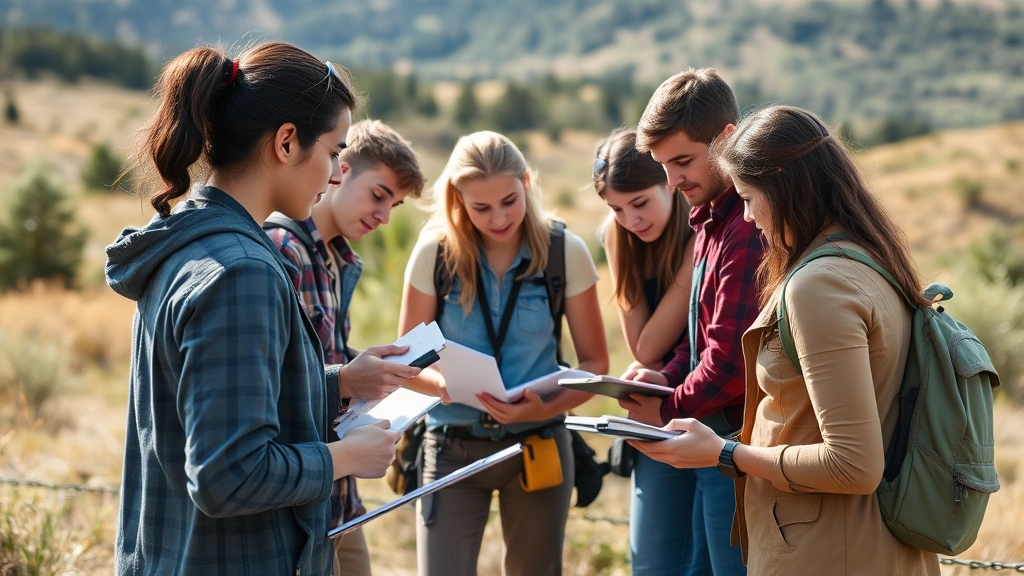
The discipline’s emphasis on fieldwork and observation—examining actual landscapes, conducting interviews, collecting data in real-world settings—grounds abstract concepts in concrete experience. This experiential learning approach, supported by research from the American Psychological Association on learning science, demonstrates that students retain information more effectively and develop deeper understanding when learning involves direct engagement with phenomena rather than passive reception of information.
Understanding Global Interconnectedness and Cultural Diversity
In our increasingly interconnected world, understanding how places, peoples, and systems relate across global scales has become essential. Geography uniquely positions students to comprehend these connections—how economic decisions in one region affect employment in another, how cultural practices reflect environmental adaptation, how political conflicts arise from competition for resources or historical grievances rooted in geography.
Geography education cultivates cultural awareness and appreciation for human diversity by examining how different societies have adapted to varied environments, developed distinct cultural practices, and created diverse economic systems. Rather than treating cultures as static or exotic, geographic study reveals how human communities continuously adapt, innovate, and interact with their environments and with each other. This understanding combats stereotyping and promotes the kind of informed cultural sensitivity essential for global citizenship.
The discipline also reveals structural inequalities in global systems—why some regions remain economically disadvantaged despite resource wealth, how colonial histories shape contemporary geopolitics, why certain populations bear disproportionate environmental burdens. This critical geographic perspective helps students understand that global patterns result not from inevitable natural forces but from human decisions and power dynamics that can be questioned and potentially transformed. Lifelong learning approaches to geography emphasize this critical perspective as essential for engaged citizenship.
Geography education also facilitates appreciation for cultural diversity by demonstrating the logic and ingenuity underlying different cultural practices and worldviews. When students understand that indigenous land management practices represent sophisticated ecological knowledge developed over centuries, they develop respect for diverse ways of knowing and being—a crucial foundation for multicultural societies.
Geographic Knowledge for Environmental Sustainability
As environmental challenges intensify—climate change, biodiversity loss, resource depletion, pollution—geographic expertise becomes increasingly critical for developing effective responses. Geographers bring unique perspectives to environmental issues by examining relationships between human systems and natural systems across multiple scales, from local watersheds to global atmospheric circulation patterns.
Geography education helps students understand that environmental problems are not simply technical or scientific challenges but deeply interconnected with economic systems, political decisions, cultural values, and social inequalities. Addressing climate change, for instance, requires understanding not just atmospheric physics but also how different regions contribute differently to emissions, how climate impacts will be distributed unequally, and what economic and social transitions are necessary for sustainable futures. This integrated perspective, grounded in geographic thinking, is essential for developing comprehensive sustainability solutions.
The discipline also teaches students to think systemically about environmental challenges—recognizing feedback loops, unintended consequences, and complex cause-and-effect relationships. Students learn that individual actions have environmental consequences, that local decisions ripple across global systems, and that sustainable futures require considering ecological limits alongside human needs. Research published by the Ecological Society of America increasingly emphasizes geographic perspectives as essential for environmental literacy and effective conservation practice.
Career Pathways and Professional Opportunities
Geography opens diverse career pathways that many students and educators fail to recognize. While some geographers pursue academic careers as researchers and university professors, the discipline’s practical applications span numerous professional fields including urban and regional planning, environmental management, international development, business analysis, government policy, conservation, humanitarian aid, and climate adaptation planning.
GIS specialists, cartographers, and spatial data analysts command strong salaries in growing fields including technology, real estate, transportation, and environmental consulting. Urban planners use geographic analysis to design sustainable cities and manage growth. Environmental consultants apply geographic knowledge to assess ecological impacts and develop mitigation strategies. International development professionals use geographic understanding to design effective poverty reduction and community development programs.
The geospatial technology sector represents one of the fastest-growing employment areas, with demand for professionals who can analyze spatial data and create geographic information systems. Specialized course guides increasingly include geographic and spatial analysis components, reflecting employer recognition that these skills enhance professional competitiveness across numerous fields.
Geography majors develop transferable skills highly valued by employers: analytical abilities, research competence, communication skills, cultural awareness, and systems thinking. These capabilities position geographers well for leadership roles in government, nonprofit organizations, and private sector companies addressing global challenges.
Geography’s Role in Civic Engagement and Global Citizenship
Democratic societies depend on informed citizens who understand how their decisions affect others, recognize connections between local and global systems, and appreciate diverse perspectives. Geography education cultivates these capacities essential for effective civic participation and global citizenship. By studying how political boundaries developed, how resources are distributed, and how power operates across space, students develop more sophisticated understanding of international relations and domestic political geography.
Geographic literacy helps citizens evaluate news coverage about global events, recognizing how media representations may reflect particular geographic perspectives and power dynamics. When reading about conflicts, trade negotiations, or environmental policies, geographically informed citizens can contextualize these issues within broader spatial frameworks, understanding historical roots and interconnected consequences.
Geography also promotes what scholars call “geoethics”—recognition that our decisions have spatial consequences affecting distant others, and that we bear ethical responsibilities to those affected by our choices. This geographic consciousness motivates more thoughtful consumption, support for fair trade practices, and engagement with international development and environmental justice issues.
Integrating Geography Across Disciplines
While geography functions as a complete discipline with its own theories, methods, and knowledge base, it also serves crucial integrative functions across educational curricula. Geography naturally connects with history, examining how past events shaped contemporary spatial patterns and how geography influenced historical developments. It intersects with science, particularly environmental science, ecology, meteorology, and geology. Geography connects with social studies, helping students understand economics, political systems, and cultural organization. It even relates to mathematics through cartography, spatial statistics, and GIS analysis.
This integrative capacity makes geography invaluable for developing interdisciplinary understanding. Students studying the Industrial Revolution gain deeper insights when geographic analysis examines why industrialization occurred in particular locations, how geographic factors facilitated or hindered industrial development, and what spatial patterns industrialization created. History becomes more comprehensible when students understand geographic context.
Similarly, environmental science education becomes more effective when geographic perspectives help students recognize that environmental problems emerge from interactions between natural systems and human societies, and that solutions must address both dimensions. The Association of American Geographers publishes resources demonstrating how geographic perspectives enhance learning across disciplines while contributing distinctive insights that other fields cannot provide.
Teachers implementing interdisciplinary units benefit from incorporating geographic perspectives and methods. Examining migration patterns combines history, economics, sociology, and geography. Studying food systems integrates agriculture, economics, environmental science, and geography. Investigating urbanization connects history, economics, environmental science, and geography. These integrative approaches, supported by specialized educational programs and course development resources, demonstrate how geography enriches learning across traditional subject boundaries.
FAQ
Why is geography often undervalued in schools compared to other subjects?
Geography has declined in many educational systems due to standardized testing emphasis on mathematics and language arts, curriculum pressures, and sometimes limited teacher preparation in geographic methods. Additionally, outdated perceptions of geography as merely place memorization rather than analytical discipline have reduced its perceived importance. Renewed emphasis on global citizenship and environmental literacy is reversing this trend.
How does studying geography improve career prospects?
Geography develops analytical, research, communication, and technology skills valuable across numerous professions. The growing importance of spatial analysis, GIS technology, sustainability, and global supply chain management creates strong demand for geographically trained professionals in consulting, planning, technology, environmental management, and international development sectors.
Can geography be taught effectively online?
While fieldwork provides irreplaceable learning experiences, online geography education can be highly effective when incorporating interactive mapping tools, virtual fieldwork, GIS software, and rich multimedia resources. Many universities now offer excellent online geography programs combining these digital tools with occasional in-person fieldwork intensives.
What geographic skills are most important for students to develop?
Critical geographic skills include spatial thinking and map interpretation, understanding scale and interconnection, recognizing human-environment relationships, appreciating cultural diversity, analyzing data and evidence, and thinking systemically about complex problems. These foundational skills support both further geographic study and success across numerous fields.
How can educators integrate more geography into existing curricula?
Educators can incorporate geographic perspectives by examining spatial dimensions of historical events, analyzing environmental and social aspects of scientific topics, considering geographic contexts for literary and cultural studies, and collaborating with geography specialists to develop interdisciplinary units addressing complex problems from multiple disciplinary angles.


