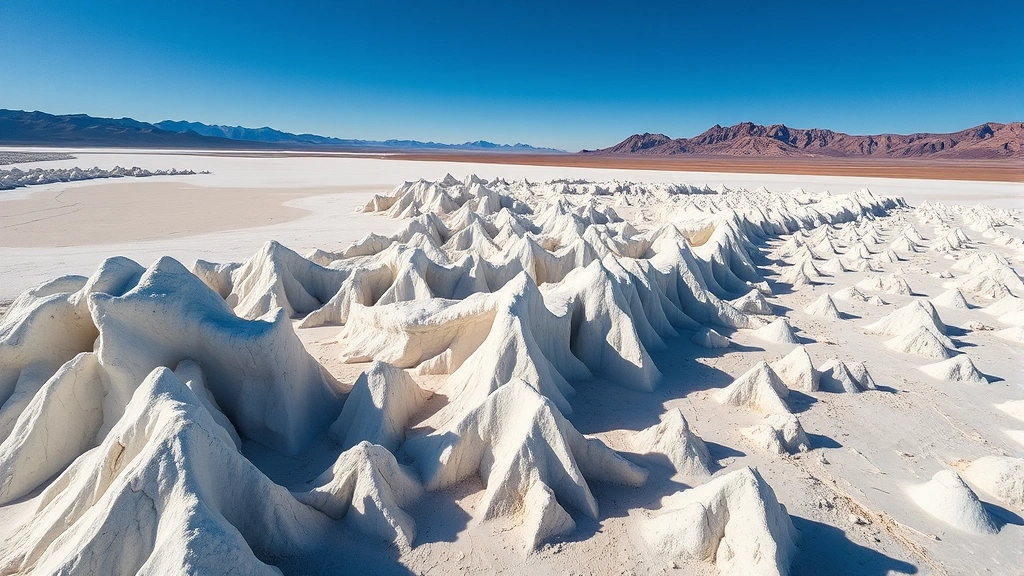
Exploring Devil’s Golf Course: Geologist’s Insights into Death Valley’s Unique Landscape
Death Valley, California, contains one of the most striking geological formations in North America: Devil’s Golf Course. This otherworldly landscape presents a fascinating case study for geologists, earth scientists, and curious travelers seeking to understand the dynamic processes that shape our planet’s surface. The formation’s dramatic terrain, characterized by jagged salt pinnacles and intricate mineral deposits, tells a compelling story about evaporation, mineral crystallization, and the extreme environmental conditions that persist in one of Earth’s most inhospitable regions.
Unlike traditional golf courses found throughout regions like Wisconsin golf courses, Devil’s Golf Course presents a natural geological wonder rather than a manicured recreational space. The name itself, attributed to a park ranger’s observation that only the Devil could play golf on such terrain, reflects the challenging and surreal nature of this landscape. Understanding the geological mechanisms behind Devil’s Golf Course requires examination of salt crystallization processes, mineral composition, and the historical climate patterns that created these distinctive formations.
Formation and Geological History
Devil’s Golf Course emerged through millions of years of geological processes centered on the evaporation of ancient lakes and mineral-rich water bodies. During the Pleistocene epoch, Death Valley experienced significantly different climatic conditions than today. Periodic lakes formed in the valley basin, fed by precipitation and groundwater sources from surrounding mountain ranges. As these lakes experienced evaporation in the arid climate, dissolved minerals concentrated in the remaining water, eventually crystallizing and accumulating on the valley floor.
The specific location of Devil’s Golf Course sits at the terminus of a paleodrainage system where water historically collected mineral-rich sediments. Over thousands of years, successive cycles of water influx and evaporation created layers of mineral deposits. The underlying bedrock geology of Death Valley, composed primarily of metamorphic and igneous rocks from the Precambrian era, provided the foundation upon which these mineral formations developed. The tectonic activity characteristic of the Death Valley region, associated with the Basin and Range extension, created the valley’s distinctive topography and influenced groundwater circulation patterns.
Geologists have determined that the current configuration of Devil’s Golf Course likely developed during the last glacial period and the subsequent Holocene epoch. Radiocarbon dating of organic materials found within the salt deposits suggests that active mineral crystallization and pinnacle formation occurred relatively recently in geological timescales, with significant development occurring within the last 10,000 years. This makes Devil’s Golf Course an actively evolving geological feature, where ongoing processes continue to shape the landscape.
The formation process involved not only simple salt crystallization but also complex interactions between groundwater chemistry, surface evaporation, and mineral precipitation. Subsurface brine deposits continue to feed the surface formations through capillary action, where mineral-rich groundwater rises through soil and rock layers, depositing minerals as surface water evaporates. This ongoing process means that Devil’s Golf Course remains dynamic, with new pinnacles forming and existing formations gradually changing through cycles of dissolution and recrystallization.
Salt Crystallization and Pinnacle Development
The distinctive jagged pinnacles characterizing Devil’s Golf Course result from a specific crystallization process unique to salt minerals under particular environmental conditions. When mineral-rich brines reach the surface and begin evaporating, halite (sodium chloride) crystals form, but the crystallization process doesn’t create smooth surfaces. Instead, the interplay between evaporation rates, mineral concentrations, and thermal expansion creates the characteristic sharp, irregular formations that give the landscape its treacherous appearance.
The pinnacle structures develop through several interconnected mechanisms. Initially, as brine evaporates, salt crystals precipitate from the solution. However, the rate of evaporation varies across the surface due to differences in sun exposure, wind patterns, and mineral composition. Areas with slower evaporation rates may develop larger, more stable crystal structures, while areas with rapid evaporation create smaller, more fragmented formations. The result is a landscape of varying pinnacle sizes and shapes, all contributing to the chaotic, broken appearance characteristic of the site.
Thermal expansion and contraction play a crucial role in pinnacle development and maintenance. Death Valley experiences extreme temperature fluctuations, with daytime temperatures in summer exceeding 120°F while nighttime temperatures can drop significantly. These temperature swings cause minerals to expand and contract at different rates, creating stress within the crystal structures. This stress eventually leads to fracturing and the development of the sharp edges and jagged surfaces visible today. The constant cycle of thermal stress helps explain why Devil’s Golf Course maintains its distinctly sharp, dangerous appearance rather than becoming smooth and rounded through weathering.
Subsurface salt deposits continue to feed pinnacle growth through capillary rise. Groundwater containing dissolved salts moves upward through soil and fractured rock, driven by capillary forces. As this water reaches the surface and evaporates, it deposits additional mineral material, causing existing pinnacles to grow taller and new formations to develop. This ongoing process means that Devil’s Golf Course is not a static geological feature but rather an actively evolving landscape where the balance between mineral deposition and weathering processes determines the current surface morphology.
The composition of the crystallizing minerals influences pinnacle morphology. While halite dominates the formations, other minerals including borax, ulexite, and various sulfate compounds contribute to the overall mineral assemblage. These minerals have different crystallization habits and solubility characteristics, leading to variations in pinnacle formation patterns. Understanding the specific mineral composition at different locations within Devil’s Golf Course provides insights into the chemical evolution of the subsurface brines and the historical water chemistry changes in Death Valley.

Mineral Composition and Chemistry
Detailed geochemical analysis of Devil’s Golf Course materials reveals a complex mineral assemblage reflecting the long history of mineral concentration through evaporative processes. Halite represents the dominant mineral, comprising the bulk of the pinnacle structures. However, the presence of secondary minerals provides crucial information about the chemical environment and the sequence of crystallization events that created the current landscape.
Borax deposits occur throughout Devil’s Golf Course, indicating that the groundwater feeding the formations contains significant boron concentrations. The presence of borax, a hydrated borate mineral, suggests that the source rocks for the groundwater include evaporitic deposits or boron-rich minerals that have been leached by circulating groundwater. The concentration of borax relative to halite varies across different areas of the site, reflecting variations in groundwater chemistry and the history of mineral deposition.
Ulexite, another borate mineral, appears in certain locations within Devil’s Golf Course. This mineral, known as ‘television stone’ due to its light-conducting properties, forms under specific conditions of brine chemistry and evaporation rates. The presence of ulexite indicates periods when boron-rich, low-pH brines dominated the surface environment. The distribution of ulexite deposits provides clues about historical changes in groundwater chemistry and the evolution of the evaporative system over time.
Sulfate minerals including gypsum and thenardite contribute to the overall mineral assemblage visible at Devil’s Golf Course. These minerals indicate that the groundwater contained substantial dissolved sulfate ions, likely derived from the oxidation of pyrite and other sulfide minerals in the surrounding bedrock. The relative abundance of sulfate minerals compared to chloride minerals varies with location, suggesting that groundwater composition changes across the Death Valley basin due to differences in rock mineralogy and groundwater flow paths.
The chemical analysis of brine samples collected from Devil’s Golf Course reveals the composition of the groundwater currently feeding mineral precipitation. These brines are highly concentrated in dissolved salts, with sodium chloride concentrations exceeding 250 grams per liter in some locations. The presence of other dissolved ions including potassium, magnesium, boron, and sulfate reflects the complex geochemistry of Death Valley’s groundwater system. Understanding this chemistry helps explain the specific minerals crystallizing at the surface and predicts how future mineral assemblages may change as groundwater composition evolves.
Environmental Conditions and Climate Impact
Death Valley’s extreme environmental conditions create the perfect setting for the development and maintenance of features like Devil’s Golf Course. The valley experiences some of Earth’s most intense heat, with recorded temperatures exceeding 130°F. The low precipitation, averaging less than 2 inches annually, ensures that evaporation dramatically exceeds water input, concentrating minerals in any surface or near-surface water. These extreme conditions have persisted for thousands of years, allowing the accumulation of massive mineral deposits.
The aridity of Death Valley results from its location in the rain shadow of the Sierra Nevada and Panamint mountain ranges. Moist air masses moving inland from the Pacific Ocean lose most of their moisture as they encounter these mountain barriers. By the time air reaches Death Valley, it contains very little moisture, resulting in clear skies, intense solar radiation, and minimal precipitation. This rain shadow effect has maintained the arid conditions necessary for mineral concentration through evaporation.
Wind patterns in Death Valley significantly influence the evaporation rates and mineral deposition processes visible at Devil’s Golf Course. Winds channeling through the valley increase evaporation rates and transport mineral-rich dust across the landscape. The directional consistency of these winds creates asymmetrical erosion patterns and influences the orientation of newly crystallizing minerals. Understanding local wind patterns provides insights into why certain areas of Devil’s Golf Course show more active mineral deposition than others.
Climate change presents both current and future challenges to Devil’s Golf Course. Changes in precipitation patterns, even modest increases, could alter the balance between mineral deposition and dissolution. Rising temperatures, if sustained, might increase evaporation rates in some seasons while affecting groundwater recharge in adjacent mountain ranges. These changes could gradually transform the landscape, potentially reducing the prominence of the characteristic pinnacles or altering the mineral composition of newly forming deposits. Long-term monitoring of Devil’s Golf Course provides valuable data about how geological features respond to climate variability.
Historical climate reconstructions based on geological evidence suggest that Death Valley has experienced significant climate fluctuations over the past 10,000 years. Periods of increased precipitation led to larger lakes and higher water tables, while drier periods concentrated mineral deposits more intensively. The current configuration of Devil’s Golf Course represents a specific point in this long-term climate history. Understanding these historical climate variations helps geologists interpret the landscape and predict how future climate changes might affect the site.
Visitor Experience and Conservation
Devil’s Golf Course attracts thousands of visitors annually, making it one of Death Valley’s most visited geological attractions. The site offers a unique opportunity for people to directly observe active geological processes and understand the extreme environments where mineral crystallization occurs. However, the fragile nature of the pinnacles and the harsh environmental conditions require careful management to balance visitor access with site preservation.
The challenging terrain that inspired the site’s name makes walking across Devil’s Golf Course genuinely dangerous. The sharp salt pinnacles can easily cut exposed skin, and the uneven surface creates hazards for twisted ankles and falls. The intense heat, lack of shade, and distance from water sources require visitors to take serious precautions including appropriate footwear, sun protection, and hydration. Park rangers recommend limiting visits to early morning or late afternoon hours when temperatures are less extreme.
Conservation efforts at Devil’s Golf Course focus on minimizing human impact while maintaining visitor access. The National Park Service has established designated walking paths to concentrate foot traffic and prevent widespread disturbance of the pinnacle formations. These paths guide visitors through the most geologically interesting areas while protecting more fragile sections from trampling. Interpretive signs explain the geological processes creating the landscape and provide context for understanding the mineral deposits visible at the site.
Scientific research continues at Devil’s Golf Course, with geologists studying the ongoing crystallization processes and monitoring changes in the landscape. Long-term photographic documentation allows researchers to track pinnacle growth rates and changes in mineral composition. Periodic sampling of brine deposits and mineral crystals provides data about the chemical evolution of the system. This research contributes to broader understanding of evaporative mineral systems and how geological features respond to environmental changes, similar to studies conducted at golf course geological surveys.

Comparative Geological Sites
Devil’s Golf Course represents one of several evaporative mineral systems found in arid regions worldwide. Understanding how this site compares to other similar geological features provides context for appreciating its unique characteristics and the processes that created it. The Course Connect geological database includes information about similar formations in different regions.
The Badwater Basin, located elsewhere in Death Valley, displays similar salt crystallization processes but in a different environmental context. Badwater represents the lowest point in North America at 282 feet below sea level. The salt formations at Badwater result from similar evaporative processes but occur in a different hydrogeological setting. Comparing Devil’s Golf Course with Badwater helps illustrate how variations in groundwater chemistry and topography influence mineral deposition patterns.
The Atacama Desert in Chile contains similar evaporative mineral systems where halite, borax, and other minerals accumulate through intense evaporation. These Chilean deposits, some of which are commercially mined for mineral resources, demonstrate how the processes visible at Devil’s Golf Course operate in other extreme environments. The Atacama sites provide opportunities to study how these mineral systems develop under different geological and climatic conditions.
The Dead Sea region in the Middle East hosts extensive evaporative mineral deposits similar to those at Devil’s Golf Course. The Dead Sea’s extremely high salinity creates ideal conditions for mineral crystallization. The mineral deposits surrounding the Dead Sea, including the Dead Sea Works mining operations, represent commercial-scale versions of the natural processes occurring at Devil’s Golf Course. Studying these different sites collectively helps geologists understand the full spectrum of evaporative mineral system behaviors.
The Great Salt Lake in Utah provides another North American example of evaporative mineral systems. While the lake itself remains liquid, its shores and surrounding areas display salt crystallization formations. The Great Salt Lake’s varying salinity zones create different mineral assemblages at different locations, providing natural experiments in how water chemistry influences mineral deposition. These comparisons, along with resources like Sherrill Park Golf Course geological records, help contextualize Devil’s Golf Course within broader geological systems.
The Salton Sea in California represents an unusual case where a modern evaporative system has developed over just the past century. The Salton Sea’s rapid mineral accumulation provides insights into how quickly salt formations can develop under extreme evaporation conditions. This young system, compared to Devil’s Golf Course’s thousands-of-years history, demonstrates the different timescales at which evaporative processes operate depending on water input rates and environmental conditions.
Research comparing these various evaporative systems, including detailed studies from Sunken Gardens geological analysis, reveals common principles governing mineral crystallization while highlighting site-specific variations. The differences in mineral assemblages, crystallization rates, and landscape morphologies at these various locations reflect variations in groundwater chemistry, climate, and geological substrate. This comparative approach strengthens geologists’ ability to interpret Devil’s Golf Course and predict how it may evolve in response to future environmental changes.
FAQ
What makes Devil’s Golf Course unique compared to other salt formations?
Devil’s Golf Course’s distinctive sharp pinnacles result from the specific combination of salt crystallization, thermal expansion and contraction, and capillary rise processes occurring in Death Valley’s extreme environment. The dynamic nature of the formation, with ongoing mineral deposition and weathering, creates the jagged landscape that distinguishes it from smoother salt formations found elsewhere.
Is it safe to visit Devil’s Golf Course?
Visitors can safely explore Devil’s Golf Course by following park guidelines, wearing appropriate footwear with good ankle support, applying sun protection, and bringing adequate water. The sharp pinnacles can cut skin, and the intense heat poses risks. Early morning visits are recommended to avoid peak heat. Staying on designated paths and moving carefully reduces injury risks significantly.
How quickly do the pinnacles grow?
Pinnacle growth rates vary considerably depending on groundwater flow rates, evaporation intensity, and mineral composition. Some areas show measurable growth over months, while others develop more slowly. Long-term monitoring studies suggest average growth rates of several millimeters per year in active areas, though these rates fluctuate seasonally and annually based on precipitation and temperature patterns.
What minerals besides salt are found at Devil’s Golf Course?
Beyond halite (common salt), Devil’s Golf Course contains significant deposits of borax and ulexite (borate minerals), gypsum, and various sulfate minerals. The specific mineral assemblage reflects the chemical composition of the groundwater feeding the site and the historical evolution of the evaporative system. Different areas show varying mineral concentrations depending on local hydrogeological conditions.
How does climate change affect Devil’s Golf Course?
Climate change could alter precipitation patterns, groundwater recharge rates, and evaporation intensity, potentially affecting mineral deposition and pinnacle growth rates. Even modest increases in precipitation could shift the balance between mineral crystallization and dissolution. Ongoing scientific monitoring helps track how Devil’s Golf Course responds to changing environmental conditions.
Can the minerals at Devil’s Golf Course be commercially mined?
While Devil’s Golf Course contains significant mineral deposits, the site’s location within Death Valley National Park and its designation as a protected geological feature prevent commercial mining. The site’s scientific and educational value, combined with its role as a natural laboratory for studying evaporative processes, takes precedence over resource extraction.


