
Improve Your Golf Swing? Pro Tips for Stay-at-Home Moms
Being a stay-at-home mom doesn’t mean sacrificing your passion for golf. In fact, many SAHMs find that golf provides a perfect blend of personal time, physical activity, and social connection—essential components for maintaining mental health and well-being. Whether you’re looking to improve your handicap or simply want to enjoy more consistent rounds, developing a stronger golf swing is entirely achievable with the right approach and dedication.
The challenge for most stay-at-home mothers is finding the time and resources to practice effectively while managing household responsibilities. This guide provides practical, evidence-based strategies specifically designed for SAHMs who want to elevate their game without overwhelming their schedules. From understanding swing mechanics to maximizing practice efficiency, you’ll discover how to transform your golf experience while balancing family life.
Understanding Golf Swing Fundamentals
Every golfer’s journey begins with mastering the fundamental mechanics of a proper swing. The golf swing comprises several interconnected phases: the address, takeaway, backswing, transition, downswing, impact, and follow-through. Understanding each component helps you identify where improvements can be made and why certain adjustments matter.
The address position sets the foundation for everything that follows. Your feet should be shoulder-width apart, with your weight distributed evenly. Your grip pressure should be firm but not tense—many instructors recommend a seven out of ten grip pressure scale. The club face should be square to your target line, and your body should be aligned parallel to that line.
Your takeaway initiates the backswing and establishes the path your club will follow. During this crucial first movement, the club should move away from the ball in a straight line for the first twelve inches. Your wrists remain relatively flat, and your shoulders begin rotating. This smooth, controlled movement prevents the common mistake of jerking the club away from the ball, which disrupts your entire swing sequence.
The backswing involves rotating your shoulders approximately ninety degrees while your hips rotate about forty-five degrees. This differential rotation creates what golfers call “coil”—tension between your upper and lower body that generates power. Your lead arm (left arm for right-handed golfers) should remain relatively straight, while your trailing arm bends naturally. At the top of your backswing, your hands should be positioned above your shoulder line, and the club shaft should be parallel to your target line.
The transition and downswing represent the most critical phase for consistency. Rather than starting your downswing with your hands or upper body, initiate the movement with your lower body. Your hips begin rotating back toward the target while your shoulders remain coiled. This sequence—lower body first, then upper body, then arms, then hands—creates the proper acceleration pattern that generates distance and accuracy.
At impact, your hands should be ahead of the ball, your head should remain behind the ball, and your lower body should be nearly fully rotated toward the target. The club face should be square to your target line. Many golfers struggle with impact position because they allow their hands to fall behind the ball, which opens the club face and creates slices.
The follow-through and finish demonstrate whether you’ve executed the previous phases correctly. Your body should be fully rotated toward the target, your weight should be predominantly on your lead leg, and your trailing heel can be up off the ground. A balanced, complete finish indicates that you’ve transferred your weight properly throughout the swing.

Time-Efficient Practice Strategies for Busy Moms
As a stay-at-home mom, your time is fragmented and unpredictable. Rather than waiting for large blocks of uninterrupted practice time, successful SAHMs adopt a deliberate practice approach that maximizes the quality of practice in shorter sessions. Research from the American Psychological Association on effective learning shows that focused, intentional practice produces superior results compared to casual repetition.
Consider dedicating three fifteen-minute sessions per week rather than one hour-long session. During each session, focus on a single element: grip and address one session, short game fundamentals the next, and swing plane the third. This focused approach prevents mental fatigue and allows you to concentrate deeply on one aspect rather than attempting to improve everything simultaneously.
The short game deserves disproportionate attention. Statistically, approximately sixty percent of strokes occur within one hundred yards of the green. Practicing chipping, pitching, and putting delivers the highest return on investment for your practice time. Fortunately, short game practice requires minimal space—you can practice in your backyard, at local par-three courses like par three golf courses near me, or during lunch breaks at nearby facilities.
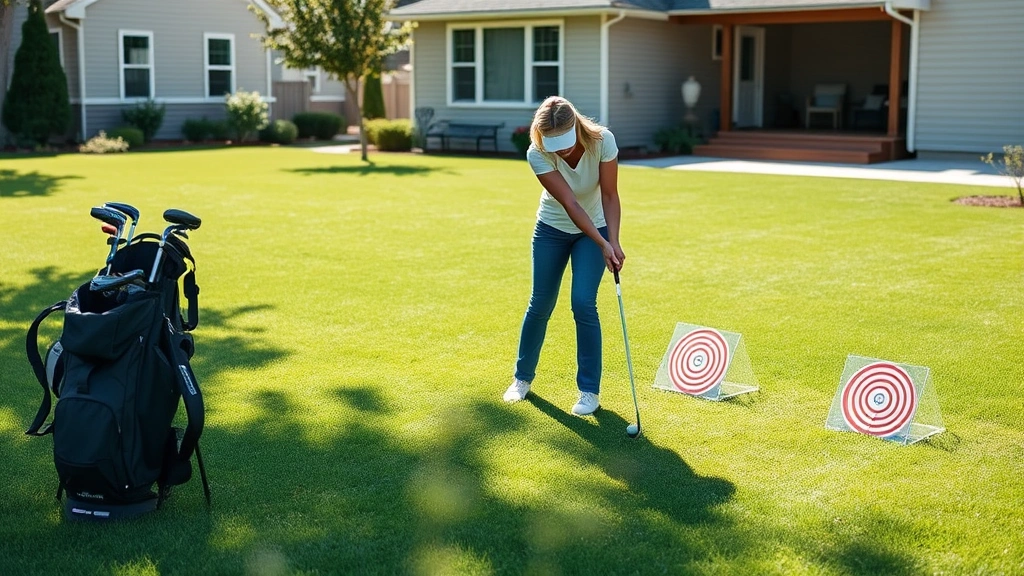
Establish a home practice station with essential equipment: a hitting net, a putting mat, and chipping targets. Many SAHMs set up a small practice area in their garage or backyard where they can work on their swing during early morning hours before family responsibilities intensify. Even thirty minutes of practice before children wake up significantly accelerates improvement.
Video analysis has become an invaluable tool for golfers of all levels. Recording your swing on your smartphone and comparing it to professional instruction videos identifies mechanical flaws immediately. Many free resources on YouTube provide detailed swing analysis, and some golf instructors offer virtual lessons via video call—a flexible option for busy moms.
When visiting Page Belcher Golf Course, dedicate specific rounds to practice rather than competition. Play one ball, focus on swing mechanics rather than score, and work on particular shots you’ve identified as weaknesses. This approach transforms your course time into a learning laboratory.
Range sessions should follow a structured protocol. Rather than mindlessly hitting balls, organize your practice into three segments: warm-up with short irons, main focus on a specific club or swing thought, and cool-down with short game work. Spend thirty percent of your range time on short shots, fifty percent on full swings, and twenty percent on specialized practice like high shots, low shots, or draws and fades.
Mental Game and Confidence Building
Technical skill represents only one dimension of golf improvement. The mental game—your ability to manage pressure, maintain focus, and believe in your capabilities—often determines success more than physical technique. Stay-at-home moms frequently experience unique mental challenges related to self-doubt, time constraints, and guilt about prioritizing personal pursuits.
Developing pre-shot routines provides structure and confidence. Your routine should include: standing behind the ball to assess the shot, selecting a target line, taking practice swings while visualizing the desired shot, addressing the ball, and executing. This consistent sequence trains your mind to enter a focused state, reducing anxiety and improving decision-making.
Research in sports psychology demonstrates that mental toughness training significantly improves performance under pressure. SAHMs can develop mental toughness through visualization exercises, where you mentally rehearse successful shots before playing them. Spend five minutes daily visualizing yourself executing excellent golf shots, handling pressure calmly, and finishing rounds strong.
Positive self-talk counteracts the internal criticism many golfers direct at themselves. Instead of “I always slice this club,” reframe to “I’m developing consistency with this club.” This subtle shift from fixed mindset to growth mindset creates psychological space for improvement. Your brain responds to the language you use, and positive framing enhances confidence and resilience.
Setting process goals rather than outcome goals reduces performance anxiety. Instead of “I want to shoot 85,” establish “I want to maintain my pre-shot routine on every shot” or “I want to hit fairways with my driver seventy percent of the time.” Process goals remain within your direct control, while outcome goals depend on variables you cannot control.
When playing at Boulder City Golf Course or other courses, practice course management—making intelligent decisions that reduce risk and maximize opportunity. This mental skill involves knowing your distances, understanding your miss patterns, and playing to your strengths rather than attempting impossible shots.
Managing perfectionism proves essential for SAHMs who often set unrealistically high standards for themselves. Golf will humble you regularly, and accepting imperfection as part of the learning process prevents frustration and burnout. Celebrate small improvements rather than demanding perfection immediately.
Finding Community at Local Courses
Golf provides remarkable social benefits, and connecting with other golfers—particularly other moms pursuing the sport—creates accountability and motivation. Many courses offer ladies’ leagues, beginner groups, and social outings specifically designed for players at various skill levels.
Investigate Talking Stick Golf Course and other local facilities to learn about their women’s programs. Joining a regular group creates consistency in your schedule, provides instruction opportunities, and builds friendships with people who understand your passion. Many courses offer discounted rates for league play, making regular golf more affordable.
Finding a golf mentor accelerates your improvement exponentially. An experienced golfer can identify swing flaws you might miss, provide encouragement during frustrating periods, and share course management wisdom. Don’t hesitate to ask better golfers if they’d welcome your joining their group occasionally.
Social golf differs from competitive golf, and both offer valuable experiences. Casual rounds with friends provide enjoyment and pressure-free practice, while competitive formats like scrambles or best-ball tournaments build pressure management skills. Participate in both formats to develop well-rounded abilities.
Many SAHMs find that golf creates a rare space where they’re not defined by their parenting role. This mental separation proves psychologically valuable, providing identity beyond motherhood. The golf community often proves welcoming and encouraging, particularly to women entering or returning to the sport.
The National Golf Foundation provides resources for women golfers and tracks the growing participation of women in golf. Connecting with broader golf communities through online forums and social media groups connects you with SAHMs facing similar challenges.
Equipment and Setup Considerations
Proper equipment significantly impacts your ability to improve. Many beginning golfers use clubs that don’t match their swing characteristics, making improvement unnecessarily difficult. If you’re using hand-me-down clubs or equipment from several years ago, consider a professional fitting.
Club fitting considers your height, swing speed, arm length, and swing characteristics to determine optimal shaft length, lie angle, and club head specifications. A proper fitting costs between one hundred and three hundred dollars but can eliminate swing compensations you’ve developed due to ill-fitting equipment. Some courses and golf shops offer free or low-cost fitting sessions.
Your golf ball selection matters more than many golfers realize. Different balls offer different spin rates, compression ratings, and flight characteristics. As you improve, experimenting with various balls helps identify which model suits your swing best. For practice purposes, inexpensive range balls suffice, but for rounds, investing in quality balls that match your swing characteristics improves consistency.
A golf bag with proper organization streamlines your course experience. Dividers prevent clubs from clanging together, which protects your equipment and reduces distractions. A lightweight carry bag or push cart reduces physical strain, particularly important for moms managing existing physical demands.
Consider investing in alignment aids—tools that help you establish proper address position. An alignment stick (a simple rod placed on the ground) costs ten dollars and immediately improves your setup consistency. Proper setup cascades positive effects throughout your swing.
Rangefinders and GPS watches provide valuable distance information, reducing guesswork and improving club selection. While not essential for beginners, these tools become increasingly valuable as your skills develop.
Nutrition and Physical Conditioning
Golf requires less explosive athleticism than many sports, but physical conditioning significantly impacts performance and injury prevention. A flexible, strong body executes the golf swing more efficiently and with less risk of injury.
Flexibility work deserves priority. The golf swing demands substantial rotation through your hips, spine, and shoulders. Yoga, particularly styles emphasizing hip and shoulder opening, provides exceptional benefits for golfers. Even fifteen minutes of daily stretching improves your range of motion, enabling more powerful swings with less strain.
Core strength stabilizes your swing and generates power from your center rather than relying on your arms. Planks, dead bugs, pallof presses, and similar exercises strengthen your core without requiring gym equipment. A strong core reduces injury risk and improves consistency.
Leg strength supports the lower body rotation that initiates your downswing. Squats, lunges, and single-leg exercises develop the strength and stability necessary for powerful leg drive. Strong legs also reduce fatigue during eighteen holes.
Nutrition supports both performance and energy levels. Proper hydration maintains mental clarity and physical performance throughout your round. Many golfers underestimate the physical demands of golf and arrive at the course dehydrated and undernourished. Eat a balanced breakfast, bring water and electrolyte beverages, and pack protein snacks to maintain energy levels.
Walking eighteen holes burns approximately fifteen hundred calories and requires sustained cardiovascular effort. Building cardiovascular fitness through walking, cycling, or swimming improves your ability to maintain focus and energy throughout a complete round.
The American Council on Exercise provides evidence-based fitness information applicable to golf conditioning. Consider working with a fitness professional familiar with golf-specific training to design an efficient conditioning program.
Injury prevention proves particularly important for SAHMs managing household responsibilities alongside their golf pursuits. Properly warming up before practice or rounds, gradually increasing training intensity, and incorporating rest days prevents overuse injuries. If pain develops, address it immediately rather than playing through it.
Creating Your Personal Improvement Plan
With understanding of fundamentals, practice strategies, mental skills, and physical conditioning, you’re ready to create a personalized improvement plan. Assessment begins with honesty about your current abilities and limitations. Video record your swing, track your scoring statistics, and identify patterns in your performance.
Categorize your challenges: swing mechanics, short game, course management, mental game, or physical conditioning. Most golfers benefit from addressing short game first, as improvement in this area most directly impacts scoring. Once you’ve identified primary areas for development, sequence your practice to address them systematically.
Establish measurable, specific goals with realistic timelines. Rather than “improve my golf swing,” establish “reduce my driver slice by hitting fairways seventy percent of the time within three months” or “develop consistent chipping technique by practicing twenty minutes three times weekly for two months.”
Create a practice schedule that realistically fits your life as a SAHM. Perhaps you practice short game Tuesday and Thursday mornings, visit the range Saturday morning, and play a round Sunday afternoon. This consistent schedule becomes part of your weekly rhythm rather than competing with other responsibilities.
When visiting Florida state parks golf courses or other local facilities, apply your practice plan to actual play. Use each round as an opportunity to test what you’ve learned and identify areas requiring additional work.
Document your progress through scorecards, practice logs, and video recordings. Visible progress motivates continued effort and helps you recognize improvements you might otherwise overlook. Review your plan quarterly and adjust based on results and changing circumstances.
FAQ
How much time do I realistically need to invest to improve my golf swing?
Quality matters more than quantity. Thirty minutes of focused, deliberate practice three times weekly produces better results than three hours of casual range sessions. Most golfers see meaningful improvement within three to six months of consistent, structured practice. Consistency trumps intensity.
Should I take professional golf lessons?
Professional instruction accelerates improvement by identifying flaws and providing corrective strategies. Even a few lessons from a qualified instructor establishes proper fundamentals, preventing years of reinforcing incorrect patterns. Many courses offer group lessons at reduced rates, making instruction affordable for budget-conscious SAHMs.
What’s the best way to practice with limited time?
Prioritize short game practice, as this area most directly impacts scoring. Dedicate sixty percent of practice time to shots within one hundred yards, twenty percent to full swings, and twenty percent to mental game work. Use video analysis to maximize the efficiency of your practice time.
How do I balance golf with family responsibilities?
Schedule golf time like any important appointment, communicating clearly with your family about your golf schedule. Morning practice sessions before children wake often prove most feasible. Involve family occasionally—children often enjoy visiting the range or playing par-three courses. Frame golf as self-care essential for your mental health.
What’s the most common mistake SAHMs make when improving their golf swing?
Attempting to fix too many things simultaneously overwhelms the learning process. Focus on one element until you achieve consistency, then progress to the next area. Patience and systematic progression produce lasting improvement.
How can I stay motivated during frustrating plateaus?
Plateaus are normal and temporary. Focus on process goals and celebrating small improvements rather than demanding dramatic score reductions. Track statistics beyond score—fairways hit, greens in regulation, putts per round—to recognize progress in specific areas. Connect with other golfers for encouragement and accountability.
Is golf expensive for stay-at-home moms on a budget?
Golf can be affordable with strategic choices. Play at municipal courses, which typically charge less than private facilities. Join ladies’ leagues for discounted rates. Buy used equipment from reputable sources. Practice at your home or driving range rather than always playing full rounds. Many communities offer junior or beginner rates even for adults new to the sport.


