
Top Welding Courses: Industry-Approved Choices for Career Success
Welding is a skilled trade that offers excellent career prospects, competitive wages, and the satisfaction of creating tangible results. Whether you’re entering the workforce for the first time or transitioning careers, selecting the right welding courses can significantly impact your professional trajectory. The welding industry demands certified professionals who understand safety protocols, multiple welding techniques, and material properties. This comprehensive guide explores industry-approved welding programs that prepare students for real-world challenges and professional certification.
The demand for skilled welders continues to grow across construction, manufacturing, automotive, aerospace, and pipeline industries. According to the U.S. Bureau of Labor Statistics, welding positions are projected to remain steady with consistent opportunities for advancement. Choosing quality welding courses ensures you gain hands-on experience, industry-recognized credentials, and the technical knowledge employers actively seek.
Understanding Welding Certification Levels
Before selecting welding courses, understanding the certification hierarchy helps you choose programs aligned with your career goals. The American Welding Society (AWS) establishes standards recognized nationwide and internationally. Entry-level certifications demonstrate foundational competency, while advanced credentials qualify you for specialized industrial applications.
Certified Welder (CW) credentials verify your ability to perform specific welding processes on particular materials and positions. These certifications require passing practical and written examinations administered by AWS-accredited testing facilities. Most employers require at least one CW certification, making it essential to prioritize programs offering AWS-certified instruction.
The Certified Welding Inspector (CWI) credential represents advanced expertise, typically pursued after gaining several years of welding experience. Similarly, Certified Welding Engineer (CWE) positions require additional engineering education. Understanding this progression helps you select welding courses that align with your long-term professional aspirations, whether you aim for hands-on welding positions or supervisory roles.
When evaluating welding courses, verify that instructors hold AWS certifications and that programs maintain accreditation with recognized bodies. This ensures curriculum quality and that your credentials transfer across employers and geographic locations.
Top Community College Welding Programs
Community colleges offer accessible, affordable welding courses with strong industry connections and experienced faculty. These institutions typically provide comprehensive two-year Associate degree programs alongside shorter certificate options, making them ideal for diverse learning timelines and budgets.
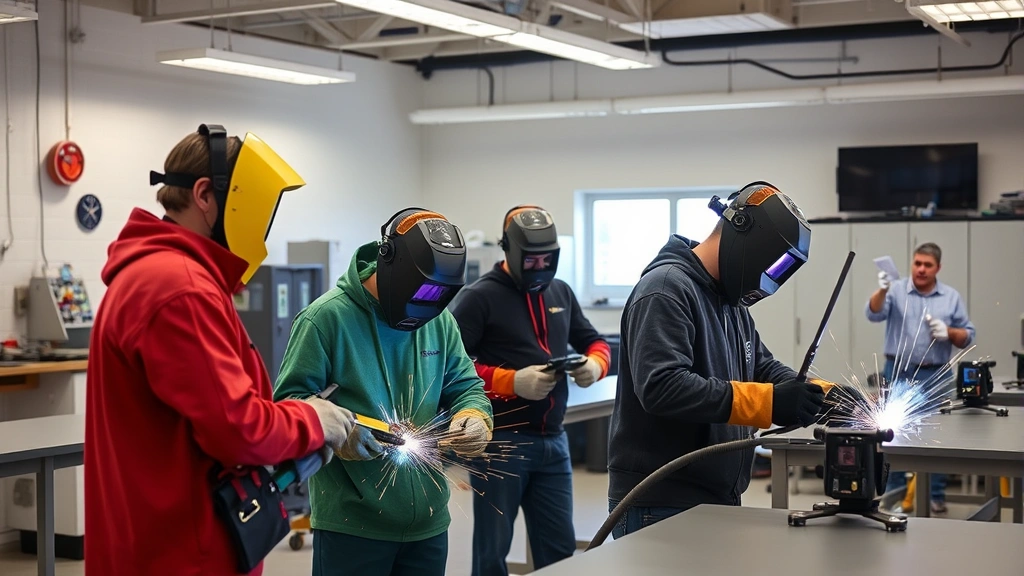
Program Structure and Benefits: Community college welding programs balance theoretical knowledge with extensive hands-on laboratory work. Students learn in state-of-the-art facilities with modern welding equipment, practicing under professional supervision. Many community colleges partner directly with local employers, facilitating job placement and ensuring curriculum reflects current industry demands.
Top community colleges often feature specializations within welding programs, including structural steel welding, pipe welding, and fabrication techniques. Faculty members typically possess industry certifications and current experience, bringing real-world perspectives to classroom instruction. Additionally, community colleges often offer flexible scheduling, evening classes, and part-time enrollment options, accommodating working adults and students with other commitments.
The cost advantage of community college welding courses cannot be overstated. Tuition typically ranges from $3,000 to $8,000 annually for full-time enrollment, substantially less than private vocational schools. Furthermore, many community colleges are eligible institutions for federal financial aid, including Pell Grants and student loans, making quality welding education financially accessible.
When researching community colleges, look for programs with strong AWS accreditation records, modern facility investments, and documented graduate employment rates. Many community colleges maintain partnerships with course catalog systems allowing you to explore detailed program requirements before enrollment.
Vocational and Trade School Options
Specialized vocational and trade schools dedicate their entire focus to hands-on skilled training, offering intensive welding courses with flexible scheduling and industry-specific expertise. These institutions often accelerate learning timelines, allowing students to complete certification requirements in months rather than years.
Advantages of Trade Schools: Vocational welding schools typically employ instructors with extensive field experience and current industry certifications. Class sizes remain smaller than community colleges, providing individualized attention and more hands-on practice time. Many trade schools operate year-round with multiple program start dates, accommodating students who cannot wait for traditional semester schedules.
Trade school welding courses often emphasize specific industries or techniques. Some programs specialize in pipe welding for oil and gas industries, while others focus on structural steel for construction or aerospace welding for advanced manufacturing. This specialization allows you to target training toward your desired career path, making you immediately valuable to employers in those sectors.
However, trade school tuition typically exceeds community college costs, ranging from $10,000 to $25,000 for comprehensive programs. Verify that trade schools maintain proper accreditation through bodies like the Accrediting Commission of Career Schools and Colleges to ensure quality standards and federal financial aid eligibility.
When evaluating trade schools, request documentation of graduate employment rates, employer partnerships, and AWS certification pass rates. Reputable schools willingly provide this information and encourage campus visits to observe instruction quality and facility conditions.
Online and Hybrid Welding Education
The expansion of online and hybrid welding courses addresses geographic barriers and scheduling constraints. While hands-on welding requires physical practice, educational technology enables theoretical instruction and preparation through distance learning.
Hybrid Program Structure: Effective hybrid welding courses deliver theoretical content, safety training, and metallurgy principles through online modules, reserving in-person sessions for hands-on welding practice. This approach reduces total facility time while maintaining essential practical experience. Students complete reading assignments, watch technique demonstrations, and participate in virtual discussions remotely, then attend intensive welding labs for supervised practice.
Online welding courses work best for students who already possess basic welding experience or who plan to complete practical training through alternative arrangements. Some programs partner with local welding shops, allowing students to complete hands-on requirements at approved facilities near their homes. This flexibility benefits working professionals and rural students without nearby training institutions.
When selecting online welding courses, verify that practical requirements can be satisfied through accredited local facilities. Ensure the program maintains quality control over remote welding instruction and that online instructors hold current AWS certifications. Additionally, confirm that certificates earned through hybrid programs receive the same industry recognition as traditional in-person credentials.
Specialized Welding Certifications
Beyond foundational welding skills, specialized certifications open doors to higher-paying positions and advanced career opportunities. Industry-specific welding courses target particular applications where specialized expertise commands premium compensation.
Pipe Welding Certifications: Pipe welding represents one of the highest-paying welding specializations, particularly for oil, gas, and power plant industries. Pipe welding courses teach students to weld various pipe diameters and materials using multiple positions and techniques. Certification requires demonstrating proficiency in specific pipe configurations under rigorous testing conditions. Pipe welders earn significantly higher wages than general structural welders, making this specialization attractive for career-focused students.
Aerospace and Aviation Welding: Aerospace welding demands exceptional precision and adherence to exacting standards. Courses in this field cover specialized aluminum welding techniques, exotic material properties, and quality control procedures required by aerospace manufacturers. These positions typically offer superior benefits, job security, and advancement opportunities within large corporations.
Robotic and Automated Welding: As manufacturing increasingly incorporates automated welding systems, courses in robotic welding programming and operation become increasingly valuable. These welding courses teach students to program, operate, and maintain automated welding equipment, positioning them for supervisory and technical roles beyond traditional welding positions.
Specialized welding certifications typically require prerequisite general welding knowledge, making them ideal pursuits after completing foundational welding courses and gaining initial experience. Many community colleges and trade schools offer specialized certifications as certificate-level programs, allowing experienced welders to upgrade their qualifications without pursuing full degree programs.
Apprenticeship Programs and On-the-Job Training
Registered apprenticeships combine classroom instruction with paid on-the-job training, allowing students to earn wages while developing welding expertise. These programs, registered with the Department of Labor, provide structured pathways from entry-level positions to journeyperson status.
Apprenticeship Benefits: Unlike traditional education where students pay tuition, apprentices receive wages while learning from experienced professionals. Typically lasting three to five years, apprenticeships alternate between classroom instruction and field work, ensuring students develop practical competency while earning income. Upon completion, apprentices become journeyperson welders eligible for union positions and superior wages.
Apprenticeships require sponsorship from employers or union organizations. Many construction unions, fabrication shops, and industrial manufacturers actively recruit apprentices. The United Association of Plumbers and Pipefitters, International Brotherhood of Boilermakers, and various construction unions offer welding apprenticeships with excellent career prospects.
To enter apprenticeships, candidates typically need high school diplomas or equivalency certificates and pass aptitude assessments. Some programs require completing pre-apprenticeship welding courses before formal apprenticeship enrollment. The Department of Labor Apprenticeship Program maintains registries of available opportunities nationwide.
Apprenticeships represent excellent value propositions for students prioritizing earning potential and job security. However, they require commitment to lengthy programs and geographic flexibility to follow employment opportunities.
Cost Considerations and Financial Aid
Welding course costs vary dramatically based on program type, duration, and institution. Understanding expenses and available financial assistance helps you make affordable choices aligned with your budget.
Cost Breakdown: Community college welding certificates typically cost $3,000 to $8,000 total, while two-year Associate degrees range from $6,000 to $15,000. Private trade school programs generally cost $10,000 to $25,000. Apprenticeships eliminate tuition costs entirely, though they require geographic relocation and income flexibility during training periods.
Federal financial aid, including Pell Grants and Federal Student Loans, supports education at accredited institutions. Grants do not require repayment, making them ideal for students with demonstrated financial need. Work-study programs at community colleges provide part-time employment reducing overall costs while building work experience.
State vocational rehabilitation agencies often fund welding courses for eligible individuals, particularly those with disabilities or disadvantaged backgrounds. Employers sometimes sponsor employee training through tuition reimbursement programs, allowing working adults to upgrade welding certifications while maintaining employment. Unions provide apprenticeship training at no cost to participants, with apprentices earning wages throughout training periods.
When budgeting for welding courses, include costs beyond tuition. Safety equipment, tools, welding supplies, and certification testing fees typically add $500 to $2,000 to total expenses. However, many institutions provide necessary equipment during instruction, with students purchasing personal tools only after completing programs. Clarify what equipment is provided versus what students must purchase before enrolling.
Researching financial aid early in your decision process ensures you understand true educational costs and identify available assistance. Complete FAFSA applications to determine federal aid eligibility, then contact financial aid offices at schools you’re considering for additional institutional aid opportunities.
Evaluating and Selecting Welding Courses
With numerous welding course options available, systematic evaluation helps you identify programs matching your goals, budget, and circumstances. Developing evaluation criteria ensures you compare programs fairly and select the best fit.
Key Evaluation Criteria: Begin by verifying AWS accreditation and instructor certifications, ensuring programs maintain industry standards. Research graduate employment rates and employer partnerships, indicating program quality and job placement support. Visit campuses to observe facilities, equipment, and instruction quality. Request references from recent graduates and contact employers hiring from the program.
Consider program duration, schedule flexibility, and location relative to your home or workplace. Determine whether you need part-time options, evening classes, or accelerated schedules. Clarify what equipment is provided versus what you must purchase, and confirm that certificates earned are recognized by employers in your target industry.
Read program curriculum carefully, ensuring courses cover welding processes relevant to your career goals. Programs should include safety training, blueprint reading, metallurgy, and specific welding techniques appropriate for your specialization. Verify that all courses are taught by AWS-certified instructors with current industry experience.
Request information about job placement assistance, alumni networks, and continuing education opportunities. Quality programs maintain relationships with employers and facilitate graduate employment. Alumni networks provide ongoing professional connections and learning opportunities throughout your career.
Compare tuition, fees, and available financial aid across programs. Calculate true costs including required equipment and certification testing. Ensure programs are eligible for federal financial aid if you plan to use loans or grants. Request written cost estimates preventing surprise expenses during enrollment.
Making Your Decision: After thorough evaluation, narrow your choices to two or three programs offering the best combination of quality, affordability, and fit with your circumstances. Contact program advisors with remaining questions and request admission information. Many schools offer campus visits and trial classes, allowing prospective students to experience instruction before committing.
Remember that selecting welding courses represents a significant investment in your future. Taking time to research thoroughly and make informed decisions yields superior outcomes compared to hasty enrollment in the first available program.
FAQ
How long do welding courses typically take?
Welding certificate programs generally require six to twelve months of full-time study. Associate degree programs typically span two years, while apprenticeships extend three to five years. Part-time and online options may take longer depending on course loads and scheduling flexibility.
What is the difference between AWS certified and non-certified welding courses?
AWS-certified programs meet rigorous standards for curriculum, instructor qualifications, and facility conditions established by the American Welding Society. Credentials earned from certified programs receive broader industry recognition and better employment prospects. Non-certified programs may offer quality instruction but lack standardized verification, potentially limiting career opportunities.
Can I complete welding courses online?
Pure online welding programs are not viable since hands-on practice is essential. However, hybrid programs deliver theoretical content online while requiring in-person laboratory sessions. Some students complete theoretical portions online through online course platforms while arranging practical training through local facilities.
What welding certifications should I pursue first?
Start with foundational AWS Certified Welder credentials in basic processes like SMAW (stick), GMAW (MIG), and FCAW (flux-core). These certifications are prerequisite for most entry-level welding positions. After gaining experience, pursue specialized certifications in pipe welding, structural steel, or industry-specific applications matching your career goals.
How much do welders earn after completing courses?
Entry-level welders typically earn $28,000 to $38,000 annually. Experienced welders with specialized certifications earn $45,000 to $65,000 or more. Pipe welders, aerospace specialists, and supervisory positions command even higher compensation. Earnings vary by location, industry, experience level, and union membership status.
What if I have no prior welding experience?
Most welding courses assume no prior experience and teach all foundational skills from the beginning. However, some programs offer pre-apprenticeship courses designed specifically for entry-level students without welding backgrounds. These preparatory courses build fundamental skills before formal apprenticeship or degree program enrollment.
Are welding courses worth the investment?
Welding courses represent excellent return on investment. With relatively modest tuition costs compared to four-year degrees, welding careers offer strong earning potential, job security, and advancement opportunities. The skilled trades face ongoing workforce shortages, ensuring excellent employment prospects for qualified welders.
Can I transfer welding credits between schools?
Transferability depends on accreditation and specific institutions. AWS-certified credits generally transfer more readily than non-certified coursework. Before enrolling, clarify whether credits transfer to other institutions if you later decide to pursue additional certifications or degree programs elsewhere.


