
Master Golf Techniques at Chastain: Pro Insights
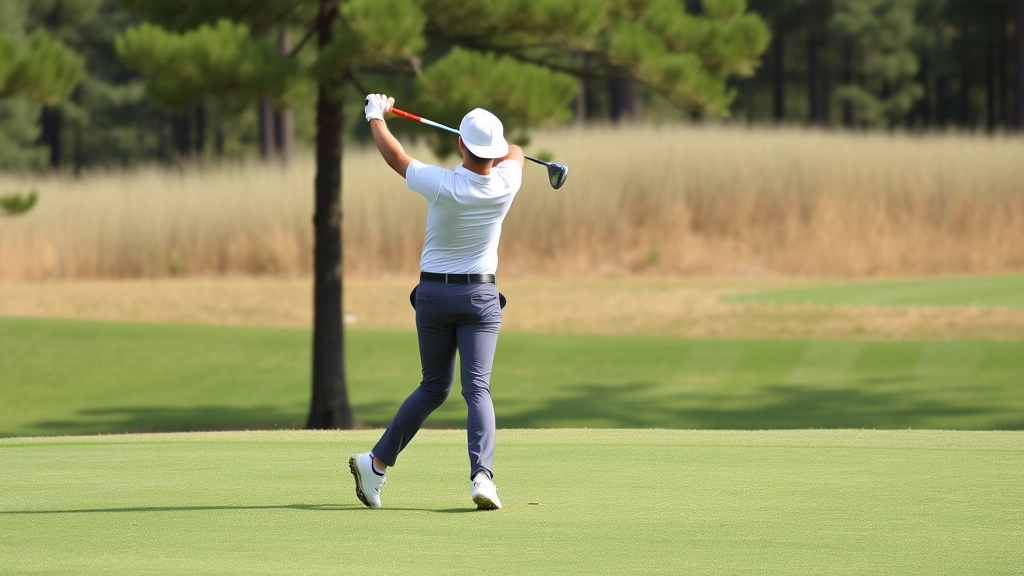
Chastain Park Golf Course in Atlanta, Georgia represents one of the Southeast’s premier destinations for golfers seeking to elevate their game. Whether you’re a beginner looking to establish proper fundamentals or an experienced golfer aiming to refine your technique, Chastain offers the ideal environment to develop your skills under professional guidance. The course’s challenging layout, well-maintained fairways, and diverse hole designs create the perfect laboratory for learning and mastering essential golf techniques.
Learning golf is similar to any educational pursuit—it requires structured instruction, deliberate practice, and understanding the underlying principles behind each technique. At Chastain, you’ll find not only an excellent course but also access to certified instructors who understand how to teach golf fundamentals effectively. This comprehensive guide explores the key techniques you can master at Chastain Park, drawing on proven instructional methods and professional insights.
Understanding Chastain Park’s Course Layout
Chastain Park Golf Course stretches across 6,500+ yards and features 18 holes that test various aspects of your golfing ability. Understanding the course layout is the first step toward mastering techniques specific to different situations you’ll encounter. The course includes several par-3 holes that demand precision, medium-length par-4s requiring balanced power and accuracy, and challenging par-5s where strategic planning becomes essential.
Each hole at Chastain presents unique learning opportunities. The course designers intentionally incorporated water hazards, bunkers, and elevation changes to simulate real-world golf challenges. By studying these features before playing, you develop course management skills that directly transfer to other venues. Professional instructors at Chastain recommend walking the course during off-peak hours to observe how wind, slope, and terrain affect ball flight—a practice that enhances your understanding of physics in golf.
The variety of hole configurations means you’ll practice different clubs, shot types, and decision-making processes during a single round. This diversity makes Chastain an excellent training ground for developing versatility in your technique. Unlike courses focused solely on par-3 holes, Chastain’s full 18-hole layout demands comprehensive skill development across all aspects of the game.

Mastering the Golf Grip and Stance
The foundation of every successful golf technique begins with proper grip and stance. These fundamentals determine your ability to control the club face, generate power efficiently, and maintain consistency across multiple swings. At Chastain Park, professional instructors emphasize that even experienced golfers benefit from periodic grip and stance evaluations.
The Grip Fundamentals
Your grip pressure directly influences swing tempo and club face control. The ideal grip pressure sits at approximately 4-5 out of 10, firm enough to maintain control but relaxed enough to allow natural swing mechanics. Hold the club primarily in your fingers rather than your palm, allowing your wrists to hinge properly during the backswing. The overlapping grip (Vardon grip) remains the most popular technique, where your pinky finger on the trailing hand overlaps the index finger of your leading hand.
Alignment of your grip affects ball flight significantly. A neutral grip—where both hands align with the club face—provides the foundation for consistent shots. Many beginners develop slices or hooks because their grip unconsciously closes or opens the club face at address. Chastain’s instructors recommend checking your grip in a mirror weekly, as subtle changes develop over time through unconscious habit formation.
Stance and Posture
Your stance width should match your shoulder width, providing stability without restricting rotation. Position your feet parallel to your target line, with the ball position varying slightly depending on club selection. For driver shots, position the ball inside your leading foot; for irons, position it more centrally; for short irons, position it toward your trailing foot.
Proper posture involves bending from your hips while maintaining a straight spine. Your knees should flex slightly, and your arms should hang naturally from your shoulders. This posture allows your core muscles to engage properly during the swing, generating power efficiently while protecting your lower back from injury. Developing proper physical conditioning supports the flexibility and strength required for maintaining correct posture throughout an 18-hole round.
IMAGE_2
Perfecting Your Swing Mechanics
The golf swing represents a complex motor skill that integrates multiple body systems working in precise coordination. Breaking the swing into distinct phases—address, takeaway, backswing, transition, downswing, impact, and follow-through—allows you to analyze and improve each component systematically.
The Backswing Phase
Your backswing should feel smooth and controlled, with the club moving away from the ball along your target line. The takeaway sets the tone for your entire swing. Many golfers rush this phase, which disrupts the rhythm and creates inconsistency. Professional instructors at Chastain recommend practicing the takeaway in slow motion, focusing on one-piece movement where your shoulders and hips rotate together initially.
As your backswing progresses, your wrists naturally hinge, storing energy that releases during the downswing. Your trailing elbow should remain relatively close to your body, creating an efficient swing plane. The top of your backswing occurs when your shoulders have rotated approximately 90 degrees while your hips rotate only 45 degrees, creating the coil that powers your downswing.
The Downswing and Impact
The downswing initiates with lower body movement—your hips begin rotating toward the target before your upper body follows. This sequence-of-motion principle generates maximum club head speed through proper leverage and timing. Your arms remain relatively passive during the downswing’s initial phase, simply following the rotation of your torso.
At impact, your hands should be slightly ahead of the ball, the club face square to your target line, and your body weight shifted toward your leading foot. The impact position represents the culmination of all preceding movements—poor setup or backswing mechanics become impossible to fully correct at this critical moment. This is why Chastain’s professionals emphasize building proper fundamentals from the beginning rather than attempting to fix problems through compensatory movements at impact.
Follow-Through and Finish
Your follow-through reveals whether your swing mechanics remained consistent through impact. A balanced finish position—where your body faces the target, your trailing foot rests only on its toe, and your club wraps around your body—indicates proper sequencing and tempo. Practicing your finish position separately helps develop the muscle memory required for consistency.
Short Game Excellence
Statistics consistently demonstrate that short game proficiency—chipping, pitching, and putting—accounts for approximately 60% of your total score. Despite this reality, many golfers dedicate disproportionate practice time to full swing mechanics. At Chastain Park, dedicated short game practice areas allow you to develop these critical skills efficiently.
Chipping Techniques
Chips represent shots played from within 30 yards of the green, requiring less than a full swing. Develop a consistent chipping stroke by using a narrow stance, positioning the ball back in your stance, and maintaining hands ahead of the ball at address. The chipping motion should resemble a pendulum—your arms, hands, and club move as one unit with minimal wrist action.
The fundamental chipping principle involves running the ball along the ground as much as possible, allowing for more predictable distance control. Select a landing spot approximately one-third of the way from the edge of the green, allowing the ball to release toward the hole. This approach reduces variables and increases consistency compared to attempting high, soft shots that demand precise distance control.
Pitching and Approach Shots
Pitching involves fuller swings from 30-100 yards out, requiring distance control and directional accuracy. Develop multiple pitch shots of varying distances—50-yard pitches, 75-yard pitches, and full-distance pitches. This versatility prevents you from being forced into awkward distances during actual play.
For pitching, allow more wrist hinge than chipping, creating a more complete swing. Your tempo should remain smooth and controlled, avoiding the tendency to decelerate through impact. Many golfers develop inconsistent pitch distances because they unconsciously shorten their follow-through on longer pitches, disrupting the natural swing tempo.
Putting Fundamentals
Putting accounts for approximately 40% of your total strokes, yet receives less technical instruction than full swing mechanics. Develop a repeatable putting stroke by maintaining a consistent grip pressure, eye position directly over the ball, and pendulum motion from your shoulders. Your putter should swing straight back and straight through, with your body remaining still throughout the stroke.
Reading greens effectively involves understanding how slope, grain, and speed affect ball roll. Walk around the hole from multiple angles before stroking, observing how the land slopes. Grain direction—determined by grass growth patterns—subtly influences ball movement. Speed varies throughout the round as moisture content and temperature change, requiring constant adjustment and observation.
Course Management Strategies
Superior course management separates exceptional golfers from merely competent ones. At Chastain Park, you’ll encounter situations requiring strategic decision-making beyond technical execution. Developing these management skills accelerates improvement across all skill levels.
Shot Selection and Risk Assessment
Every shot presents options with varying risk-reward profiles. A conservative approach might lay up short of a hazard, accepting a longer approach shot but guaranteeing safety. An aggressive approach attempts to carry the hazard, potentially reaching the green in fewer shots but risking a penalty stroke. Professional golfers analyze these decisions based on their skill level, current score position, and remaining holes.
Learn to recognize your personal shot-making percentages. If you successfully execute your 7-iron from 150 yards 80% of the time but only successfully execute your 6-iron 60% of the time, course management demands selecting the 7-iron even if it requires an additional club for your approach shot. This data-driven approach removes emotion from decision-making.
Understanding Wind and Weather
Wind dramatically affects ball flight and distance. A headwind reduces distance by approximately 10-15% per 5 mph of wind speed, while a tailwind increases distance proportionally. Develop the habit of checking wind direction before each shot by observing flag movement, tree swaying, or grass ripples. Side winds require club selection adjustments and aim point modifications.
Temperature affects distance as well—colder air is denser, reducing carry distance. At Chastain Park’s Atlanta location, seasonal temperature variations significantly impact club selection decisions. Humidity also affects ball flight, with dry conditions producing slightly longer distances than humid conditions.
Strategic Club Selection
Many golfers select clubs based on distance alone, ignoring accuracy and consistency percentages. If your 5-wood provides better directional consistency than your 3-wood, course management suggests using the 5-wood despite slightly reduced distance. Consistency compounds across 18 holes—selecting reliable clubs reduces the frequency of recovery shots and penalty strokes.
Mental Game and Confidence Building
Golf psychology significantly influences performance, yet remains underemphasized in many instruction programs. At Chastain Park, developing mental resilience and confidence proves equally important as technical skill refinement. Research from the American Psychological Association on sports performance demonstrates that mental skills training produces measurable improvements in competitive outcomes.
Pre-Shot Routine Development
Establishing a consistent pre-shot routine creates psychological stability and reduces performance anxiety. Your routine should include target assessment, club selection, alignment verification, and breathing exercises. The routine duration should remain consistent—typically 20-30 seconds—allowing your subconscious mind to enter a focused state. This routine becomes especially valuable when facing pressure situations or unfamiliar course conditions.
Managing Negative Thoughts and Emotions
Inevitably, poor shots occur despite proper technique. Rather than dwelling on mistakes, develop a recovery protocol. After each poor shot, identify the specific cause—technique breakdown, poor club selection, or execution error. Acknowledge the mistake without emotional attachment, then refocus on the next shot. Professional golfers often describe this as “playing the next shot,” consciously separating past performance from future outcomes.
Building Confidence Through Deliberate Practice
Confidence emerges from repeated successful execution of specific skills. Rather than aimless practice, engage in deliberate practice targeting identified weaknesses. If your 7-iron accuracy needs improvement, practice 7-iron shots exclusively until your consistency improves measurably. Tracking improvement through metrics—percentage of shots landing within 15 feet, for example—provides concrete evidence supporting confidence development.
IMAGE_3
Practice Routines for Continuous Improvement
Translating instruction into improved performance requires structured practice following evidence-based learning principles. Research from the Journal of Sports Sciences on deliberate practice in sports confirms that quality practice design directly determines skill acquisition rates.
Structured Practice Session Design
Begin each practice session with a warm-up phase addressing your primary weakness area. If chipping needs improvement, dedicate 20 minutes to chipping before moving to other skills. Warm-up exercises should mimic competition conditions—establish targets, maintain score, and enforce realistic consequences for missed shots. This approach develops pressure tolerance while improving technical execution.
Follow your focused practice segment with varied practice addressing multiple skills. Hit drivers, long irons, short irons, and chips in random order rather than hitting 20 consecutive drivers. This random practice design strengthens learning retention and transfers skills more effectively to actual play. Research demonstrates that varied practice produces superior long-term retention despite initially feeling less efficient.
Performance Tracking and Analysis
Maintain detailed records of your practice sessions and competitive rounds. Track statistics including fairways hit, greens in regulation, putts per round, and scrambling percentage (recovery success rate following missed greens). These metrics reveal patterns identifying your actual weaknesses versus perceived weaknesses. Many golfers incorrectly believe their driving needs improvement when statistics reveal putting represents their actual limiting factor.
Utilize video analysis to compare your swing mechanics to instructional models. Modern smartphones capture sufficient video quality for meaningful analysis. Record your swing from face-on and down-the-line perspectives, analyzing takeaway path, backswing plane, and follow-through position. Comparing your video to professional instruction resources reveals mechanical discrepancies you cannot feel during actual swinging.
Competitive Practice and Simulation
Develop competitive tolerance by playing practice rounds against playing partners or competing in club championships at Chastain. Competitive environments create pressure that practice ranges cannot replicate. Gradually increasing competitive exposure builds psychological resilience while revealing technical weaknesses that emerge under pressure.
Consider comparing your experience to other golf courses. If you play Cranberry Highlands Golf Course in Pennsylvania or Harding Park Golf Course in San Francisco, you’ll encounter different conditions that challenge your adaptability and course management skills. Each course teaches valuable lessons applicable to future play at Chastain and other venues.
Professional Instruction Integration
Schedule periodic lessons with Chastain’s certified professionals to assess progress and refine techniques. Instructors provide objective analysis that you cannot achieve independently, identifying compensatory patterns and mechanical flaws developing unconsciously over time. Most professionals recommend lessons every 4-6 weeks for serious improvement seekers, with more frequent instruction during competitive seasons.
FAQ
What skill level should I have before playing Chastain Park?
Chastain Park accommodates all skill levels, from absolute beginners to low handicap golfers. The course offers multiple tee positions allowing you to select appropriate distances for your ability. Beginners should consider starting from the forward tees while developing fundamentals. Most instructors recommend taking 3-5 lessons before playing your first round to establish proper grip, stance, and basic swing mechanics.
How often should I practice to improve at Chastain?
Serious improvement requires consistent practice. Dedicate 3-4 hours weekly to structured practice, supplemented by regular competitive rounds. Quality practice proves more valuable than quantity—two hours of focused, deliberate practice produces superior results to four hours of aimless range hitting. Most players see measurable improvement within 4-6 weeks of consistent practice following professional instruction.
Should I focus on long game or short game development first?
Short game development produces more immediate score improvement because it accounts for 60% of your total strokes. Beginners benefit from establishing long game fundamentals before extensive short game work, but intermediate players should prioritize short game improvement. Most professionals recommend a 60/40 practice split favoring short game once basic mechanics are established.
How does playing at Chastain compare to other Atlanta-area courses?
Chastain Park offers an excellent balance of challenge and playability, making it ideal for skill development. The course design incorporates strategic elements testing course management without overwhelming beginners. For comparison, explore LearnWise Blog for reviews of other local courses offering different challenges and learning opportunities.
What equipment do I need to start learning at Chastain?
A basic 14-club set provides sufficient equipment for learning fundamentals. You’ll need a driver, 3-wood, irons (5-9), pitching wedge, sand wedge, and putter. Avoid expensive equipment initially—used clubs perform adequately while you develop skills. Invest in quality clubs once your fundamentals are established and you understand your preferences.
Can I improve without professional instruction?
Self-teaching remains possible but inefficient. Without professional feedback, you risk developing compensatory patterns and mechanical flaws becoming increasingly difficult to correct. Most serious golfers invest in professional instruction, which accelerates improvement dramatically. Even experienced golfers benefit from periodic instruction identifying subtle mechanical changes.
Mastering golf techniques at Chastain Park requires commitment to structured learning, deliberate practice, and professional guidance. By understanding course layout, developing fundamental mechanics, refining short game skills, and cultivating mental resilience, you’ll experience continuous improvement across all aspects of your game. The comprehensive approach outlined above, integrated with regular play at Chastain and feedback from certified instructors, provides the roadmap for achieving your golfing potential.


