Donald Ross Courses: Golf History Insights and Educational Value
Donald Ross stands as one of the most influential golf course architects in history, having designed or redesigned over 400 courses throughout North America during the late 19th and 20th centuries. His legacy extends far beyond the fairways—understanding his design philosophy provides valuable insights into landscape architecture, strategic game design, and historical preservation. For educators and golf enthusiasts alike, studying Donald Ross golf courses offers a comprehensive window into how environmental design shapes human behavior and competitive strategy.
The significance of Ross’s work transcends recreational sport. His courses represent masterpieces of strategic thinking, where terrain manipulation, hazard placement, and green contours create challenges that reward skill, course management, and intelligent play. Many educational institutions have incorporated case studies of Ross’s designs into landscape architecture and business strategy programs. Whether you’re exploring course offerings in design fundamentals or seeking to understand historical architecture, Ross’s contributions provide essential context for modern course development and preservation efforts.
This comprehensive guide explores the history, design principles, notable courses, and educational importance of Donald Ross’s architectural legacy. We’ll examine how his innovative approaches continue to influence contemporary golf course design and what makes his work relevant to students of architecture, history, and landscape management.

Who Was Donald Ross? A Brief Biography
Donald J. Ross was born in Dornoch, Scotland, in 1873, in a region renowned for its natural links golf courses. His early exposure to Scottish golf culture profoundly shaped his understanding of course design and the relationship between landscape and playability. Ross apprenticed under Old Tom Morris and other legendary Scottish professionals before immigrating to the United States in 1896, where he would revolutionize American golf architecture.
Throughout his 60-year career, Ross designed courses that reflected both Scottish links traditions and American landscape characteristics. His ability to adapt to diverse terrains—from coastal environments to inland meadows—made him exceptionally versatile. Ross maintained a design office in Boston, Massachusetts, which became the epicenter of American golf course architecture during the sport’s explosive growth in the early 20th century.
Understanding Ross’s biographical context helps educators frame his work within broader historical narratives. His immigration story, professional development, and eventual prominence illustrate how expertise transfer shapes industries and cultures. For those interested in how to create online courses about historical figures and their contributions, Ross provides an excellent case study in innovation and legacy.

Design Philosophy and Architectural Principles
Donald Ross’s design philosophy centered on the principle that great golf courses should reward strategic thinking and penalize poor course management. Unlike some contemporary architects who emphasized difficulty through sheer length or excessive hazards, Ross believed that intelligent hazard placement and subtle green contours could challenge players of all skill levels appropriately.
Ross’s fundamental design principles included:
- Strategic hazard placement: Bunkers and water features positioned to reward aggressive but calculated play while punishing careless shots
- Multi-tiered greens: Complex putting surfaces with significant elevation changes that create multiple pin positions and reward precision
- Fairway shaping: Subtle contouring that guides players toward optimal approach angles without appearing artificial
- Routing intelligence: Careful course layout that maximizes use of natural terrain while creating logical player flow
- Playability across handicaps: Courses that challenge professionals while remaining enjoyable for recreational players
These principles reflect sophisticated understanding of game theory and human psychology. Ross recognized that golfers need to make meaningful decisions throughout their round—choices that directly impact their scores. This design approach created engaging experiences that encouraged repeated play and skill development, much like well-designed educational PCC courses scaffold learning progressively.
From an educational standpoint, Ross’s design philosophy demonstrates how constraints can enhance user experience. His courses prove that limiting certain options (such as architectural gimmicks or excessive length) actually increases engagement and satisfaction. This principle applies broadly to curriculum design, assessment strategies, and learning environment creation.
Signature Features of Ross Courses
Recognizing the distinctive characteristics of Donald Ross courses helps students and enthusiasts identify his work and understand his evolving design approach. Several signature features appear consistently across his portfolio:
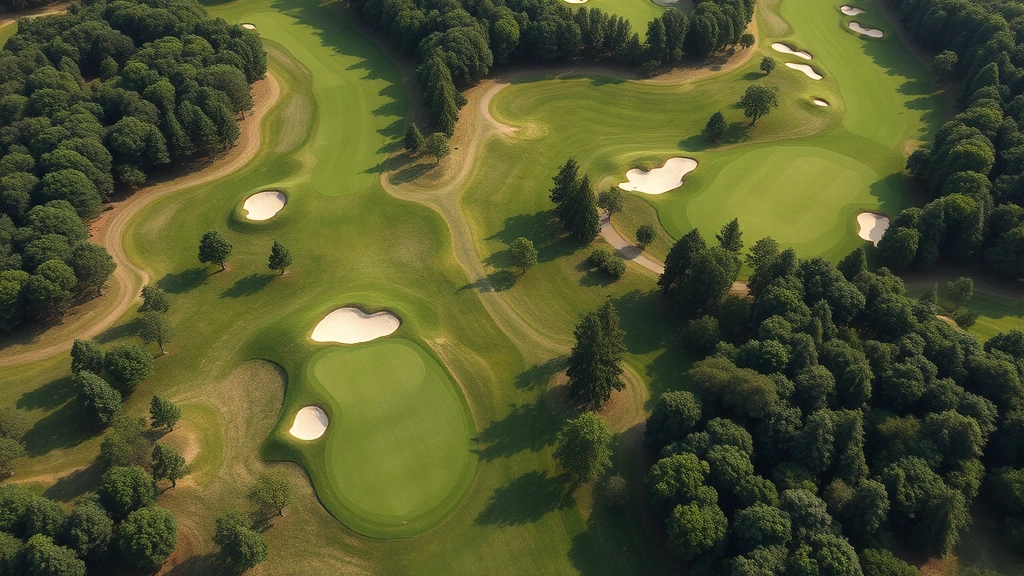
The Ross Plateau Green represents perhaps his most iconic contribution to golf architecture. These greens feature elevated, relatively flat playing surfaces surrounded by subtle slopes that funnel errant shots away from the putting area. The plateau design creates a visual reference point for players while rewarding accuracy with receptive putting surfaces. Misses, even slight ones, roll away into collection areas, emphasizing precision.
Strategic bunkering in Ross courses typically avoids clustering hazards directly in front of greens. Instead, bunkers flank fairways and protect specific angles of approach, forcing players to commit to particular lines. This design principle teaches players to think strategically about shot selection rather than simply avoiding obvious obstacles.
Subtle elevation changes characterize many Ross designs. Rather than creating dramatic hills, he incorporated gentle undulations that provide visual interest and strategic complexity. These elevation changes affect ball roll, lie quality, and approach angles in ways that reward careful observation and course knowledge.
Natural aesthetic integration defined Ross’s approach to fitting courses within their landscapes. His designs worked with existing terrain rather than imposing artificial forms upon it. This principle reflects environmental sensitivity and creates courses that feel established and organic rather than obviously engineered.
Notable Donald Ross Golf Courses
Several Donald Ross courses have achieved legendary status within golf and architectural communities. These courses serve as educational destinations where students and professionals study his techniques:
Pinehurst No. 2 (Pinehurst, North Carolina) stands as Ross’s masterpiece and one of the most important courses in American golf. Redesigned by Ross in 1907, this course features his most refined design principles. The distinctive crowned fairways, strategic bunkering, and complex greens create a course that challenges professionals while remaining playable for all skill levels. Pinehurst No. 2 has hosted numerous major championships and represents the gold standard for Ross course restoration.
Seminole Golf Club (Jupiter, Florida) showcases Ross’s adaptation of his principles to tropical environments. Designed in 1929, Seminole demonstrates how Ross modified his Scottish links traditions for American coastal conditions. The course features dramatic elevation changes unusual for Florida courses, strategic use of water hazards, and greens that reward precise approach shots.
Oakland Hills Country Club (Bloomfield Hills, Michigan) exemplifies Ross’s ability to create championship-caliber courses. The course’s stern layout and demanding greens have made it a favorite for USGA championships. Oakland Hills demonstrates how Ross courses age gracefully, becoming more strategically interesting as vegetation matures and maintenance practices refine green speeds.
Aronimink Golf Club (Philadelphia, Pennsylvania) represents an excellent example of a Ross course in its original form. The course retains much of Ross’s original design intent, making it valuable for educational study and architectural analysis.
Inverness Club (Toledo, Ohio) showcases Ross’s design sophistication in a Midwestern context. The course balances strategic complexity with playability and demonstrates his mastery of fairway routing and green design.
Ross Courses as Educational Resources
Donald Ross courses provide exceptional educational value across multiple disciplines. Architecture and landscape design programs benefit from studying his work as historical precedent and contemporary inspiration. Courses like those mentioned above serve as outdoor classrooms where students examine design principles in their built context.
Business schools use Ross course design as case studies in strategic thinking and constraint-based problem solving. His approach to balancing competing demands—difficulty and playability, aesthetic appeal and functionality, tradition and innovation—illustrates sophisticated decision-making frameworks applicable far beyond golf.
Environmental science programs examine how Ross courses demonstrate sustainable landscape management. His emphasis on working with natural terrain rather than imposing artificial forms reflects ecological sensitivity that aligns with contemporary environmental values. Understanding how courses built over a century ago continue functioning effectively provides insights into sustainable design principles.
History and cultural studies benefit from examining Ross’s work within contexts of immigration, professional development, and cultural exchange. His Scottish heritage, American success, and influence on both golf cultures illustrates complex historical narratives about expertise, adaptation, and innovation.
For educators developing golf course for sale discussions or real estate education, understanding Ross’s design principles helps explain why certain courses command premium valuations. His courses appreciate in value not through inflation but through increased appreciation of their design sophistication and historical significance.
Preservation and Modern Restoration Efforts
Preserving Donald Ross courses presents unique challenges. Golf course maintenance differs fundamentally from other historical preservation efforts because courses remain active, functional landscapes requiring regular modification. Balancing historical accuracy with contemporary playability and maintenance efficiency requires sophisticated knowledge of Ross’s design intent.
The Pinehurst Company has led exemplary restoration efforts, most notably the comprehensive restoration of Pinehurst No. 2 completed in 2014. This project involved extensive research into Ross’s original design documents, contemporary photographs, and maintenance records. The restoration team carefully removed decades of modifications while adapting the course for contemporary tournament standards.
Restoration efforts typically involve:
- Researching original design documents, photographs, and maintenance records
- Removing or modifying unauthorized changes made by previous superintendents
- Restoring original bunkering patterns and hazard configurations
- Adjusting green contours to match original designs
- Replanting appropriate vegetation species
- Adapting courses for contemporary maintenance efficiency and playability standards
These restoration projects provide valuable lessons in historical preservation, documentation, and adaptation. They demonstrate how historical artifacts can remain functionally relevant while honoring original design intent—a principle applicable across educational institutions and cultural heritage sites.
When exploring Wisconsin golf courses or courses in any region, understanding restoration principles helps identify authentic Ross designs versus courses that have been significantly altered over time.
Learning from Ross: Lessons for Contemporary Design
Donald Ross’s design legacy offers crucial lessons for modern architects and educators. In an era where golf course design sometimes emphasizes length and obvious difficulty, Ross’s principle that strategic design creates superior experiences deserves renewed attention.
Contemporary course architects increasingly return to Ross principles as they recognize that courses designed primarily for length or visual drama often prove less engaging and more expensive to maintain than strategically designed alternatives. This shift reflects broader recognition that constraints enhance rather than diminish user experience—a principle applicable to educational design, user interface design, and urban planning.
Ross’s approach to aesthetic integration demonstrates that beautiful design and functional performance need not conflict. His courses prove that environmental sensitivity and challenging playability coexist naturally. This principle challenges false dichotomies often presented in design education and encourages integrated thinking about form, function, and context.
The accessibility of Ross courses across skill levels illustrates how universal design principles operate in complex environments. By creating courses where beginners enjoy their experience while professionals face legitimate challenges, Ross designed for genuine inclusivity rather than artificial difficulty scaling. Educational institutions can learn from this approach when designing curricula, assessments, and learning environments that serve diverse learner needs simultaneously.
For those interested in exploring courses in specific regions, understanding Ross’s design principles helps identify excellent examples. Whether examining Desert Willow Golf Course Palm Desert or other courses, recognizing strategic design principles helps distinguish genuinely excellent courses from those merely famous for length or celebrity associations.
Frequently Asked Questions
How many courses did Donald Ross design?
Donald Ross designed or significantly redesigned over 400 golf courses throughout his career. This remarkable productivity, combined with the quality of his work, makes him one of history’s most prolific and influential architects. His designs span from modest nine-hole courses to championship layouts, demonstrating versatility across project scales.
What makes Donald Ross courses distinctive from other classic courses?
Ross courses are distinguished by their strategic design philosophy, where hazard placement, green complexity, and fairway shaping create multiple meaningful decisions for players. His use of plateau greens, strategic bunkering, and subtle elevation changes creates courses that age well and reward repeated play. Unlike some architects who emphasized dramatic visual impact, Ross prioritized strategic engagement.
Are Donald Ross courses still competitive at professional levels?
Absolutely. Many Ross courses host professional and championship tournaments regularly. Pinehurst No. 2, Seminole, Oakland Hills, and other Ross designs continue hosting major championships because their strategic design principles create appropriate challenges for elite players. The longevity of these courses proves their fundamental soundness as competitive venues.
How can I visit and study Donald Ross courses?
Many Ross courses remain open to the public or offer limited public play through reciprocal club arrangements. Pinehurst Resort offers public access to several Ross courses, making it an excellent destination for study. Additionally, some courses offer educational tours and programs specifically designed to explain Ross’s design principles and restoration efforts.
What resources exist for learning more about Donald Ross and his work?
Several excellent resources document Ross’s life and work. The American Society of Golf Course Architects maintains historical information and archives. Academic institutions increasingly include Ross course studies in landscape architecture curricula. Books by golf historians and architectural scholars provide detailed analysis of his design philosophy and specific courses. For educators developing curriculum, these resources support comprehensive study of Ross’s historical significance and contemporary relevance.
How do Ross courses compare to modern championship courses?
Ross courses typically feature less overall length than modern championship layouts but compensate through strategic complexity and demanding green designs. Modern courses often rely on length as a difficulty mechanism, while Ross courses challenge players through precision requirements and strategic options. Many contemporary architects now recognize that Ross’s approach creates more engaging and sustainable courses than length-based design.
Can golf courses learn from Ross’s design principles today?
Absolutely. Contemporary architects increasingly study Ross’s work to understand how strategic design creates superior courses. His principles regarding hazard placement, green design, and routing intelligence remain relevant and increasingly valued as golf courses seek to enhance playability, reduce maintenance costs, and create more engaging experiences. Educational programs studying design principles benefit from Ross’s systematic approach to solving architectural challenges.


