
Golf Course Maps: Improve Your Game with Expert Advice
Understanding golf course maps is one of the most underutilized tools for improving your game. Whether you’re a beginner stepping onto the greens for the first time or an experienced golfer looking to shave strokes off your scorecard, mastering how to read and interpret course layouts can dramatically enhance your performance. A golf course map isn’t just a decorative piece—it’s a strategic blueprint that reveals hidden challenges, optimal shot placements, and scoring opportunities that many players simply overlook.
Professional golfers spend considerable time studying course maps before tournaments, analyzing elevation changes, hazard placements, and wind patterns. This same approach works for recreational golfers too. By learning to decode the visual language of golf course maps, you’ll make smarter decisions on every hole, manage risk more effectively, and ultimately lower your handicap. In this comprehensive guide, we’ll explore how to leverage course maps to transform your golfing experience and develop a more strategic approach to the game.
What Is a Golf Course Map?
A golf course map is a detailed visual representation of an entire golf course, showing the layout of all 18 holes (or 9 holes for shorter courses) from an aerial perspective. These maps typically include critical information such as fairway boundaries, rough areas, hazards like water and sand bunkers, tree placements, green layouts, and often tee box positions. Think of it as the course’s DNA—every element tells a story about how the hole was designed and how you should approach it.
Quality course maps go beyond basic diagrams. They incorporate topographical data showing elevation changes, which significantly impact ball flight and distance. Many modern course maps include yardage information from various tee positions, handicap ratings for each hole, and par designations. Some premium versions even feature detailed green contours, helping you understand how putts will break and roll. The level of detail varies depending on the map’s source—official course maps tend to be more comprehensive than casual versions.
Understanding what information a course map provides is the first step toward using it effectively. Different maps serve different purposes: some are designed for planning your visit, others for strategic preparation, and some specifically for understanding green reading and putting lines. The best approach involves consulting multiple map sources to gather comprehensive information about your target course.
Understanding Course Layout and Design
Golf course design follows established principles developed over centuries of the sport’s evolution. When you examine a golf course map, you’re looking at intentional design choices made by architects who understand how golfers think and play. The layout reveals the designer’s philosophy: whether they emphasized risk-reward scenarios, demanded precision, or rewarded aggressive play.
Most courses follow a strategic pattern where holes progress in difficulty. Typically, the first nine holes (front nine) include easier opening holes to build confidence, while the back nine presents increasingly challenging scenarios. By studying your course map, you can identify which holes are designed as birdie opportunities and which demand defensive play. This knowledge alone can reduce pressure and improve decision-making throughout your round.
The relationship between hole length and handicap rating is crucial information visible on quality course maps. A 600-yard par 5 rated as a handicap 1 hole means it’s considered the most difficult on the course. This doesn’t necessarily mean it’s the longest—design difficulty factors in how challenging the hole is relative to par. Understanding these ratings helps you allocate your mental energy and risk tolerance appropriately.
Consider visiting Arroyo Seco Golf Course, Hansen Dam Golf Course, or Rustic Canyon Golf Course to experience how different design philosophies shape gameplay.
Reading Elevation and Terrain Features
One of the most valuable aspects of studying a golf course map is understanding elevation changes. Visual representations using contour lines or color gradients show how terrain rises and falls throughout the course. Elevation dramatically affects ball flight—uphill shots require more club and reduce distance, while downhill shots fly farther with less club. A map that clearly shows these changes becomes an invaluable strategic tool.
Terrain features extend beyond simple elevation. Water hazards, whether lakes, ponds, or streams, present both visual and psychological challenges. A course map helps you identify exactly where water comes into play and whether you can safely avoid it or must carry it. Sand bunkers, another key feature, appear as distinct shapes on maps. Understanding bunker placement helps you plan your approach shots and avoid unnecessary penalties.
Tree placement, though sometimes difficult to represent precisely on maps, significantly influences strategy. Maps that indicate tree locations help you understand sight lines and how wind patterns might affect ball flight through different areas of the course. Dense tree coverage on one side of a fairway might suggest a preferred landing zone on the other side.
Slope and gradient information becomes increasingly important as you study advanced course maps. Fairways that slope left to right will naturally feed balls toward the right rough or hazards. Maps showing these micro-slopes help you understand optimal landing zones and why certain areas are more forgiving than others. This knowledge transforms your approach from reactive to proactive.
Strategic Planning Using Course Maps
Strategic golf requires planning that begins before you arrive at the course. By thoroughly studying a golf course map, you develop a pre-round strategy that addresses each hole’s unique challenges. This preparation reduces on-course anxiety and helps you make better decisions under pressure.
Start by identifying the three to four most difficult holes on your course map. These are typically marked with low handicap numbers (1, 2, 3). Develop specific strategies for these holes: where you’ll position your tee shot to set up the best approach angle, which hazards you absolutely must avoid, and what score would represent a good result. If a difficult par 4 has water left and rough right, deciding in advance to aim for the right side removes decision-making pressure during actual play.
Conversely, identify birdie opportunities using your course map. These are usually higher handicap-rated holes or shorter par 4s and par 5s. Develop aggressive strategies for these holes—where you’ll take extra risk to gain advantage. The contrast between defensive play on difficult holes and aggressive play on opportunities creates a balanced, strategic approach.
Create a personalized course map strategy sheet noting: (1) tee shot target areas for each hole, (2) specific hazards to avoid, (3) approach shot strategy, (4) green reading notes from previous plays or local knowledge, and (5) contingency plans if your tee shot doesn’t go as planned. This preparation transforms a generic course map into a personalized playbook.
Popular Courses and Their Maps
Different courses present different challenges visible through their maps. When examining a quality golf course map, you’ll notice how various layouts demand different strategic approaches. Some courses emphasize accuracy over distance, while others reward long hitting with scoring opportunities.
If you’re exploring options in your region, Arroyo Seco Golf Course features interesting elevation changes and strategic water placement that rewards careful course map study. Hansen Dam Golf Course presents its own unique design philosophy with specific hazard placement patterns worth analyzing on its course map. Rustic Canyon Golf Course showcases how terrain and elevation create strategic opportunities for different skill levels.
Each course’s map tells a story about its design intent. Public courses often emphasize playability and multiple options for different skill levels—their maps typically show wider landing areas and forgiving layouts. Championship courses, by contrast, display tighter fairways and more demanding hazard placement. Understanding these distinctions helps you appreciate design philosophy and adapt your strategy accordingly.
When exploring golf courses for sale or evaluating new par 3 courses near you, detailed course maps become essential for assessing whether a facility matches your skill level and preferences.
Digital Tools and Technology
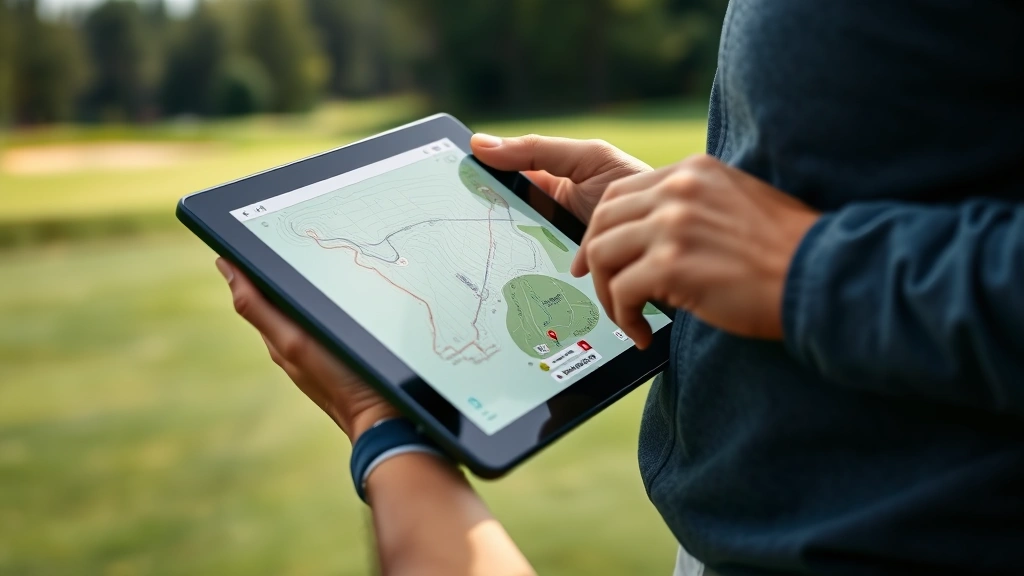
Modern technology has revolutionized how golfers access and interact with course maps. GPS golf watches, smartphone applications, and rangefinders now provide real-time course map information directly on the course. These digital tools display exact distances to hazards, greens, and landing areas, transforming the static course map into an interactive strategic assistant.
Popular golf GPS applications integrate detailed course maps for thousands of facilities worldwide. These apps show your exact position on the course, provide precise yardages, and often include historical data about optimal shot locations. Some premium versions include 3D renderings of holes based on course map data, giving you a more intuitive understanding of hole layout and elevation changes.
Rangefinders with course map integration allow you to measure distances to specific targets while seeing the course map on a small screen. This combination of actual course conditions and mapped information helps you make data-driven decisions about club selection and shot strategy. The technology essentially brings the course map to life during play.
Before purchasing equipment, research which tools integrate course maps for your specific courses. Many apps offer free basic versions with premium features available through subscription. The investment often pays for itself through improved scoring and reduced frustration from poor course management decisions.

Practical Tips for Course Map Mastery
Mastering golf course maps requires deliberate practice and systematic application. Here are proven strategies for maximizing the value of course maps in your game:
- Study maps before play: Spend 15-20 minutes reviewing your course map the night before playing. Visualize each hole, mentally rehearse your strategy, and identify potential decision points. This pre-play visualization primes your brain for better on-course execution.
- Print annotated copies: Create personal copies of course maps and annotate them with your strategy notes, previous round results, and local knowledge. Over time, these personalized maps become invaluable references documenting your learning about each course.
- Compare multiple map sources: Different map providers include different information. Consulting multiple sources gives you more complete information. Official course maps, golf app maps, and satellite imagery each provide unique perspectives on course layout.
- Focus on green contours: If available, study detailed green maps showing slope and break patterns. Understanding how water drains off greens and where putts typically break transforms your approach shot strategy and helps you position for makeable putts.
- Track hazard patterns: Spend a few rounds documenting where golfers typically lose balls, where water actually plays vs. where it appears to play, and which bunkers are most frequently visited. This real-world data supplements map information and improves your risk assessment.
- Use maps for course management: When playing with different tee boxes, study how the course map changes from each position. This helps you understand how course difficulty scales with tee selection and informs your tee box choices based on current skill level.
- Document weather patterns: Overlay weather observations onto your mental course map. Understanding how wind typically affects specific holes and how rain changes drainage patterns helps you adapt strategy to conditions.
The most successful golfers treat course maps as living documents. They continuously update their understanding based on play experience, seasonal changes, and new information. This iterative approach transforms a static map into a dynamic strategic tool that evolves with your game.
For additional inspiration and variety, explore golf course prints that showcase beautiful course designs while reinforcing your mental map of various layouts.
FAQ
How do I read elevation changes on a golf course map?
Elevation changes appear as contour lines (like topographic maps), color gradients, or numerical indicators on quality course maps. Closer contour lines indicate steeper terrain, while wider spacing shows gradual slopes. Learning to interpret these visual cues helps you understand how elevation will affect club selection and shot trajectory. Many modern digital maps use color coding where green indicates lower elevation and brown/tan indicates higher elevation.
What’s the most important information on a golf course map?
While all information has value, hazard placement and fairway boundaries are typically most critical for strategy. Understanding where water, bunkers, and out-of-bounds areas exist helps you avoid costly mistakes. Green layout and contour information comes second, as it directly impacts your approach shot strategy and putting game. Yardage information from various tee positions ranks third in importance for most golfers.
Can I use a golf course map to improve my handicap?
Absolutely. Strategic course management using course maps directly reduces scores. By identifying difficult holes requiring defensive play versus birdie opportunities for aggressive play, you distribute risk more effectively throughout your round. Studies show that golfers who actively study course strategy improve their handicaps 30-40% faster than those who play reactively without planning.
Are free golf course maps reliable?
Free course maps vary in accuracy and detail. Official maps from the golf course itself are typically most reliable, though they may lack detailed elevation or green contour information. Free app-based maps and satellite imagery are generally accurate for basic layout but may have outdated information if courses have recently undergone renovations. Compare multiple free sources and supplement with paid premium maps for critical information.
How often do golf course maps need updating?
Course layouts rarely change dramatically, but maintenance, renovation, and seasonal variations do occur. Maps should be updated whenever courses undergo significant renovation, when new hazards are added, or when drainage patterns change meaningfully. Most courses update official maps every 3-5 years. If you notice discrepancies between your map and actual course conditions, report them to the course management.
What’s the difference between course maps and scorecards?
Scorecards typically show basic hole numbers, par, and yardage in a simple format designed for recording scores. Course maps provide detailed visual representations of hole layouts, hazards, elevation, and strategic information. Many modern scorecards incorporate simplified course maps, combining both functions. For serious strategic study, detailed course maps provide far more useful information than standard scorecards.


