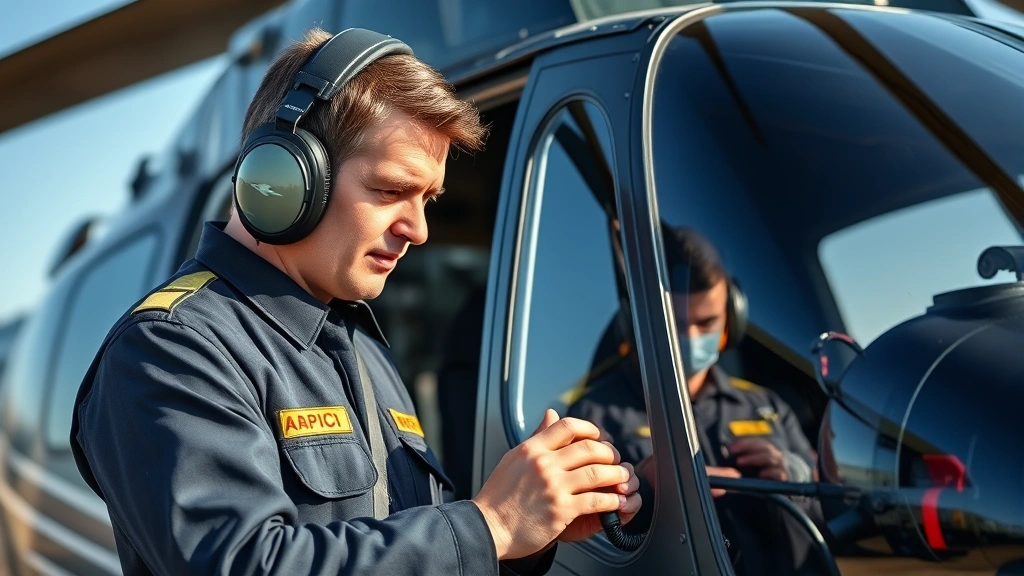
Helicopter Pilot Course: Expert Guide to Professional Aviation Training
Becoming a helicopter pilot represents one of the most challenging and rewarding career paths in aviation. A comprehensive helicopter pilot course combines rigorous theoretical knowledge with hands-on flight training, preparing aspiring pilots for the complexities of rotorcraft operations. Whether you’re pursuing this career for commercial opportunities, rescue operations, or military service, understanding the structure and requirements of professional helicopter pilot training is essential for success.
The journey to earning your helicopter pilot certificate involves multiple stages of education and certification. From private pilot ratings to commercial operations and instructor credentials, each level builds upon foundational skills while introducing advanced techniques and emergency procedures. This guide explores the complete pathway through helicopter pilot training, helping you understand what to expect, how to prepare, and what investments—both financial and personal—you’ll need to make.
Understanding Helicopter Pilot Certification Levels
The Federal Aviation Administration (FAA) establishes three primary certification levels for helicopter pilots, each building upon the previous tier. Beginning pilots typically start with the Private Pilot License, which permits you to operate helicopters for personal use but prohibits compensation for flights. This foundational certification demonstrates competency in basic aircraft handling, emergency procedures, and decision-making under various weather and operational conditions.
The Commercial Pilot Certificate represents the next advancement, authorizing you to be compensated for helicopter operations. This rating requires significantly more flight hours, typically 250 hours minimum, and demonstrates advanced proficiency in complex scenarios. Commercial pilots must master techniques like precision hovering, external load operations, and mountain flying depending on their specialization.
Finally, the Airline Transport Pilot (ATP) Certificate qualifies you for the highest level of responsibility, including pilot-in-command positions at commercial helicopter operations. ATP certification demands extensive experience, typically 1,500 total flight hours, and represents mastery of advanced decision-making, crew resource management, and emergency response protocols. Many professional helicopter operators, similar to how organizations structure FEMA courses for emergency management, require ATP certification as a baseline qualification.
Between these primary certificates, you’ll also pursue ratings and endorsements specific to your operational goals. A commercial pilot might obtain a Helicopter with Turbine Engine Rating to operate more powerful aircraft, or pursue specialized endorsements like External Load Operations for construction and forestry work, or Instrument Rating for flight in low-visibility conditions.
Flight Training Requirements and Hours
The FAA mandates specific minimum flight hours for each certification level, though actual requirements often exceed these minimums. Private pilot certification requires a minimum of 60 flight hours, including at least 15 hours of dual instruction (with an instructor) and 5 hours of solo flight. However, most pilots require 80-100 hours to achieve proficiency and pass their checkride—the practical examination administered by an FAA examiner.
Commercial pilot training builds substantially on private pilot skills, requiring 250 minimum hours total flight time, with at least 100 hours as pilot-in-command. The curriculum emphasizes precision, efficiency, and advanced maneuvers. Students practice autorotations (emergency procedures where engine power is lost), confined area operations, and pinnacle approaches—techniques essential for real-world helicopter work in construction, utility, and emergency services.
Instrument rating, which many professional pilots pursue concurrently with commercial training, requires 50 hours of instrument instruction and 40 hours of simulated instrument flight. This rating enables pilots to operate in clouds and low-visibility conditions, dramatically expanding career opportunities. The structured progression mirrors how educational institutions like UCSD course schedule sequences learning objectives across multiple terms.
ATP certification demands 1,500 total flight hours, though military pilots and graduates of approved university aviation programs may qualify with reduced hour requirements. These hours must include specific minimums in various categories: 500 hours cross-country, 100 hours night, 75 hours of instrument flight, and 250 hours as pilot-in-command. The extensive hour requirement reflects the critical nature of commercial helicopter operations and the need for comprehensive experience across diverse scenarios.
Ground School and Theoretical Knowledge
Successful helicopter pilot training requires mastery of substantial theoretical knowledge alongside practical flying skills. Ground school covers aerodynamics specific to rotorcraft, including rotor disc theory, blade flapping, and the unique characteristics that distinguish helicopter flight from fixed-wing aircraft. Understanding how helicopter rotor systems generate lift and control authority is fundamental to safe operations.
The curriculum encompasses meteorology, particularly how weather phenomena affect helicopter operations differently than airplanes. Helicopters operate at lower altitudes and speeds, making them vulnerable to specific wind patterns, turbulence, and visibility conditions. Students study weather interpretation, reading aviation forecasts, and making go/no-go decisions based on current conditions and their skill level.
Navigation instruction covers both traditional pilotage (map reading and landmark identification) and modern GPS-based systems. Though helicopters operate primarily visually, pilots must understand aeronautical charts, airspace designations, and procedures for operating near airports and restricted areas. Many helicopter pilot courses include UPenn course review principles for evaluating learning outcomes, ensuring students demonstrate comprehension rather than mere memorization.
Federal Aviation Regulations (FARs) constitute another critical knowledge area. Pilots must understand regulations governing flight operations, maintenance requirements, crew rest, and duty time limitations. Commercial operations involve additional regulatory complexity around passenger safety, cargo handling, and operational minimums.
Helicopter-specific systems knowledge includes detailed study of the engine, transmission, hydraulic systems, and emergency equipment. Understanding how these systems interact prepares pilots to recognize malfunctions, execute appropriate procedures, and make sound decisions when systems fail. This technical knowledge, combined with decision-making frameworks taught in ground school, enables pilots to respond effectively to emergencies.
Modern helicopter pilot courses increasingly incorporate computer-based learning platforms and virtual reality simulations. These technologies allow students to practice emergency procedures and complex scenarios without incurring the substantial cost of actual helicopter flight time. Research from the Aircraft Owners and Pilots Association demonstrates that simulation-based training enhances learning retention and transfer to actual flight operations.
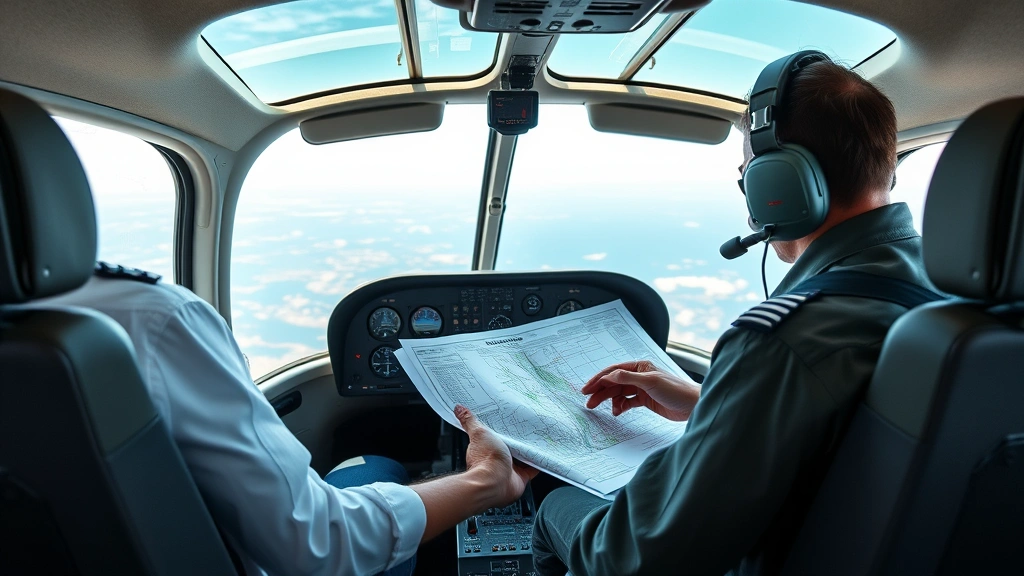
” alt=”Flight instructor and student pilot reviewing flight plan and aeronautical charts before helicopter training session, both focused on navigation preparation in modern cockpit environment”/>
Medical Certification and Prerequisites
Before beginning helicopter pilot training, candidates must obtain an FAA medical certificate, which certifies that you meet health standards necessary for safe flight operations. The FAA issues three classes of medical certificates, with commercial and ATP operations requiring at least a second-class medical. The medical examination includes vision and hearing tests, cardiovascular evaluation, and screening for conditions that might impair judgment or physical capability.
Certain medical conditions require special evaluation or may disqualify applicants entirely. These include significant vision or hearing loss, heart disease, diabetes requiring insulin, neurological disorders, and psychiatric conditions. Importantly, the FAA has progressively liberalized medical requirements in recent years, allowing pilots with well-managed conditions like diabetes or sleep apnea to obtain medical certification through special issuance processes.
Beyond medical requirements, helicopter pilot course prerequisites typically include high school diploma or equivalent, though some schools accept younger students for private pilot training. Strong fundamentals in mathematics and physics prove beneficial for understanding aerodynamics and aircraft systems, though they’re not absolute requirements. Many successful helicopter pilots developed technical aptitude through the training itself rather than prior formal education.
English language proficiency represents another critical requirement. Pilots must understand and communicate clearly in English, both for ground school instruction and for radio communications with air traffic control. Non-native English speakers often require additional language training before beginning flight operations, particularly for commercial and ATP certifications.
Physical fitness, while not formally tested, significantly influences helicopter pilot training success. Helicopter flying demands sustained concentration, physical coordination, and the ability to manage stress. Students who maintain reasonable fitness levels typically progress more smoothly through training and experience fewer fatigue-related difficulties during long training days.
Choosing the Right Flight School
Selecting an appropriate flight school represents one of the most consequential decisions in your helicopter pilot training journey. Quality schools vary significantly in instructor experience, aircraft condition, curriculum structure, and training outcomes. The FAA Part 141 certification indicates that a school meets rigorous federal standards for curriculum, instructor qualifications, and training facilities, though Part 61 schools (which operate under more flexible regulations) can also provide excellent training.
Accreditation by organizations like the Aircraft Owners and Pilots Association or membership in the Helicopter Association International provides additional assurance of quality standards. Research instructor credentials carefully—experienced helicopter pilots with specialized training backgrounds contribute significantly to training quality. Instructors should hold current commercial or ATP certificates with extensive helicopter experience, ideally including real-world operations in diverse environments.
Visit prospective schools to evaluate their aircraft fleet. Well-maintained helicopters with modern avionics provide superior training environments. Ask about maintenance records, aircraft age, and upgrade schedules. The school’s training aircraft should closely match helicopters you’ll operate professionally, ensuring smooth transition to your first job.
Cost represents a significant factor, but the cheapest option often proves most expensive when considering training delays, additional flight hours needed, or poor preparation for commercial operations. Compare total program costs, including aircraft rental rates, instructor fees, ground school, and examination fees. Some schools bundle costs, while others charge à la carte, making direct comparison challenging.
Evaluate the school’s job placement support and industry connections. Excellent schools maintain relationships with helicopter operators, potentially facilitating employment after certification. Ask about graduate employment rates and typical starting positions for recent graduates. This support can substantially accelerate your career launch.
Location considerations extend beyond convenience to weather patterns and airspace. Schools in areas with consistent flying weather and diverse airspace enable year-round training and exposure to varied operational environments. Conversely, schools in regions with frequent weather delays or limited airspace may extend training timelines significantly.
Cost Breakdown and Financing Options
Helicopter pilot training represents a substantial financial investment, typically ranging from $75,000 to $150,000 for private through commercial certification, depending on aircraft type and training intensity. This cost structure differs markedly from golf course top golf courses in the US memberships or recreational activities—helicopter training constitutes professional credentialing with direct career implications.
Aircraft rental comprises the largest expense component, typically $300-$800 per flight hour depending on helicopter type. A Robinson R22, common for training, rents for $250-400 hourly, while larger turbine helicopters cost $600-1200 per hour. Students require 60-100+ flight hours for private certification, making this single expense $15,000-80,000 or more.
Instructor fees add substantially, typically $50-150 per hour for dual instruction time. With 15-20+ hours of required instruction for private pilot training alone, this component easily reaches $1,500-3,000. Commercial training requires additional instruction hours, further increasing this cost.
Ground school tuition ranges from $1,500-3,500 depending on format and depth. Some schools include ground instruction with flight training packages, while others charge separately. Online ground schools offer lower-cost alternatives but may lack the personalized instruction and peer interaction of traditional classroom settings.
Additional expenses include FAA written exam fees ($175), practical checkride fees ($500-800), medical certificate costs ($100-300), and study materials ($200-500). Headsets, flight bags, and personal equipment add another $300-1000. These ancillary costs accumulate quickly but remain minor compared to aircraft and instruction expenses.
Financing options include personal savings, aviation-specific loans from banks and credit unions, and employer sponsorship programs. Some military branches and government agencies sponsor helicopter pilot training in exchange for service commitments. Flight schools occasionally offer payment plans or financing partnerships, though interest costs must be calculated into total program expenses.
Scholarships specifically for helicopter pilot training exist but prove less common than fixed-wing aviation scholarships. Organizations like the Helicopter Association International and regional aviation organizations occasionally offer financial assistance. Investigating these opportunities early in your planning process can substantially reduce out-of-pocket costs.
Career Pathways After Certification
Helicopter pilot certification opens diverse career opportunities across commercial, government, and specialized sectors. Commercial helicopter operators employ pilots for passenger tourism, sightseeing tours, and charter services. These entry-level positions typically require commercial certification and provide opportunities to build flight hours while earning income. Major tourist destinations and resort areas maintain active helicopter tour operations, offering accessible entry into professional helicopter flying.
Utility helicopter operations represent another significant employment sector. Pilots work for energy companies conducting pipeline and power line inspections, for construction companies transporting personnel and materials, and for forestry services in logging operations. These roles demand specialized skills like external load operations and confined area flying but offer competitive compensation and diverse working environments.
Emergency services employ helicopter pilots for medical evacuation (MEDEVAC), search and rescue, and firefighting operations. These demanding roles require exceptional judgment, composure under pressure, and commitment to public service. Government agencies like the Coast Guard employ pilots extensively, offering stable employment, comprehensive benefits, and opportunities for advancement to leadership positions.
Corporate and executive transport represents a lucrative niche where experienced pilots fly business leaders and dignitaries. These positions typically require ATP certification and significant flight hours but offer excellent compensation and work environments. Major corporations, especially in energy and finance sectors, maintain helicopter fleets for executive mobility.
Helicopter instruction and training represent career paths for experienced pilots. Certified flight instructors (CFIs) train the next generation of helicopter pilots, contributing to aviation safety and professionalism. Instructing offers schedule flexibility, reasonable compensation, and the satisfaction of developing pilot skills. Experienced instructors often transition to chief pilot or training director roles, overseeing entire training programs.
Military service attracts many helicopter pilots, whether through active service, reserve components, or National Guard positions. Military helicopter operations span transport, attack, search and rescue, and training missions. Military service provides structured career progression, comprehensive training in advanced operations, and opportunities for command positions. Many commercial helicopter operators actively recruit military-trained pilots for their experience and discipline.
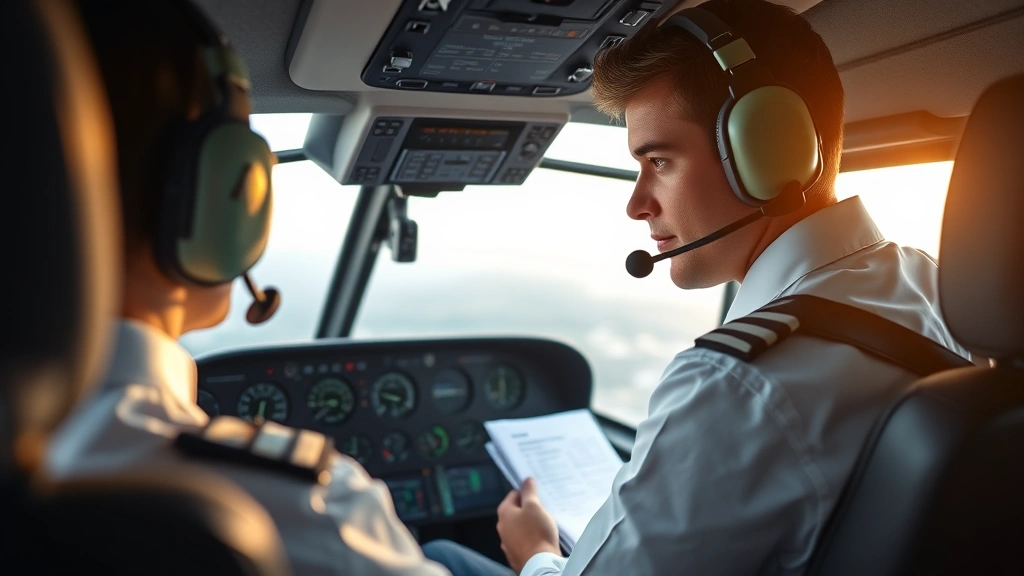
” alt=”Professional helicopter pilot in modern cockpit performing pre-flight checklist with detailed instrument panel visible, demonstrating professionalism and technical competence in aviation environment”/>
FAQ
How long does it take to complete a helicopter pilot course?
Private pilot certification typically requires 3-6 months of intensive training, assuming consistent flight scheduling and weather cooperation. Commercial certification adds 2-4 additional months. Timeline varies based on training intensity, weather patterns in your region, and individual learning pace. Some students complete training in accelerated programs within 8-12 weeks, while part-time training over 12-18 months accommodates working professionals.
What’s the minimum age to begin helicopter pilot training?
Students can begin private pilot training at age 14, though they cannot legally pilot an aircraft solo until age 16. Commercial certificate requires minimum age 18. ATP certification requires age 23. Many flight schools accept younger students for ground school and simulator training, allowing them to begin actual helicopter flying once they reach minimum legal age.
Do I need prior aviation experience to pursue helicopter pilot training?
No prior aviation experience is required. Helicopter pilot training begins from fundamentals and progresses systematically. However, students with fixed-wing pilot experience sometimes find certain concepts easier to grasp, though helicopter flying involves substantially different physics and control techniques. Many successful helicopter pilots began with no aviation background whatsoever.
What’s the difference between Part 61 and Part 141 helicopter pilot training?
Part 141 schools operate under FAA-approved curricula with structured syllabi and regular inspections, often resulting in faster certification timelines and lower minimum flight hour requirements. Part 61 training operates under more flexible regulations, allowing individualized pacing and potentially lower costs, though typically requiring more flight hours. Both paths lead to identical FAA certificates; the choice depends on personal learning preferences and schedule flexibility.
Can I finance helicopter pilot training?
Yes, multiple financing options exist. Personal loans from banks or credit unions, aviation-specific lenders, employer sponsorship, military service commitments, and flight school payment plans all provide financing avenues. Calculate total costs including interest when evaluating financing options. Some employers sponsor pilot training for employees in relevant positions, essentially providing free or subsidized training in exchange for service commitments.
What medical conditions might disqualify me from helicopter pilot certification?
Serious cardiac conditions, uncontrolled diabetes requiring insulin, certain psychiatric disorders, significant hearing loss, uncorrected vision problems, and neurological conditions may present disqualification concerns. However, the FAA increasingly issues special issuance medical certificates for well-managed conditions. Consulting with an aviation medical examiner early in your planning process clarifies your specific medical situation without triggering formal denial.
Is helicopter pilot training more difficult than fixed-wing pilot training?
Helicopter flying demands different skills than fixed-wing aviation; neither is objectively more difficult, but helicopter operations present unique challenges. Helicopters require continuous active control inputs, lack the stability of fixed-wing aircraft, and demand precise hovering and low-altitude maneuvering skills. Students transitioning from fixed-wing often find the workload initially higher, though this varies individually. Many pilots find helicopter training more engaging precisely because of these demands.